THE ADVENTURE COLLECTIVE® · Independent discovery and booking for outdoor travel

Travel by private car through the Heart of Neolithic Orkney: short walks to Skara Brae, Ring of Brodgar and Maes Howe with a local driver-guide. Expect exposed coasts, flagstone paths, and flexible pacing tailored to weather and interest.
Travel by private car through the Heart of Neolithic Orkney: short walks to Skara Brae, Ring of Brodgar and Maes Howe with a local driver-guide. Expect exposed coasts, flagstone paths, and flexible pacing tailored to weather and interest.
You step out of a warm, air-conditioned car onto wind-carved grass and feel the Atlantic press at the edge of the islands. Low, stone-built houses and grassy barrows sit within a landscape that looks older than the weather itself — the remains of communities who lived here 5,000 years ago. The driver-guide closes the door, and the stories begin: farmers, builders, and seafarers who left stone circles, passage tombs, and a village preserved in stony peat.
Verified experiences and guided adventures in the surrounding area.
Operated by Scenic Orkney · Kirkwall, Orkney
You step out of a warm, air-conditioned car onto wind-carved grass and feel the Atlantic press at the edge of the islands. Low, stone-built houses and grassy barrows sit within a landscape that looks older than the weather itself — the remains of communities who lived here 5,000 years ago. The driver-guide closes the door, and the stories begin: farmers, builders, and seafarers who left stone circles, passage tombs, and a village preserved in stony peat.
Geology here is Old Red Sandstone and flagstone shaped by glacial scouring; the coast drops to cliffs and beaches defined by strong tides. Skara Brae offers an intimate look at domestic life in the Neolithic; Ring of Brodgar and Maes Howe show ceremonial and funerary architecture, part of the Heart of Neolithic Orkney UNESCO site. Cultural layers include Viking-era place names and 20th‑century wartime structures like the Italian Chapel — a reminder the islands have kept changing use over millennia.
Practical guidance: this is a relaxed, vehicle-based private tour that moves between short site visits — expect uneven paths, exposed weather, and short walks of 10–30 minutes at each stop. Wear waterproof layers and sturdy shoes; bring binoculars for seabirds and timing that leaves sunlight for photography. Confirm pickup and any entrance fees ahead of time — the tour price typically covers transport but not site admissions. With a knowledgeable driver at the wheel, you get flexible pacing to match weather, mobility, and what you most want to see.
easy.
1–4 hours.
Suitable for most fitness levels; involves short, easy walks between parking and sites, but some uneven ground.
Most tours cover transport only; entry to managed sites such as Skara Brae or Maes Howe is usually charged separately and paid on arrival or online.
Yes — the tour is private and typically offers pickup within Orkney towns like Kirkwall; confirm exact pickup point when booking.
Visits generally involve short walks of 10–30 minutes over uneven ground; some sites have short steps or low doorways to navigate.
Yes, but ferries and roads can be affected by storms; tours may be canceled for severe weather — bring warm layers and check cancellation policy.
The Heart of Neolithic Orkney (Skara Brae, Ring of Brodgar, Maes Howe) dates to c. 3200–2500 BCE and is a UNESCO World Heritage Site illustrating complex prehistoric communities.
High visitor numbers and coastal erosion are ongoing concerns; stick to marked paths, avoid climbing stones, and follow site-specific guidance to protect fragile archaeology.
Scenic Orkney operates guided outdoor trips and adventures with an emphasis on safety, stewardship, and memorable experiences.

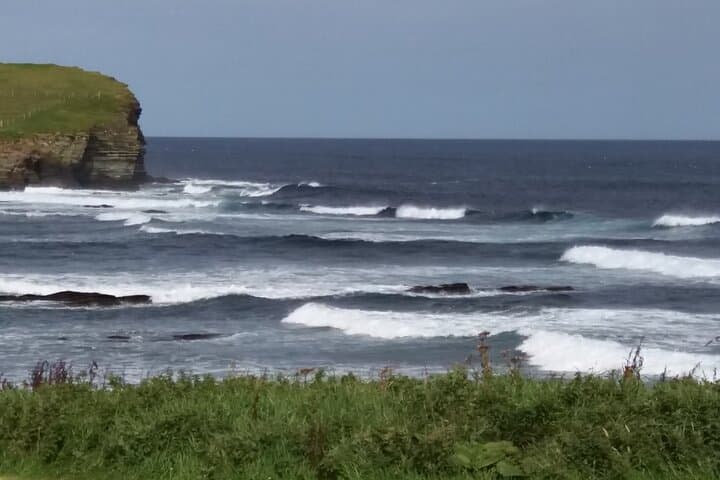
You step out of a warm, air-conditioned car onto wind-carved grass and feel the Atlantic press at the edge of the islands. Low, stone-built houses and grassy barrows sit within a landscape that looks older than the weather itself — the remains of communities who lived here 5,000 years ago. The driver-guide closes the door, and the stories begin: farmers, builders, and seafarers who left stone circles, passage tombs, and a village preserved in stony peat.
You step out of a warm, air-conditioned car onto wind-carved grass and feel the Atlantic press at the edge of the islands. Low, stone-built houses and grassy barrows sit within a landscape that looks older than the weather itself — the remains of communities who lived here 5,000 years ago. The driver-guide closes the door, and the stories begin: farmers, builders, and seafarers who left stone circles, passage tombs, and a village preserved in stony peat.
Geology here is Old Red Sandstone and flagstone shaped by glacial scouring; the coast drops to cliffs and beaches defined by strong tides. Skara Brae offers an intimate look at domestic life in the Neolithic; Ring of Brodgar and Maes Howe show ceremonial and funerary architecture, part of the Heart of Neolithic Orkney UNESCO site. Cultural layers include Viking-era place names and 20th‑century wartime structures like the Italian Chapel — a reminder the islands have kept changing use over millennia.
Practical guidance: this is a relaxed, vehicle-based private tour that moves between short site visits — expect uneven paths, exposed weather, and short walks of 10–30 minutes at each stop. Wear waterproof layers and sturdy shoes; bring binoculars for seabirds and timing that leaves sunlight for photography. Confirm pickup and any entrance fees ahead of time — the tour price typically covers transport but not site admissions. With a knowledgeable driver at the wheel, you get flexible pacing to match weather, mobility, and what you most want to see.