THE ADVENTURE COLLECTIVE® · Independent discovery and booking for outdoor travel

Explore two hours of fossils, gemstones and museum lore on a guided walk through London’s Natural History Museum. This practical guide covers what to expect, local history, and tips to make the most of your visit.
Explore two hours of fossils, gemstones and museum lore on a guided walk through London’s Natural History Museum. This practical guide covers what to expect, local history, and tips to make the most of your visit.
Step through the museum doors and Hintze Hall opens like a slow-motion reveal: terracotta arches frame a towering skeleton while curated displays nudge you toward deep time. The tour moves at a brisk, readable pace—two hours of fossils, gemstones and engineered displays—letting the building’s Victorian masonry and modern galleries speak in turns.
Verified experiences and guided adventures in the surrounding area.
Operated by Golden Tours Gray Line London · London, England
Step through the museum doors and Hintze Hall opens like a slow-motion reveal: terracotta arches frame a towering skeleton while curated displays nudge you toward deep time. The tour moves at a brisk, readable pace—two hours of fossils, gemstones and engineered displays—letting the building’s Victorian masonry and modern galleries speak in turns.
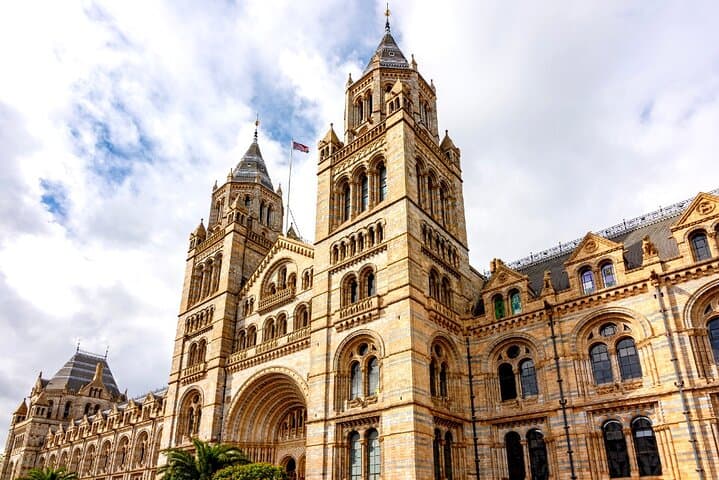
Opened in 1881 and designed by Alfred Waterhouse, the Natural History Museum grew from private collections into one of the world’s largest repositories of life and earth sciences—more than 80 million specimens that chart evolution, extinction and shifting climates.
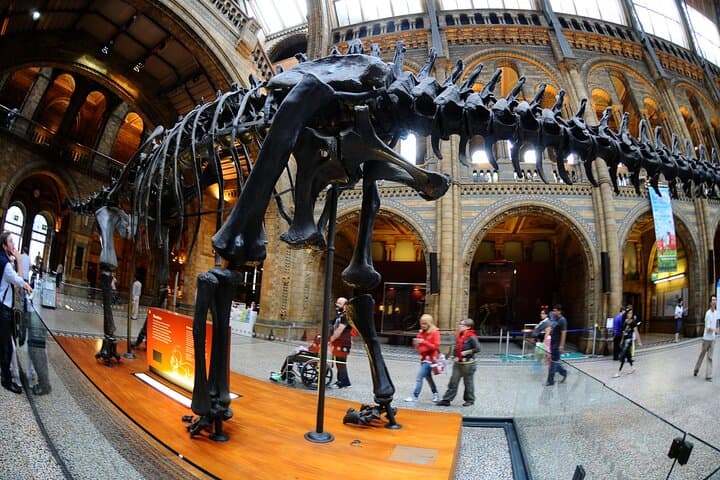
Geology fans can trace planetary drama in the Volcanoes & Earthquakes gallery and study meteorites that arrived before human memory; paleontologists’ discoveries, from Mary Anning’s fossils to Darwin’s influence, anchor the mammal and dinosaur exhibits. Outside, the Wildlife Garden gives pollinators and birds room to move, a living counterpoint to the preserved specimens inside.
Practical guide: the walking tour is guided and wheelchair accessible but does not include museum admission—bring a mobile ticket and arrive 15 minutes early. Comfortable shoes and a light rain layer make a big difference; plan morning slots to avoid school groups, and allow extra time afterward for the Darwin Centre cocoon or the gem vault. Photography is generally allowed but be mindful of exhibit rules and conservation signage. For travelers who want context with their visuals, the guide will point out curatorial stories and lab-restoration work that most visitors miss.
moderate.
2 hours.
Able to stand and walk for up to two hours with short periods of standing; manageable for most with moderate fitness
No. This guided tour does not include admission; you should book or have museum entry arranged separately.
Yes. The tour and many museum surfaces are wheelchair accessible; notify the operator of requirements when booking.
Shared tours can include up to about 52 travelers; private options may be available separately.
Children are welcome, but the tour pace and content suits school-age kids or those who can walk and stand for the duration.
Housed in a Victorian Gothic building opened in 1881, the museum grew from private naturalist collections into one of the world’s largest natural history repositories.
The museum runs active conservation and research programs—follow signage, avoid touching displays, and support preservation by using designated photography rules.
Golden Tours Gray Line London operates guided outdoor trips and adventures with an emphasis on safety, stewardship, and memorable experiences.
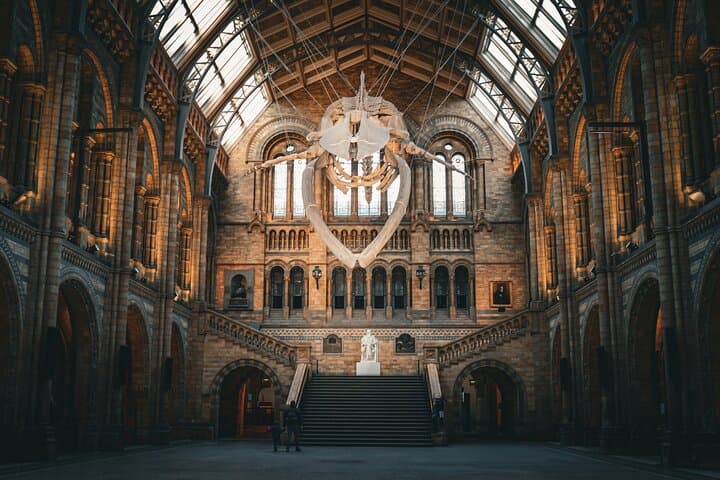
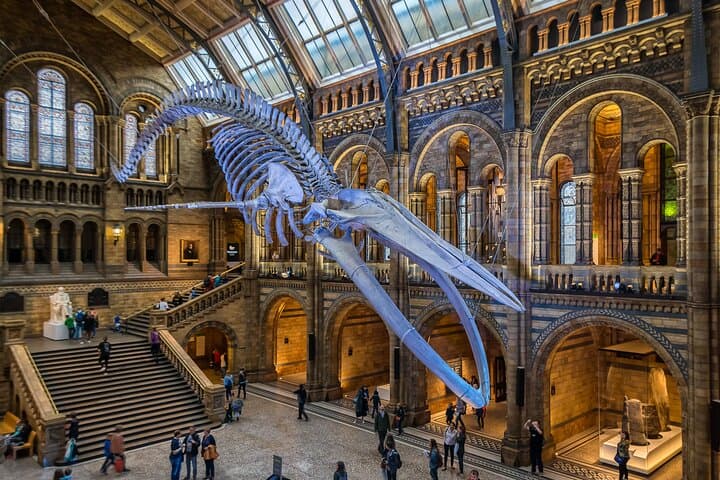
Step through the museum doors and Hintze Hall opens like a slow-motion reveal: terracotta arches frame a towering skeleton while curated displays nudge you toward deep time. The tour moves at a brisk, readable pace—two hours of fossils, gemstones and engineered displays—letting the building’s Victorian masonry and modern galleries speak in turns.
Step through the museum doors and Hintze Hall opens like a slow-motion reveal: terracotta arches frame a towering skeleton while curated displays nudge you toward deep time. The tour moves at a brisk, readable pace—two hours of fossils, gemstones and engineered displays—letting the building’s Victorian masonry and modern galleries speak in turns.
Opened in 1881 and designed by Alfred Waterhouse, the Natural History Museum grew from private collections into one of the world’s largest repositories of life and earth sciences—more than 80 million specimens that chart evolution, extinction and shifting climates.
Geology fans can trace planetary drama in the Volcanoes & Earthquakes gallery and study meteorites that arrived before human memory; paleontologists’ discoveries, from Mary Anning’s fossils to Darwin’s influence, anchor the mammal and dinosaur exhibits. Outside, the Wildlife Garden gives pollinators and birds room to move, a living counterpoint to the preserved specimens inside.
Practical guide: the walking tour is guided and wheelchair accessible but does not include museum admission—bring a mobile ticket and arrive 15 minutes early. Comfortable shoes and a light rain layer make a big difference; plan morning slots to avoid school groups, and allow extra time afterward for the Darwin Centre cocoon or the gem vault. Photography is generally allowed but be mindful of exhibit rules and conservation signage. For travelers who want context with their visuals, the guide will point out curatorial stories and lab-restoration work that most visitors miss.