THE ADVENTURE COLLECTIVE® · Independent discovery and booking for outdoor travel

Walk Marrakech with an official art historian and move from Koutoubia’s minaret to the alleys of the souks, with stops at Saadian tombs, Bahia Palace and Majorelle. This 4–6 hour private tour blends architecture, craft and practical, on-the-ground context.
Walk Marrakech with an official art historian and move from Koutoubia’s minaret to the alleys of the souks, with stops at Saadian tombs, Bahia Palace and Majorelle. This 4–6 hour private tour blends architecture, craft and practical, on-the-ground context.
A morning in Marrakech begins with the city knocking at your senses: the minaret of the Koutoubia looms, pigeons quarter the warm air, and the souks already hum as merchants arrange brass lamps and woven rugs.
Verified experiences and guided adventures in the surrounding area.
Operated by Morocco today travel · Marrakech, Marrakech-Safi
A morning in Marrakech begins with the city knocking at your senses: the minaret of the Koutoubia looms, pigeons quarter the warm air, and the souks already hum as merchants arrange brass lamps and woven rugs.
This guided city tour, led by an official art historian, moves through layers of Marrakchi history — from the 11th-century Almoravid foundations to the Saadian tombs and the 19th-century elegance of the Bahia Palace. Geologically the city sits on a plain that radiates toward the High Atlas; you’ll notice the change in light and vegetation where olive groves give way to palm plantations and, on clear days, the snow-capped Atlas frames the horizon like a distant line of guardians.
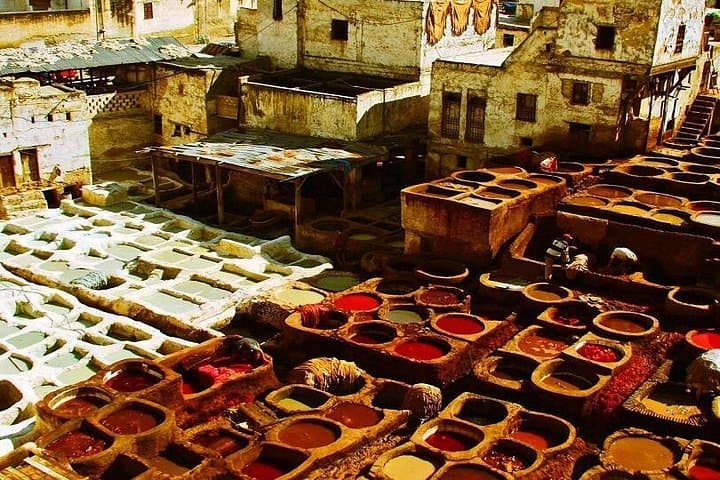
Culturally the tour centers on craft and commerce: the souks are still the city's working heart, where dyers, metalworkers and artisans practice time-honed techniques. Gardens like Majorelle and Menara show another side of Marrakech — irrigated geometric calm that contrasts with the frenetic square of Jemaa el-Fna, which unfolds as a living stage of storytellers, food stalls and musicians.
Practical guidance: expect 4–6 hours of mostly flat walking with frequent stops; bring comfortable shoes, sun protection and a refillable water bottle. Dress smart-casual and modestly to respect local norms. Cash is useful for small purchases and tips; bargaining is customary in the souks but polite limits apply. The guide will handle navigation, cultural context and most entry logistics — arrive hydrated and ready to walk, and leave with a clearer picture of Marrakech’s architectural layers, artisan neighborhoods and the rhythms that keep the city alive.
easy.
4–6 hours.
Suitable for most fitness levels; expect several hours of walking on mostly flat, paved and cobbled surfaces with intermittent steps
Yes — pickup and drop-off in central Marrakech are included; confirm your pickup point at booking.
The provider lists wheelchair accessibility; contact the operator ahead to confirm specific access needs for historic sites with steps.
Expect 4–6 hours of touring with frequent stops; the route is mostly flat but includes cobbled lanes and some palace steps.
Smart-casual clothing that covers shoulders and knees is recommended for cultural respect and easier entry to religious sites.
Founded by the Almoravids in the 11th century, Marrakech grew as a political and commercial capital for multiple dynasties and a regional crossroads for trade routes to the Atlas and Sahara.
Water scarcity and waste are local concerns; use refillable bottles, support certified local artisans, and avoid feeding wildlife or leaving litter in historic sites.
Morocco today travel operates guided outdoor trips and adventures with an emphasis on safety, stewardship, and memorable experiences.
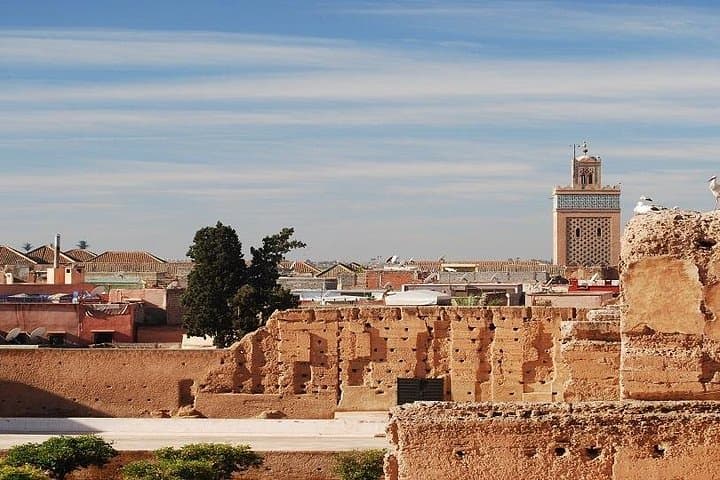
A morning in Marrakech begins with the city knocking at your senses: the minaret of the Koutoubia looms, pigeons quarter the warm air, and the souks already hum as merchants arrange brass lamps and woven rugs.
A morning in Marrakech begins with the city knocking at your senses: the minaret of the Koutoubia looms, pigeons quarter the warm air, and the souks already hum as merchants arrange brass lamps and woven rugs.
This guided city tour, led by an official art historian, moves through layers of Marrakchi history — from the 11th-century Almoravid foundations to the Saadian tombs and the 19th-century elegance of the Bahia Palace. Geologically the city sits on a plain that radiates toward the High Atlas; you’ll notice the change in light and vegetation where olive groves give way to palm plantations and, on clear days, the snow-capped Atlas frames the horizon like a distant line of guardians.
Culturally the tour centers on craft and commerce: the souks are still the city's working heart, where dyers, metalworkers and artisans practice time-honed techniques. Gardens like Majorelle and Menara show another side of Marrakech — irrigated geometric calm that contrasts with the frenetic square of Jemaa el-Fna, which unfolds as a living stage of storytellers, food stalls and musicians.
Practical guidance: expect 4–6 hours of mostly flat walking with frequent stops; bring comfortable shoes, sun protection and a refillable water bottle. Dress smart-casual and modestly to respect local norms. Cash is useful for small purchases and tips; bargaining is customary in the souks but polite limits apply. The guide will handle navigation, cultural context and most entry logistics — arrive hydrated and ready to walk, and leave with a clearer picture of Marrakech’s architectural layers, artisan neighborhoods and the rhythms that keep the city alive.