THE ADVENTURE COLLECTIVE® · Independent discovery and booking for outdoor travel

Paddle from Hout Bay harbor beneath Chapman’s Peak on a two-hour guided sea-kayak trip. Expect close encounters with seals, opportunistic dolphins, and sweeping coastal geology with practical safety briefings and gear provided.
Paddle from Hout Bay harbor beneath Chapman’s Peak on a two-hour guided sea-kayak trip. Expect close encounters with seals, opportunistic dolphins, and sweeping coastal geology with practical safety briefings and gear provided.
You push off from Hout Bay harbor and the water takes the first breath of the morning — cool, glassy, and forward-moving. Paddle strokes cut clean lines as seals surface and a seal colony on a nearby outcrop watches you with blunt, curious eyes. Chapman’s Peak cliffs rise to the east, the rock faces a patchwork of Cape granite that drops straight into the ocean; the sea dares you to look away.
Verified experiences and guided adventures in the surrounding area.
Operated by Kayak Adventures Cape Town · Hout Bay, Western Cape
You push off from Hout Bay harbor and the water takes the first breath of the morning — cool, glassy, and forward-moving. Paddle strokes cut clean lines as seals surface and a seal colony on a nearby outcrop watches you with blunt, curious eyes. Chapman’s Peak cliffs rise to the east, the rock faces a patchwork of Cape granite that drops straight into the ocean; the sea dares you to look away.
Hout Bay’s name comes from early Dutch settlers who harvested the valley’s timbers; its harbor later grew into a working fishing village with a strong maritime culture. Geologically the coastline is steep, formed by uplifted Cape Supergroup rocks, with rounded headlands and hidden coves where currents swirl and marine life congregates. Local guides know the currents, the sheltered paddling lines, and where dolphins commonly run the kelp beds.
Practically: this guided experience runs about two hours, suitable for paddlers with moderate fitness. Tours launch from the harbor, group sizes can reach two dozen, and kayaks plus basic safety gear are provided. Mornings usually offer calmer seas and the best chance to see dolphins, whales, and sunfish; afternoons can be windier thanks to the southeaster "Cape Doctor." Guides brief on distance, emergency procedures, and wildlife etiquette—keep respectful space from animals and avoid sudden splashes.
Bring a waterproof layer, sun protection, closed-toe water shoes, and a small dry bag with your phone and snacks. If you’re prone to seasickness, take measures before launch. Expect a pragmatic, close-to-nature outing: the landscape pushes you forward, the water answers back.
moderate.
2 hours.
Moderate — able to paddle continuously for short bursts and handle entry/exit from a harbor kayak.
No advanced experience is required; guides provide instruction and the route is chosen for sea conditions and group ability.
Common sightings include Cape fur seals, occasional African penguins, dusky dolphins, whales in season, and sunfish; sightings are never guaranteed.
Tours typically refund fully if cancelled at least 24 hours beforehand; operators will cancel in unsafe weather and refund or reschedule.
Not recommended — the activity involves repetitive paddling and the operator advises against participation for those with serious spinal or cardiovascular conditions.
Hout Bay began as a timber supply area for Dutch settlers and evolved into a working harbor and fishing village with deep local maritime traditions.
This coastline is sensitive habitat—avoid disturbing wildlife, carry out all waste, and follow guide instructions to reduce impact on kelp beds and seal haul-outs.
Kayak Adventures Cape Town operates guided outdoor trips and adventures with an emphasis on safety, stewardship, and memorable experiences.

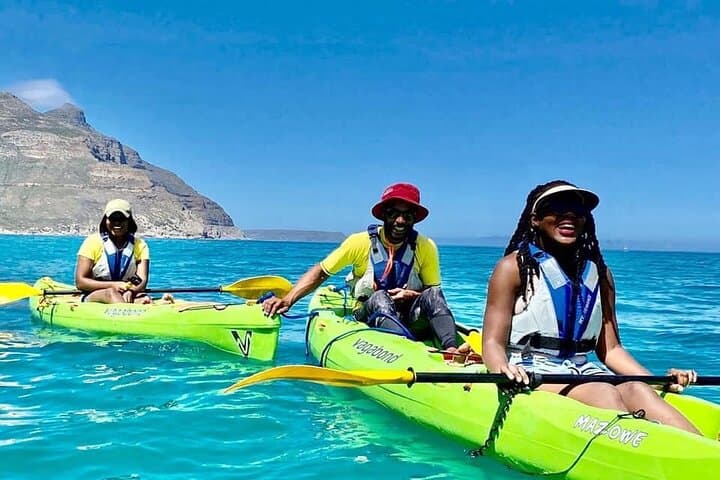
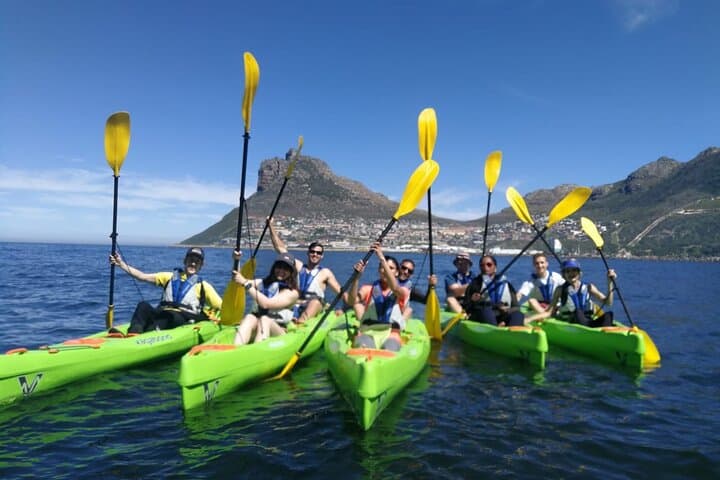
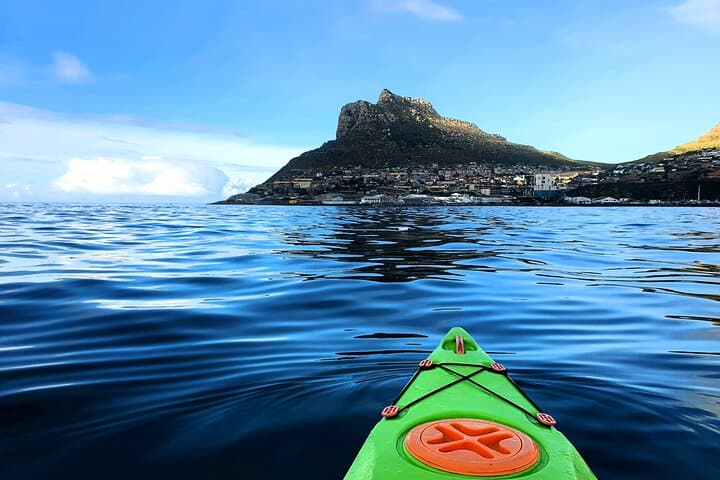
You push off from Hout Bay harbor and the water takes the first breath of the morning — cool, glassy, and forward-moving. Paddle strokes cut clean lines as seals surface and a seal colony on a nearby outcrop watches you with blunt, curious eyes. Chapman’s Peak cliffs rise to the east, the rock faces a patchwork of Cape granite that drops straight into the ocean; the sea dares you to look away.
You push off from Hout Bay harbor and the water takes the first breath of the morning — cool, glassy, and forward-moving. Paddle strokes cut clean lines as seals surface and a seal colony on a nearby outcrop watches you with blunt, curious eyes. Chapman’s Peak cliffs rise to the east, the rock faces a patchwork of Cape granite that drops straight into the ocean; the sea dares you to look away.
Hout Bay’s name comes from early Dutch settlers who harvested the valley’s timbers; its harbor later grew into a working fishing village with a strong maritime culture. Geologically the coastline is steep, formed by uplifted Cape Supergroup rocks, with rounded headlands and hidden coves where currents swirl and marine life congregates. Local guides know the currents, the sheltered paddling lines, and where dolphins commonly run the kelp beds.
Practically: this guided experience runs about two hours, suitable for paddlers with moderate fitness. Tours launch from the harbor, group sizes can reach two dozen, and kayaks plus basic safety gear are provided. Mornings usually offer calmer seas and the best chance to see dolphins, whales, and sunfish; afternoons can be windier thanks to the southeaster "Cape Doctor." Guides brief on distance, emergency procedures, and wildlife etiquette—keep respectful space from animals and avoid sudden splashes.
Bring a waterproof layer, sun protection, closed-toe water shoes, and a small dry bag with your phone and snacks. If you’re prone to seasickness, take measures before launch. Expect a pragmatic, close-to-nature outing: the landscape pushes you forward, the water answers back.