THE ADVENTURE COLLECTIVE® · Independent discovery and booking for outdoor travel

A classic Norwegian day-hike: a 8 km round-trip climb to a 604 m granite plateau with wide views over Lysefjord. This guided departure from Stavanger handles transport and pacing so you can focus on the ascent and the unforgettable view.
A classic Norwegian day-hike: a 8 km round-trip climb to a 604 m granite plateau with wide views over Lysefjord. This guided departure from Stavanger handles transport and pacing so you can focus on the ascent and the unforgettable view.
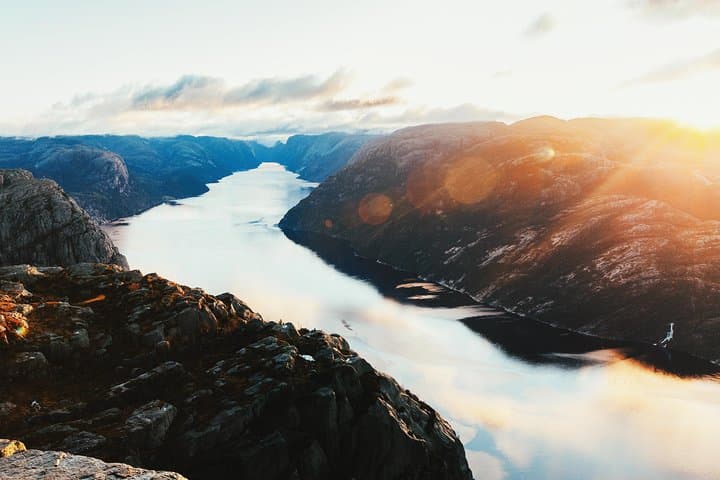
The trail begins with the patient scrape of rubber on wet stone and the soft murmur of a bus unloading at the trailhead. You walk away from the concrete and into a landscape that still carries the handprints of the Ice Age: stunted birch, blued moss, and a ribbon of trail that climbs in a steady, honest way. After an hour the trees thin, the wind sharpens, and the fjord announces itself—first as a ribbon of ultramarine, then as the full, ribboning throat of Lysefjord far below.
Verified experiences and guided adventures in the surrounding area.
Operated by Lysefjorden Adventure · Preikestolen Trailhead (near Stavanger), Rogaland
The trail begins with the patient scrape of rubber on wet stone and the soft murmur of a bus unloading at the trailhead. You walk away from the concrete and into a landscape that still carries the handprints of the Ice Age: stunted birch, blued moss, and a ribbon of trail that climbs in a steady, honest way. After an hour the trees thin, the wind sharpens, and the fjord announces itself—first as a ribbon of ultramarine, then as the full, ribboning throat of Lysefjord far below.
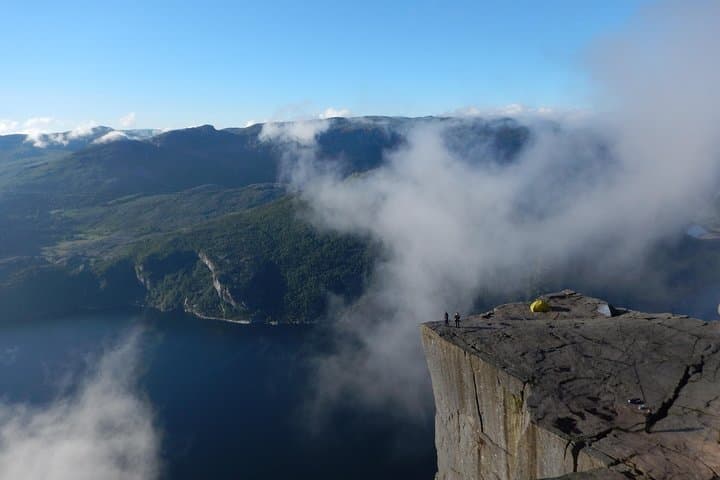
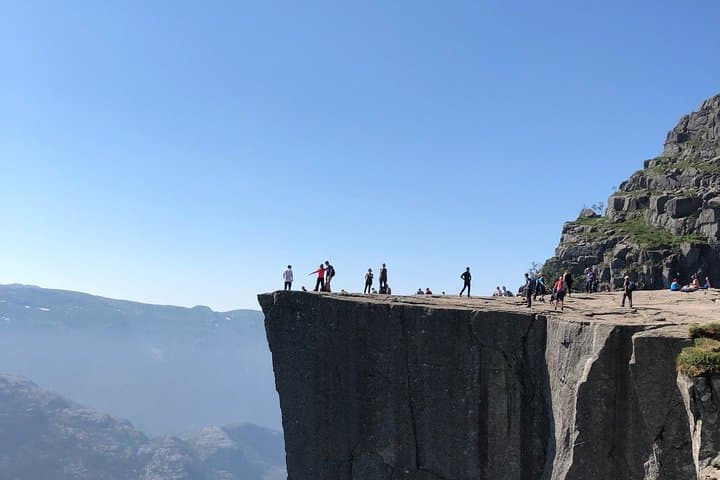
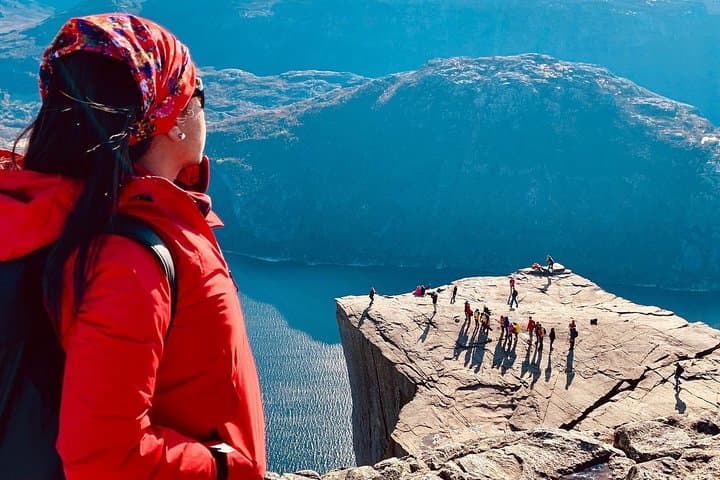
Pulpit Rock (Preikestolen) is a square slab of granite that hangs roughly 604 meters above Lysefjord. The cliff was carved as glaciers gouged the valleys and pushed rock into the fjord, leaving abrupt cliffs and deep waters where ice once flowed. Locals have been passing this ground for centuries; the plateau became a must-see in the age of outdoor photography, and the trail reflects that mixture of natural force and human curiosity—old path worn smooth, newer wooden steps and stone staircases built to steady the ascent.
The hike itself is direct: about 8 km round-trip with roughly 350 meters of elevation gain. Terrain alternates between compacted soil, exposed bedrock with shallow scrambles, and boardwalk sections over boggy patches. On a clear day the view from the top is uncompromising—no barriers, only sky and fjord—so stay aware of the edge: wind can arrive suddenly and the plateau gives little room for mistake.
Culture here is practical and low-key. Guides emphasize safety and leave little trace. The local tourism economy flows from Stavanger—ferries and minivans bring visitors for the day—and the guides who lead these hikes are as likely to talk geology as they are to point out the best vantage for a photo.
If you book a guided departure, expect pickup in Stavanger and a short drive to the trailhead; your guide will manage timing, route-finding, and pacing so you can focus on the climb and the view. Practicalities matter: bring layered waterproof clothing, sturdy boots with grip, at least 1–1.5 liters of water, and snacks for sustained energy. Start early to dodge the busiest hours and to catch lower-angle light on the fjord. In winter or heavy rain, the experience changes—bring traction and check cancellations.
Preikestolen rewards a straightforward effort with one of Norway’s cleanest, most dramatic viewpoints. It’s not about conquest; it’s a measured exchange: a few hours of steady climbing for a vista that forces you to slow down and look, with the fjord daring you to stay longer.
moderate.
4–6 hours (hiking only); full tour up to 9 hours including transport.
Require a reasonable level of cardiovascular fitness and comfort on uneven terrain; frequent short rests typical of the route.
The trail is about 8 km round-trip with approximately 350 meters of elevation gain; expect 4–6 hours including breaks.
Fit children and active older adults who can handle uneven ground and short steeper sections can do it, but the guide may adjust pace; check age and fitness requirements when booking.
In winter, parts of the trail can be icy—guided tours advise traction devices or crampons seasonally and may alter or cancel departures for safety.
Yes, guided departures include hotel pickup and drop-off in Stavanger and travel by minivan to the trailhead.
Basic facilities exist near parking and at the trailhead; bring snacks and water as there are no food services on the path.
Absolutely—there’s plenty of room for photos but be cautious of edges, strong wind, and other hikers when framing shots.
The fjord-and-cliff landscape was sculpted by glaciers during the last Ice Age; local communities have used the area for centuries for grazing and travel between farms.
The site is heavily visited; guides emphasize staying on trail and packing out all waste to reduce erosion and protect alpine vegetation.
Lysefjorden Adventure operates guided outdoor trips and adventures with an emphasis on safety, stewardship, and memorable experiences.
The trail begins with the patient scrape of rubber on wet stone and the soft murmur of a bus unloading at the trailhead. You walk away from the concrete and into a landscape that still carries the handprints of the Ice Age: stunted birch, blued moss, and a ribbon of trail that climbs in a steady, honest way. After an hour the trees thin, the wind sharpens, and the fjord announces itself—first as a ribbon of ultramarine, then as the full, ribboning throat of Lysefjord far below.
The trail begins with the patient scrape of rubber on wet stone and the soft murmur of a bus unloading at the trailhead. You walk away from the concrete and into a landscape that still carries the handprints of the Ice Age: stunted birch, blued moss, and a ribbon of trail that climbs in a steady, honest way. After an hour the trees thin, the wind sharpens, and the fjord announces itself—first as a ribbon of ultramarine, then as the full, ribboning throat of Lysefjord far below.
Pulpit Rock (Preikestolen) is a square slab of granite that hangs roughly 604 meters above Lysefjord. The cliff was carved as glaciers gouged the valleys and pushed rock into the fjord, leaving abrupt cliffs and deep waters where ice once flowed. Locals have been passing this ground for centuries; the plateau became a must-see in the age of outdoor photography, and the trail reflects that mixture of natural force and human curiosity—old path worn smooth, newer wooden steps and stone staircases built to steady the ascent.
The hike itself is direct: about 8 km round-trip with roughly 350 meters of elevation gain. Terrain alternates between compacted soil, exposed bedrock with shallow scrambles, and boardwalk sections over boggy patches. On a clear day the view from the top is uncompromising—no barriers, only sky and fjord—so stay aware of the edge: wind can arrive suddenly and the plateau gives little room for mistake.
Culture here is practical and low-key. Guides emphasize safety and leave little trace. The local tourism economy flows from Stavanger—ferries and minivans bring visitors for the day—and the guides who lead these hikes are as likely to talk geology as they are to point out the best vantage for a photo.
If you book a guided departure, expect pickup in Stavanger and a short drive to the trailhead; your guide will manage timing, route-finding, and pacing so you can focus on the climb and the view. Practicalities matter: bring layered waterproof clothing, sturdy boots with grip, at least 1–1.5 liters of water, and snacks for sustained energy. Start early to dodge the busiest hours and to catch lower-angle light on the fjord. In winter or heavy rain, the experience changes—bring traction and check cancellations.
Preikestolen rewards a straightforward effort with one of Norway’s cleanest, most dramatic viewpoints. It’s not about conquest; it’s a measured exchange: a few hours of steady climbing for a vista that forces you to slow down and look, with the fjord daring you to stay longer.