THE ADVENTURE COLLECTIVE® · Independent discovery and booking for outdoor travel

Trade Seoul's skyline for granite ridges and centuries-old fortress walls on a full-day guided hike of Bukhansan. Expect 6–7 hours of varied trail, licensed English guide commentary, and a Korean-style lunch en route.
Trade Seoul's skyline for granite ridges and centuries-old fortress walls on a full-day guided hike of Bukhansan. Expect 6–7 hours of varied trail, licensed English guide commentary, and a Korean-style lunch en route.
You step out of Seoul's hum and into a granite world where ridges cut the skyline and streams dare you toward quieter air. The day begins at a hotel pickup, a short ride to the northern trailheads of Bukhansan National Park. The path climbs under pine-scented slopes, then exposes you to slabs of granite that require steady feet and a careful pace. By the first summit you’re looking across Baekundae, Insubong, Mankyungdae and Nojeokbong — peaks that read like a map of the city’s geological backbone.
Verified experiences and guided adventures in the surrounding area.
Operated by Bergen travel · Seoul, Seoul
You step out of Seoul's hum and into a granite world where ridges cut the skyline and streams dare you toward quieter air. The day begins at a hotel pickup, a short ride to the northern trailheads of Bukhansan National Park. The path climbs under pine-scented slopes, then exposes you to slabs of granite that require steady feet and a careful pace. By the first summit you’re looking across Baekundae, Insubong, Mankyungdae and Nojeokbong — peaks that read like a map of the city’s geological backbone.
Bukhansan (837 m) became Korea’s 15th national park, covering roughly 80 km² and earning a Guinness entry for visits per unit area. The mountain’s granite was sculpted by long uplift and freeze-thaw cycles; human history left its mark too — the Bukhansanseong Fortress walls and more than 100 temples speak to two millennia of strategic and spiritual use.
Culturally, guides weave stories of Korean mountain worship and wartime defenses as you pass temple eaves and fortress gates. The Euisangbong ridge offers sections of exposed rock and brief scrambling; valleys below carry summer water and in autumn the slopes shift color.
Practical guidance: expect 6–7 hours on varied terrain, moderate fitness, and an English-speaking licensed guide who provides a Korean-style lunch, snacks and water. Wear supportive boots, bring layers for wind on the ridgelines, and start early to avoid mid-day crowds. The trail can be adjusted for ability — novice hikers can take gentler alternatives while still tasting Bukhansan’s high-country views.
moderate.
6–7 hours.
Moderate — regular walkers and day-hikers with good balance will be comfortable; some short scrambles require confidence on rock.
The ridge has exposed granite and brief scrambles making it moderately difficult; fit beginners can use alternate lower routes offered by the guide.
Yes — the tour includes private, air-conditioned transport with hotel pickup and drop-off within Seoul as listed in the inclusions.
There is no special permit for day hiking Bukhansan; some trailheads require modest parking or access rules but the guide handles logistics.
Spring and fall offer the most comfortable temperatures and visual rewards (flowers or foliage); summer is lush but humid, winter is scenic but colder and may need crampons.
Bukhansanseong Fortress dates back roughly two millennia as a defensive line; the area also hosts many Buddhist temples tied to regional mountain worship.
High visitation stresses trails and vegetation; stick to durable surfaces, pack out trash, and follow seasonal trail advisories to reduce erosion.
Bergen travel operates guided outdoor trips and adventures with an emphasis on safety, stewardship, and memorable experiences.
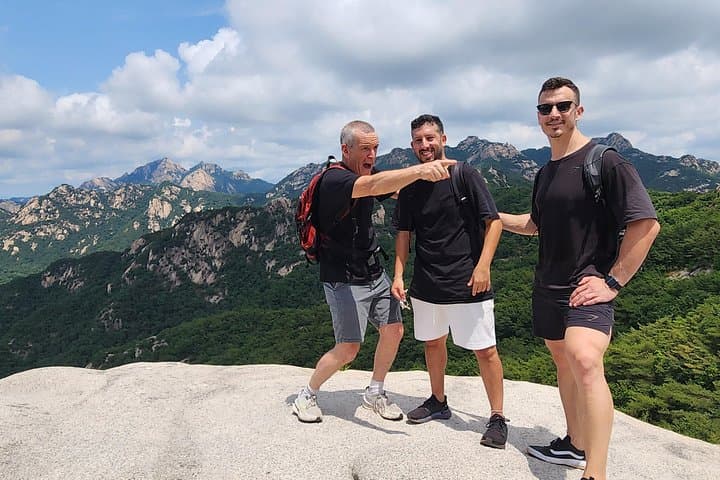
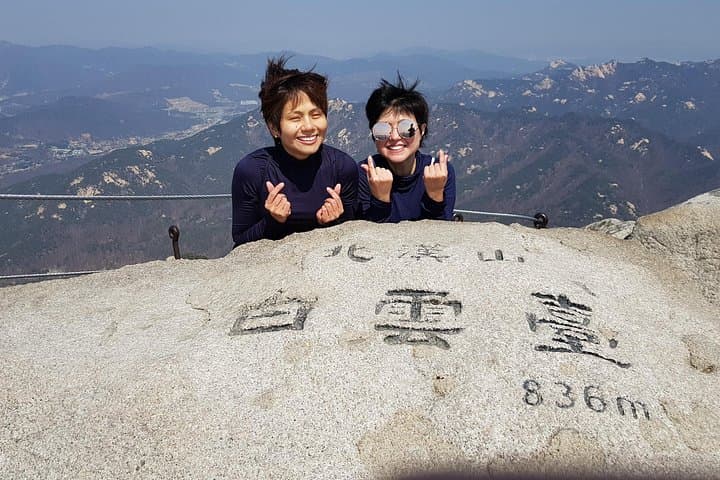
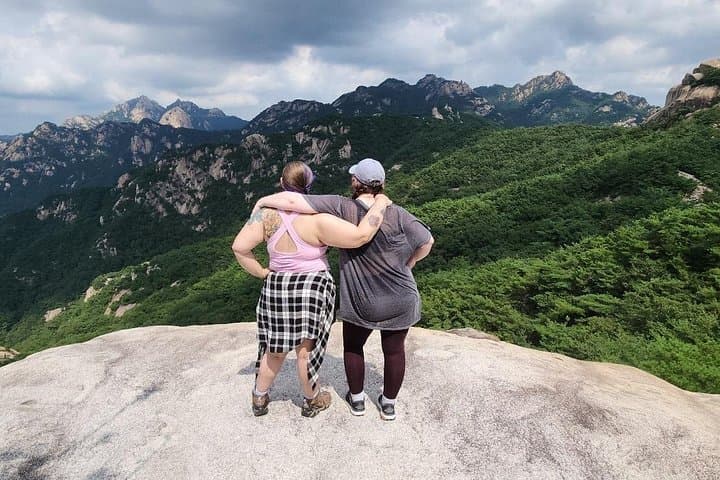
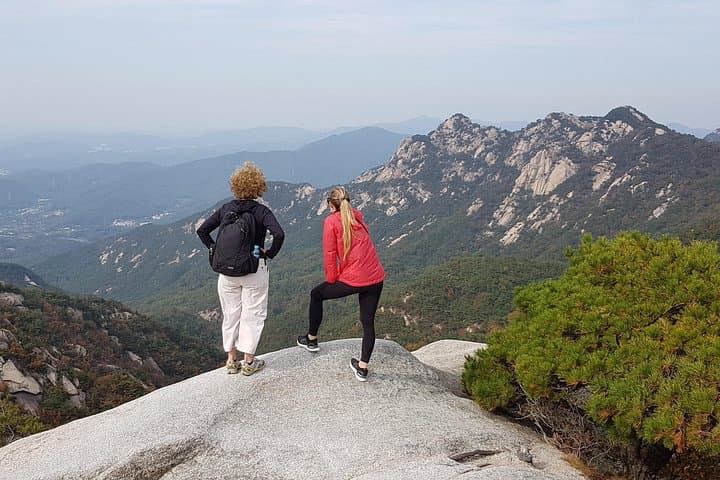
You step out of Seoul's hum and into a granite world where ridges cut the skyline and streams dare you toward quieter air. The day begins at a hotel pickup, a short ride to the northern trailheads of Bukhansan National Park. The path climbs under pine-scented slopes, then exposes you to slabs of granite that require steady feet and a careful pace. By the first summit you’re looking across Baekundae, Insubong, Mankyungdae and Nojeokbong — peaks that read like a map of the city’s geological backbone.
You step out of Seoul's hum and into a granite world where ridges cut the skyline and streams dare you toward quieter air. The day begins at a hotel pickup, a short ride to the northern trailheads of Bukhansan National Park. The path climbs under pine-scented slopes, then exposes you to slabs of granite that require steady feet and a careful pace. By the first summit you’re looking across Baekundae, Insubong, Mankyungdae and Nojeokbong — peaks that read like a map of the city’s geological backbone.
Bukhansan (837 m) became Korea’s 15th national park, covering roughly 80 km² and earning a Guinness entry for visits per unit area. The mountain’s granite was sculpted by long uplift and freeze-thaw cycles; human history left its mark too — the Bukhansanseong Fortress walls and more than 100 temples speak to two millennia of strategic and spiritual use.
Culturally, guides weave stories of Korean mountain worship and wartime defenses as you pass temple eaves and fortress gates. The Euisangbong ridge offers sections of exposed rock and brief scrambling; valleys below carry summer water and in autumn the slopes shift color.
Practical guidance: expect 6–7 hours on varied terrain, moderate fitness, and an English-speaking licensed guide who provides a Korean-style lunch, snacks and water. Wear supportive boots, bring layers for wind on the ridgelines, and start early to avoid mid-day crowds. The trail can be adjusted for ability — novice hikers can take gentler alternatives while still tasting Bukhansan’s high-country views.