THE ADVENTURE COLLECTIVE® · Independent discovery and booking for outdoor travel

Walk the ancient lanes of Ait Ben Haddou and cross the Ounila Valley on a short guided hike that combines Berber culture, Cambrian geology and historic caravan paths. Expect compacted earth, short sandy stretches, and a tea stop with a local family.
Walk the ancient lanes of Ait Ben Haddou and cross the Ounila Valley on a short guided hike that combines Berber culture, Cambrian geology and historic caravan paths. Expect compacted earth, short sandy stretches, and a tea stop with a local family.
You step through a mudbrick gateway and the smell of baked clay and thyme hits you — Ait Ben Haddou opens like a living map. The guided hike begins at Kasbah Tebi in Ait Ougaram; within an hour you move from packed-silt alleys into the pale sweep of the Ounila (Wadi Ounila) valley, across old caravan tracks and low plateaus where wind shapes the rock.
Verified experiences and guided adventures in the surrounding area.
Operated by Kasbah Art Tresor · Ait Ben Haddou, Drâa-Tafilalet
You step through a mudbrick gateway and the smell of baked clay and thyme hits you — Ait Ben Haddou opens like a living map. The guided hike begins at Kasbah Tebi in Ait Ougaram; within an hour you move from packed-silt alleys into the pale sweep of the Ounila (Wadi Ounila) valley, across old caravan tracks and low plateaus where wind shapes the rock.
This walk threads together human history and deep geology: the ksar is a UNESCO site that grew as part of the trans-Saharan caravan network linking Marrakech to Timbuktu. Beneath your boots are Cambrian-aged outcrops and desert pavements that record ancient seas; above you, terraces and kasbah towers show vernacular Berber architecture built to survive heat and flash floods.
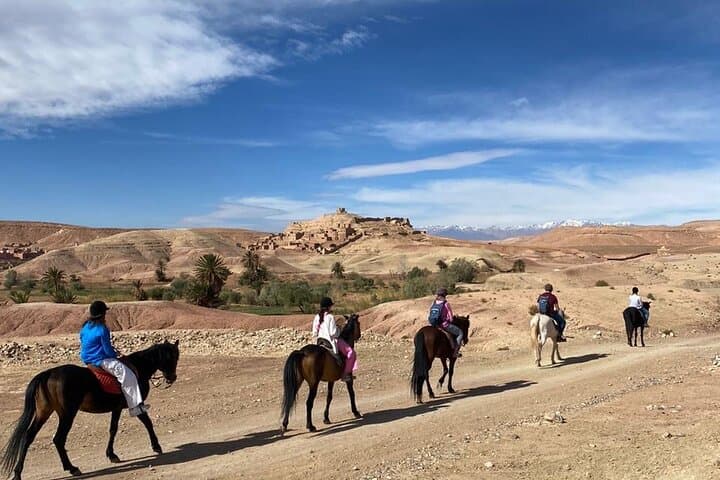
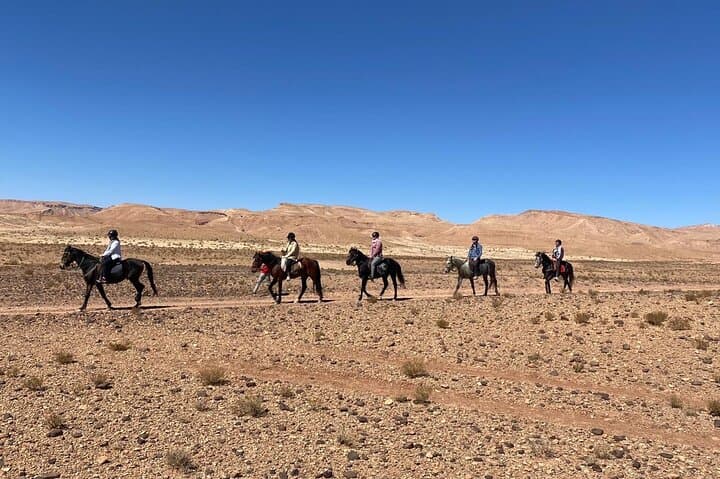
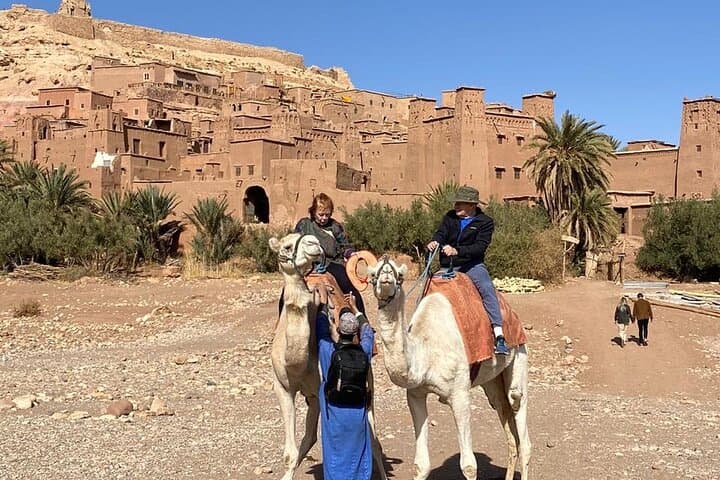
The route: short (roughly 2–3 km), minimal elevation gain (≈50–120 m), mixed terrain of compacted earth, loose stones and short sandy stretches. Alongside cultural stops — family homes, rooftop viewpoints — guides explain local life, olive and argan uses, and the kasbah’s film history. Animals (camels or horses) are available for less-mobile travelers; quads are an option for varied routes.
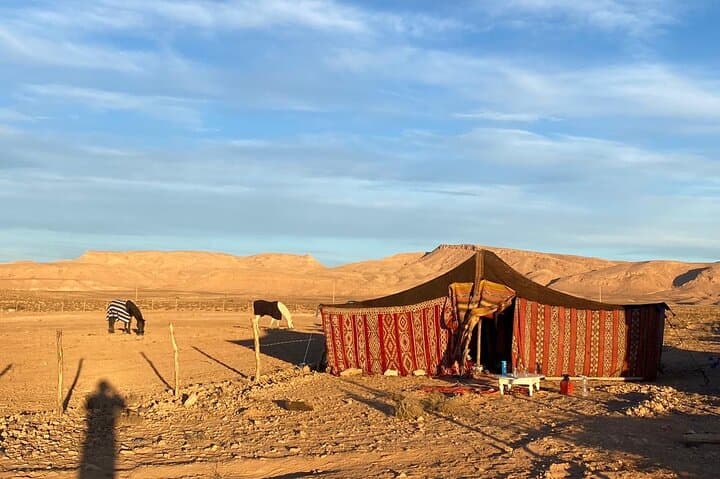
Practical guidance: expect strong sun and dry air — carry 1–1.5 L water, wear closed-toe hiking shoes, and leave plastic behind. Plan morning or late-afternoon departures to avoid midday heat. Reserve time for mint tea with a local family at Kasbah Tebi: it’s both a cultural exchange and a quiet vantage point to watch the valley push wind across the plateaus.
easy.
1 hour.
Suitable for someone comfortable walking 2–3 km on uneven ground; minimal stamina required
The guided route is about 1 hour (roughly 2–3 km) with minimal elevation gain (≈50–120 m); terrain is uneven but suitable for most fitness levels.
Yes — camels and horses are offered for less-mobile guests and some routes include quad options; your guide will arrange animals at the start.
Yes, but remember much of the ksar is residential — ask permission before photographing people or private courtyards and avoid stepping onto fragile mudbrick features.
Ait Ben Haddou is a 30–40 minute drive from Ouarzazate via the N9; organized transfers can be arranged or take a taxi to the ksar entrance and meet at Kasbah Tebi.
Ait Ben Haddou grew as a fortified caravan ksar on the trans-Saharan trade routes; its towered mudbrick architecture preserved centuries of Berber settlement and commerce.
The mudbrick structures are vulnerable to erosion and tourism wear; stick to paths, avoid climbing fragile walls and support local guides and family-run tea stops to help sustain the community.
Kasbah Art Tresor operates guided outdoor trips and adventures with an emphasis on safety, stewardship, and memorable experiences.
You step through a mudbrick gateway and the smell of baked clay and thyme hits you — Ait Ben Haddou opens like a living map. The guided hike begins at Kasbah Tebi in Ait Ougaram; within an hour you move from packed-silt alleys into the pale sweep of the Ounila (Wadi Ounila) valley, across old caravan tracks and low plateaus where wind shapes the rock.
You step through a mudbrick gateway and the smell of baked clay and thyme hits you — Ait Ben Haddou opens like a living map. The guided hike begins at Kasbah Tebi in Ait Ougaram; within an hour you move from packed-silt alleys into the pale sweep of the Ounila (Wadi Ounila) valley, across old caravan tracks and low plateaus where wind shapes the rock.
This walk threads together human history and deep geology: the ksar is a UNESCO site that grew as part of the trans-Saharan caravan network linking Marrakech to Timbuktu. Beneath your boots are Cambrian-aged outcrops and desert pavements that record ancient seas; above you, terraces and kasbah towers show vernacular Berber architecture built to survive heat and flash floods.
The route: short (roughly 2–3 km), minimal elevation gain (≈50–120 m), mixed terrain of compacted earth, loose stones and short sandy stretches. Alongside cultural stops — family homes, rooftop viewpoints — guides explain local life, olive and argan uses, and the kasbah’s film history. Animals (camels or horses) are available for less-mobile travelers; quads are an option for varied routes.
Practical guidance: expect strong sun and dry air — carry 1–1.5 L water, wear closed-toe hiking shoes, and leave plastic behind. Plan morning or late-afternoon departures to avoid midday heat. Reserve time for mint tea with a local family at Kasbah Tebi: it’s both a cultural exchange and a quiet vantage point to watch the valley push wind across the plateaus.