THE ADVENTURE COLLECTIVE® · Independent discovery and booking for outdoor travel

A private, guided hike through Alpe di Siusi, Sciliar and the Rosengarten offers close-up geology, Ladin culture and high-alpine views—tailored routes for quiet ridgelines or full-day traverses. Read on for what to expect and how to prepare.
A private, guided hike through Alpe di Siusi, Sciliar and the Rosengarten offers close-up geology, Ladin culture and high-alpine views—tailored routes for quiet ridgelines or full-day traverses. Read on for what to expect and how to prepare.
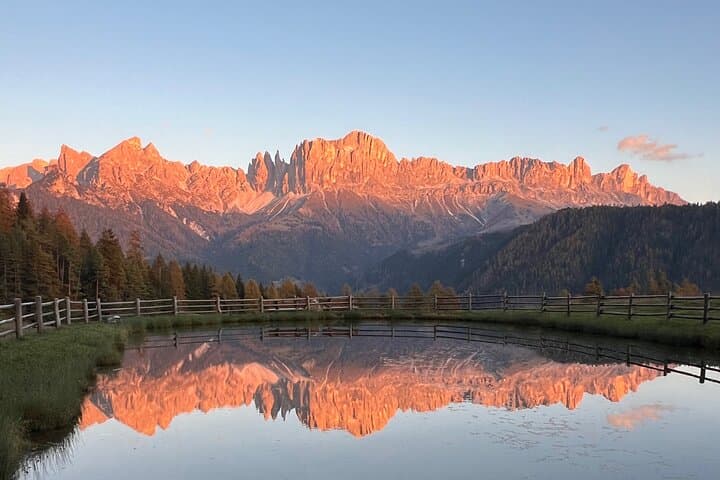
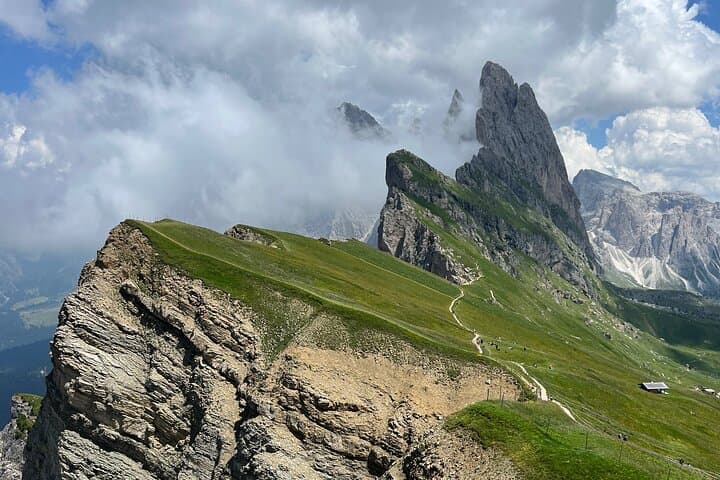
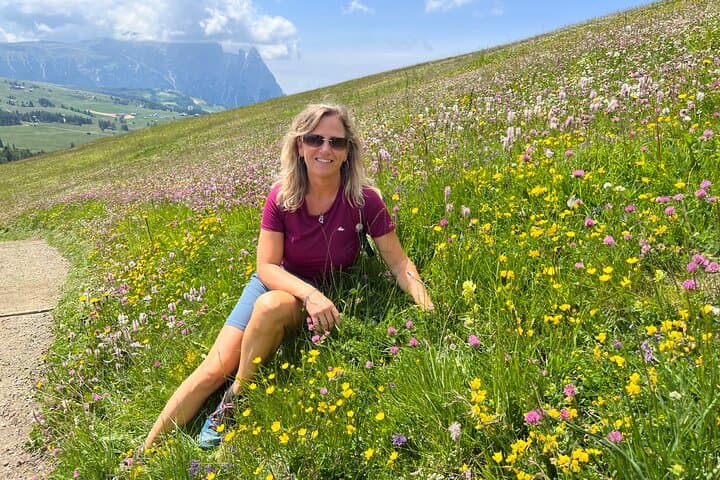
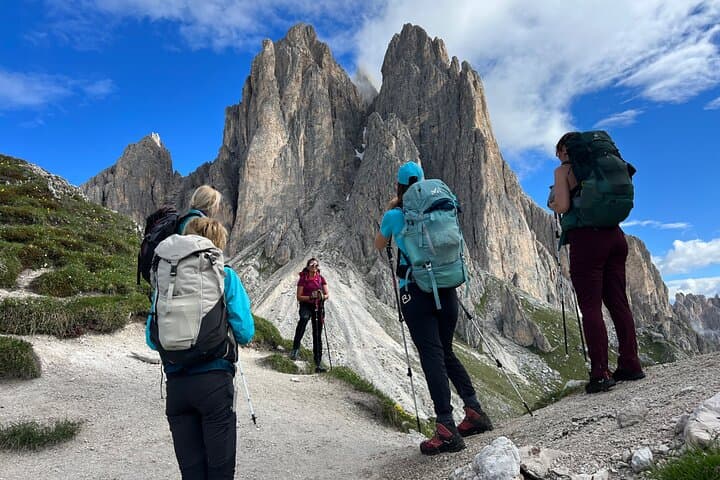
You step out of the village shade and into a world that rearranges itself with every bend: a wide alpine meadow opens to a ring of pale towers, their vertical faces catching late-morning light like pages of a weathered map. On this private, guided hike the Dolomites refuse to be background scenery—the mountains press forward, daring you to read their angles and follow the ridgelines where shepherd trails thread through high pastures and scree. Your guide, a South Tyrolean with a local's patience and a geologist’s eye, points out fossilized reef layers and the fingerprint of the Triassic seas embedded in dolomite stone.
Verified experiences and guided adventures in the surrounding area.
Operated by Günther Vettori · Selva di Val Gardena (Wolkenstein), Trentino-Alto Adige
You step out of the village shade and into a world that rearranges itself with every bend: a wide alpine meadow opens to a ring of pale towers, their vertical faces catching late-morning light like pages of a weathered map. On this private, guided hike the Dolomites refuse to be background scenery—the mountains press forward, daring you to read their angles and follow the ridgelines where shepherd trails thread through high pastures and scree. Your guide, a South Tyrolean with a local's patience and a geologist’s eye, points out fossilized reef layers and the fingerprint of the Triassic seas embedded in dolomite stone.
This region—Alpe di Siusi (Seiser Alm), the Sciliar (Schlern) massif, the Rosengarten (Catinaccio) group and the valleys of Val Gardena—has been worked and watched for centuries. Ladin-speaking villages keep a distinctive alpine culture: haymaking still punctuates summer, and simple mountain huts (rifugi) serve dishes shaped by altitude and season. The Dolomites’ pale rock, formed from coral and ancient seabeds, was thrust skyward and carved by glaciers into the jagged profiles you see today; World War I left scars and tunnels that the landscape has slowly soft-pedaled into trails and viewpoints.
On a tailored tour you can ask for summit objectives or longer ridge traverses—expect anywhere from a compact 6 km walk to a full-day 15+ km hike, with typical elevation gain between 300–900 m depending on route choice. Terrain is mixed: packed paths across meadows, short sections of loose scree near upper slopes, and stone switchbacks that demand steady footing. Because the tour is private, the guide will adjust pace, point out local flora and fauna, and choose quieter lines away from busier rifugios.
Practicalities: meet in front of Santner’s Club Apres Ski in Selva di Val Gardena where guides will be identifiable by traditional workwear. Public transport reaches nearby towns; many visitors base themselves in Ortisei, Selva or Castelrotto. Plan for strong mountain sun and sudden weather swings—layers, a waterproof shell and 1–2 liters of water are non-negotiable. Start early to avoid afternoon storms and to catch the clearest light on the peaks.
This is hiking that asks you to read rock as history and meadow as map. It’s accessible to fit walkers who are comfortable on variable trails, and extremely rewarding for those who want an intimate, informed encounter with one of Europe’s most dramatic ranges.
moderate.
4–8 hours.
Moderate fitness: regular hikers or active travelers comfortable with steep climbs and sustained walking.
The meeting point is in front of Santner’s Club Apres Ski in Selva di Val Gardena; the guide is identifiable by South Tyrolean hiking guide workwear.
Routes are tailored but typically range from moderate walks with 300–900 m elevation gain to more challenging all-day hikes; let the operator know your fitness level when booking.
Yes—this is an individually guided private hike, so the itinerary can be adjusted for pace and objectives.
Guides commonly speak Italian, German and English; confirm language needs at booking.
Families are welcome if children can handle multi-hour walks and some elevation gain; routes can be chosen to suit younger hikers.
All sales are final with no refunds for cancellations, so check conditions and travel insurance before booking.
The Dolomites were once coral reefs in the Triassic seas; later uplift and glaciation carved the vertical faces and high plateaus. The area also holds traces of World War I mountain warfare between Italian and Austro-Hungarian forces.
Stick to marked trails to protect fragile alpine vegetation and respect seasonal grazing; guided trips reduce erosion by channeling foot traffic and follow local land-use rules.
Günther Vettori operates guided outdoor trips and adventures with an emphasis on safety, stewardship, and memorable experiences.
You step out of the village shade and into a world that rearranges itself with every bend: a wide alpine meadow opens to a ring of pale towers, their vertical faces catching late-morning light like pages of a weathered map. On this private, guided hike the Dolomites refuse to be background scenery—the mountains press forward, daring you to read their angles and follow the ridgelines where shepherd trails thread through high pastures and scree. Your guide, a South Tyrolean with a local's patience and a geologist’s eye, points out fossilized reef layers and the fingerprint of the Triassic seas embedded in dolomite stone.
You step out of the village shade and into a world that rearranges itself with every bend: a wide alpine meadow opens to a ring of pale towers, their vertical faces catching late-morning light like pages of a weathered map. On this private, guided hike the Dolomites refuse to be background scenery—the mountains press forward, daring you to read their angles and follow the ridgelines where shepherd trails thread through high pastures and scree. Your guide, a South Tyrolean with a local's patience and a geologist’s eye, points out fossilized reef layers and the fingerprint of the Triassic seas embedded in dolomite stone.
This region—Alpe di Siusi (Seiser Alm), the Sciliar (Schlern) massif, the Rosengarten (Catinaccio) group and the valleys of Val Gardena—has been worked and watched for centuries. Ladin-speaking villages keep a distinctive alpine culture: haymaking still punctuates summer, and simple mountain huts (rifugi) serve dishes shaped by altitude and season. The Dolomites’ pale rock, formed from coral and ancient seabeds, was thrust skyward and carved by glaciers into the jagged profiles you see today; World War I left scars and tunnels that the landscape has slowly soft-pedaled into trails and viewpoints.
On a tailored tour you can ask for summit objectives or longer ridge traverses—expect anywhere from a compact 6 km walk to a full-day 15+ km hike, with typical elevation gain between 300–900 m depending on route choice. Terrain is mixed: packed paths across meadows, short sections of loose scree near upper slopes, and stone switchbacks that demand steady footing. Because the tour is private, the guide will adjust pace, point out local flora and fauna, and choose quieter lines away from busier rifugios.
Practicalities: meet in front of Santner’s Club Apres Ski in Selva di Val Gardena where guides will be identifiable by traditional workwear. Public transport reaches nearby towns; many visitors base themselves in Ortisei, Selva or Castelrotto. Plan for strong mountain sun and sudden weather swings—layers, a waterproof shell and 1–2 liters of water are non-negotiable. Start early to avoid afternoon storms and to catch the clearest light on the peaks.
This is hiking that asks you to read rock as history and meadow as map. It’s accessible to fit walkers who are comfortable on variable trails, and extremely rewarding for those who want an intimate, informed encounter with one of Europe’s most dramatic ranges.