THE ADVENTURE COLLECTIVE® · Independent discovery and booking for outdoor travel

Discover shore-accessible reefs and wrecks off Cirkewwa with guided dives tailored to your certification level. This five-hour experience pairs clear Mediterranean water with patient, safety-first guiding for beginners and advanced divers alike.
Discover shore-accessible reefs and wrecks off Cirkewwa with guided dives tailored to your certification level. This five-hour experience pairs clear Mediterranean water with patient, safety-first guiding for beginners and advanced divers alike.
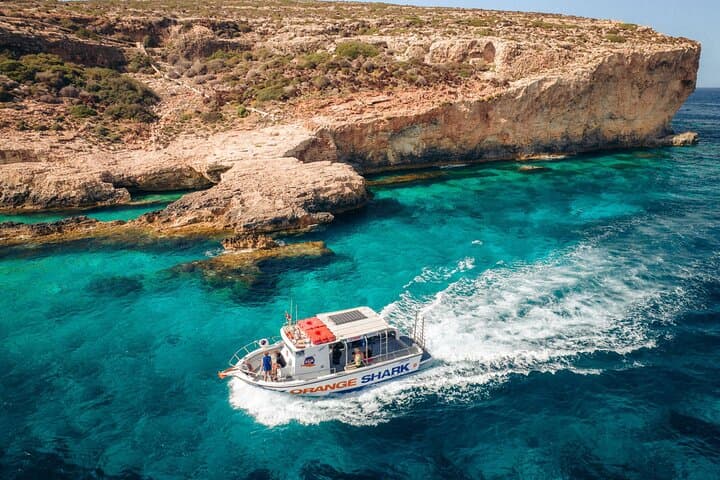
The day begins on a limestone headland where the sea cuts clear and blue against weathered rock; guides check tanks and brief the group while wind and salt sketch the horizon. From the center in Ċirkewwa you’ll travel a short drive to shore-entry sites or slip into sheltered bays that protect calm surface conditions for the first descent.
Verified experiences and guided adventures in the surrounding area.
Operated by OrangeShark Diving Centre · Mellieħa, Malta
The day begins on a limestone headland where the sea cuts clear and blue against weathered rock; guides check tanks and brief the group while wind and salt sketch the horizon. From the center in Ċirkewwa you’ll travel a short drive to shore-entry sites or slip into sheltered bays that protect calm surface conditions for the first descent.
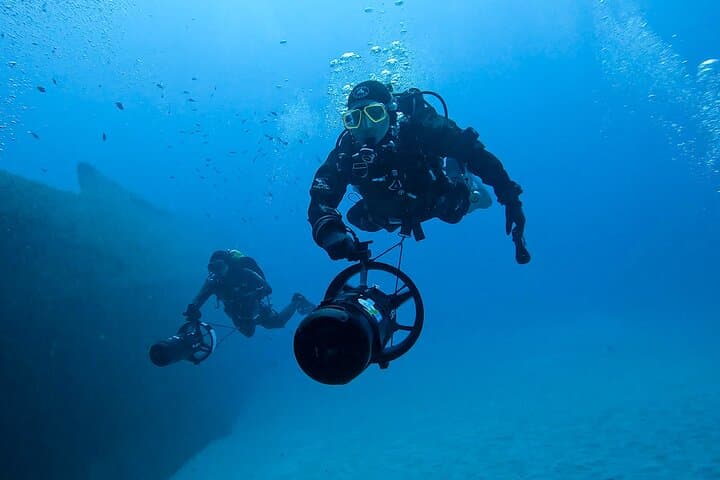
Malta’s central position in the Mediterranean shaped its dive terrain — sun-bleached coralline limestone, submerged cliffs, and shipwrecks left by centuries of trade and conflict. Cirkewwa sits near a marine protected area with strong populations of grouper, wrasse, and the occasional octopus; visibility often ranges 10–30 meters depending on season and swell.
Culturally, diving here follows a practical, safety-first rhythm: compact briefings, buddy checks, and conservative profiles. Many sites are shore-accessible, making logistics simpler for small groups and varied certification levels.
Expect two guided dives over roughly five hours: a shallow reef or wall for newer divers and deeper wreck or reef features for advanced certs. Guides tailor sites to experience, weather, and currents; boats are less common for these particular sites because of easy shore access.
Practical guidance: bring your certification card and logbook, hydrate before the briefing, and plan a surface interval on shaded rock or in the center. Wetsuit thickness depends on season (3–7mm in cooler months). Listen closely during the briefing — equalization, buoyancy, and emergency procedures are non-negotiable here. With mindful diving and respect for the protected zones, Malta delivers clear water, lively reefs, and compelling wrecks in compact, accessible dives.
moderate.
5 hours.
Moderate fitness—able to swim, carry equipment short distances, and perform two dives with surface intervals.
Yes—dives are assigned based on certification; open-water divers can typically join shallow reef dives while advanced cert holders can access deeper wrecks.
Visibility commonly ranges 10–30 meters depending on wind, swell, and season; summer usually brings the clearest water.
Most of the sites for this program are shore-accessible, simplifying entries and exits; guides will choose the safest option for the group and conditions.
Yes—scuba equipment is provided as part of the experience, but many divers bring personal masks, fins, and computers for fit and familiarity.
Malta’s position on historic trade routes left a patchwork of wrecks and maritime artifacts; many sites reflect 20th-century wartime and commercial losses.
Several Maltese sites are inside a marine protected area—practice buoyancy control, pack out any litter, and avoid touching coralline surfaces to protect slow-growing organisms.
OrangeShark Diving Centre operates guided outdoor trips and adventures with an emphasis on safety, stewardship, and memorable experiences.

The day begins on a limestone headland where the sea cuts clear and blue against weathered rock; guides check tanks and brief the group while wind and salt sketch the horizon. From the center in Ċirkewwa you’ll travel a short drive to shore-entry sites or slip into sheltered bays that protect calm surface conditions for the first descent.
The day begins on a limestone headland where the sea cuts clear and blue against weathered rock; guides check tanks and brief the group while wind and salt sketch the horizon. From the center in Ċirkewwa you’ll travel a short drive to shore-entry sites or slip into sheltered bays that protect calm surface conditions for the first descent.
Malta’s central position in the Mediterranean shaped its dive terrain — sun-bleached coralline limestone, submerged cliffs, and shipwrecks left by centuries of trade and conflict. Cirkewwa sits near a marine protected area with strong populations of grouper, wrasse, and the occasional octopus; visibility often ranges 10–30 meters depending on season and swell.
Culturally, diving here follows a practical, safety-first rhythm: compact briefings, buddy checks, and conservative profiles. Many sites are shore-accessible, making logistics simpler for small groups and varied certification levels.
Expect two guided dives over roughly five hours: a shallow reef or wall for newer divers and deeper wreck or reef features for advanced certs. Guides tailor sites to experience, weather, and currents; boats are less common for these particular sites because of easy shore access.
Practical guidance: bring your certification card and logbook, hydrate before the briefing, and plan a surface interval on shaded rock or in the center. Wetsuit thickness depends on season (3–7mm in cooler months). Listen closely during the briefing — equalization, buoyancy, and emergency procedures are non-negotiable here. With mindful diving and respect for the protected zones, Malta delivers clear water, lively reefs, and compelling wrecks in compact, accessible dives.