THE ADVENTURE COLLECTIVE® · Independent discovery and booking for outdoor travel

Explore two millennia of human history in two hours with an expert English-speaking guide. See the Rosetta Stone and Elgin Marbles while learning the stories behind iconic artifacts on this small-group museum tour.
Explore two millennia of human history in two hours with an expert English-speaking guide. See the Rosetta Stone and Elgin Marbles while learning the stories behind iconic artifacts on this small-group museum tour.
You step off the bustle of Great Russell Street into a cool, echoing court of stone and glass—the British Museum’s covered Great Court opens like a public living room where history takes up comfortable residence. A guide waits near Starbucks across from the main entrance, a small group assembled for two hours that will move deliberately through rooms that map the rise of cities, empires, and written language.
Verified experiences and guided adventures in the surrounding area.
Operated by we share · London, England
You step off the bustle of Great Russell Street into a cool, echoing court of stone and glass—the British Museum’s covered Great Court opens like a public living room where history takes up comfortable residence. A guide waits near Starbucks across from the main entrance, a small group assembled for two hours that will move deliberately through rooms that map the rise of cities, empires, and written language.
The museum itself dates to 1753, founded from Sir Hans Sloane’s collection, and occupies the footprint of earlier Montagu House. Its galleries collect objects from ancient Mesopotamia, Egypt, Greece and the Americas—each object a physical link to trade routes, conquests and cultural exchange. Geology and materials science make an appearance in the labels: basalt seals from the Fertile Crescent, limestone reliefs from Pharaonic quarries, and Parian marble carved into the Elgin Marbles that still provoke debates about provenance and repatriation.
Culturally, the building is a crossroads: school groups, independent travelers and specialists converge, and the guide’s role is to turn display cases into narratives—how the Rosetta Stone unlocked hieroglyphs, why the Mesopotamian cylinder seals mattered for identity.
Practical guidance: wear comfortable shoes and bring a small water bottle; the tour is paced but involves standing and short walks between rooms. Meet precisely at the Starbucks landmark; the tour is wheelchair accessible and conducted in English for groups up to ten. Photography is generally allowed without flash—check signage for restricted objects. Allocate extra time afterward to revisit highlights in the quieter galleries or the museum shop for specialized facsimiles.
easy.
2 hours.
Suitable for all fitness levels; involves standing and short walks between galleries
Your guide meets the group in front of the Starbucks directly opposite the museum’s main entrance on Great Russell Street.
Yes—museum entry is included as noted in the tour inclusions; special exhibitions may require an additional ticket.
Yes; the tour and main public areas are wheelchair accessible. Contact the operator ahead of booking for specific assistance needs.
All sales are final for this tour; bookings require a minimum of two participants or the tour may be canceled by the operator.
Founded in 1753 from Sir Hans Sloane’s collection, the British Museum was the first national public museum in Britain and expanded across the 19th century into the building you see today.
The museum runs active conservation labs and displays object-care practices; debates over provenance and repatriation are part of ongoing conversations about ethical stewardship.
we share operates guided outdoor trips and adventures with an emphasis on safety, stewardship, and memorable experiences.
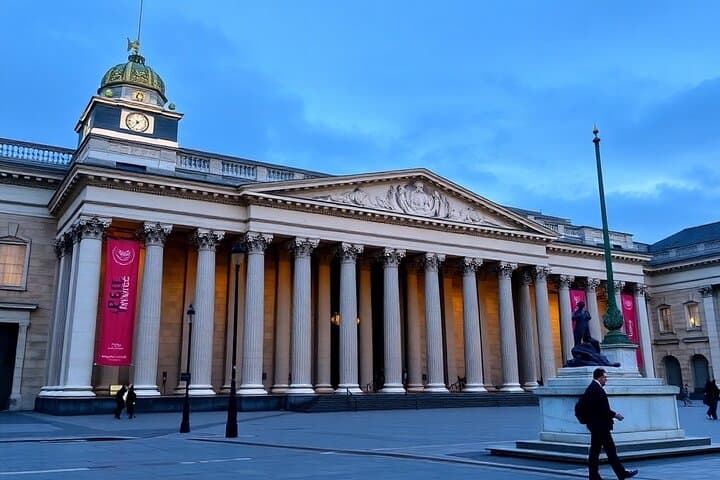
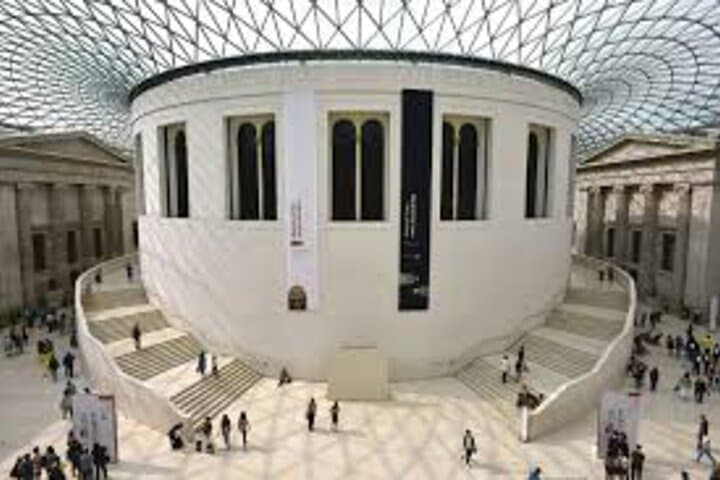
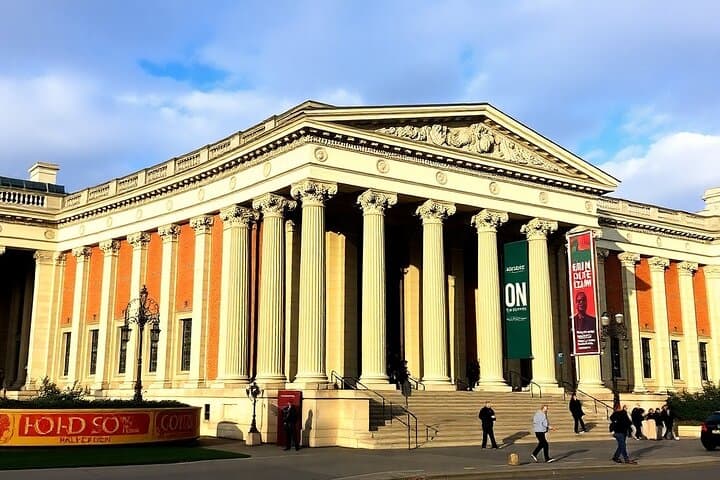
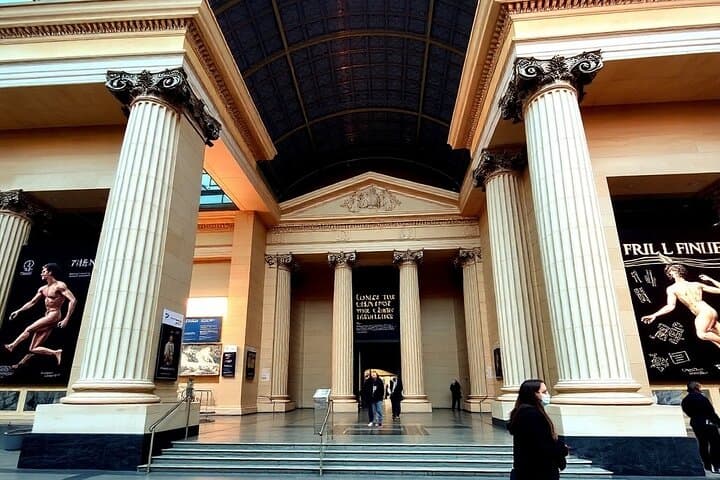
You step off the bustle of Great Russell Street into a cool, echoing court of stone and glass—the British Museum’s covered Great Court opens like a public living room where history takes up comfortable residence. A guide waits near Starbucks across from the main entrance, a small group assembled for two hours that will move deliberately through rooms that map the rise of cities, empires, and written language.
You step off the bustle of Great Russell Street into a cool, echoing court of stone and glass—the British Museum’s covered Great Court opens like a public living room where history takes up comfortable residence. A guide waits near Starbucks across from the main entrance, a small group assembled for two hours that will move deliberately through rooms that map the rise of cities, empires, and written language.
The museum itself dates to 1753, founded from Sir Hans Sloane’s collection, and occupies the footprint of earlier Montagu House. Its galleries collect objects from ancient Mesopotamia, Egypt, Greece and the Americas—each object a physical link to trade routes, conquests and cultural exchange. Geology and materials science make an appearance in the labels: basalt seals from the Fertile Crescent, limestone reliefs from Pharaonic quarries, and Parian marble carved into the Elgin Marbles that still provoke debates about provenance and repatriation.
Culturally, the building is a crossroads: school groups, independent travelers and specialists converge, and the guide’s role is to turn display cases into narratives—how the Rosetta Stone unlocked hieroglyphs, why the Mesopotamian cylinder seals mattered for identity.
Practical guidance: wear comfortable shoes and bring a small water bottle; the tour is paced but involves standing and short walks between rooms. Meet precisely at the Starbucks landmark; the tour is wheelchair accessible and conducted in English for groups up to ten. Photography is generally allowed without flash—check signage for restricted objects. Allocate extra time afterward to revisit highlights in the quieter galleries or the museum shop for specialized facsimiles.