THE ADVENTURE COLLECTIVE® · Independent discovery and booking for outdoor travel

Cover Málaga’s essential sights in two hours with a local guide: port promenade, Alcazaba, Roman theatre and La Manquita Cathedral. This easy urban walk combines concise history, coastal views and practical local tips for first-time visitors.
Cover Málaga’s essential sights in two hours with a local guide: port promenade, Alcazaba, Roman theatre and La Manquita Cathedral. This easy urban walk combines concise history, coastal views and practical local tips for first-time visitors.
The guide steps away from the harbor and the city opens like a map under your feet: sea air pushes you along the port promenade, tiled facades catch the light, and the Alcazaba climbs the hill above, watching centuries pass.
Verified experiences and guided adventures in the surrounding area.
Operated by Guydeez · Malaga, Andalucía
The guide steps away from the harbor and the city opens like a map under your feet: sea air pushes you along the port promenade, tiled facades catch the light, and the Alcazaba climbs the hill above, watching centuries pass.
This two-hour guided walking tour threads through Málaga’s layered history — founded by Phoenicians, reshaped by Romans and Moors, then reborn in modern Spain. Geology is apparent in the city’s stones: limestone and sandstone walls hold Roman theater terraces and Moorish fortress arches, while the nearby Mediterranean defines a coastal climate of bright summers and mild winters that shapes daily life here.
Culture in Málaga is immediate: cafés pulse with chatter, markets spill citrus and olives, and art appears in carved capitals and small galleries—an accessible city that wears history openly. Local insights include the compact scale of the historic center, why La Manquita (the Cathedral) is unfinished on one tower, and how the Alcazaba and Roman Theatre sit in deliberate dialogue.
Practical guidance: this is a mostly flat, urban route with short climbs up to viewpoints; expect about 1.5–2 miles of walking on paved streets and some steps. Wear supportive shoes, protect against sun on summer days, and bring a small bottle of water. Guides can customize pace for families or fitness options and can advise on buying entry tickets for monuments after the walk.
Plan to start early for cooler temperatures and clearer views of the bay; arriving hungry rewards you with market tapas and a stronger sense of Málaga’s everyday rhythm.
easy.
2 hours.
Suitable for most fitness levels; participants should be able to walk 1.5–2 miles and handle short flights of steps.
Yes — the route and many streets are wheelchair accessible, but some viewpoints around the Alcazaba and Roman Theatre involve steps; notify the operator to plan the best route.
No — the walking tour focuses on outside views and commentary; guides can help book or advise on buying tickets for interior visits separately.
Private or small-group options are available; the group option usually requires a minimum of two participants.
Guides are offered in English, Spanish, French and Italian according to the listing and availability.
Málaga dates back to Phoenician settlement (around 8th century BCE) and later became a Roman and Moorish stronghold; the city’s monuments reflect this layered past.
Visitors are encouraged to reduce waste, stick to marked paths around archaeological sites, and support local businesses to keep economic benefits in the community.
Guydeez operates guided outdoor trips and adventures with an emphasis on safety, stewardship, and memorable experiences.

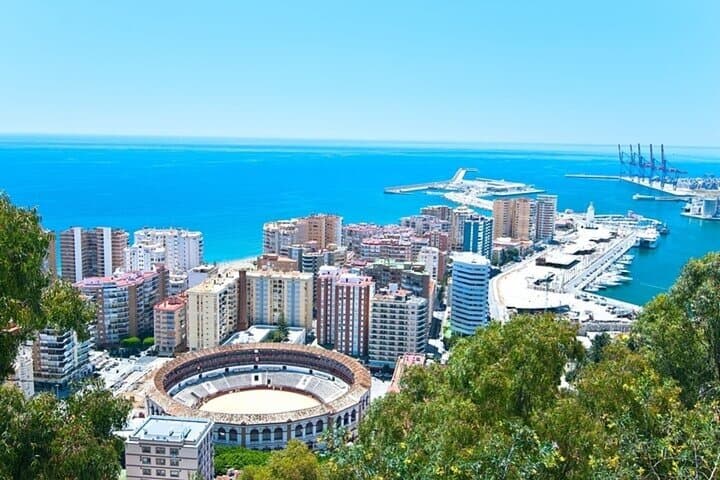
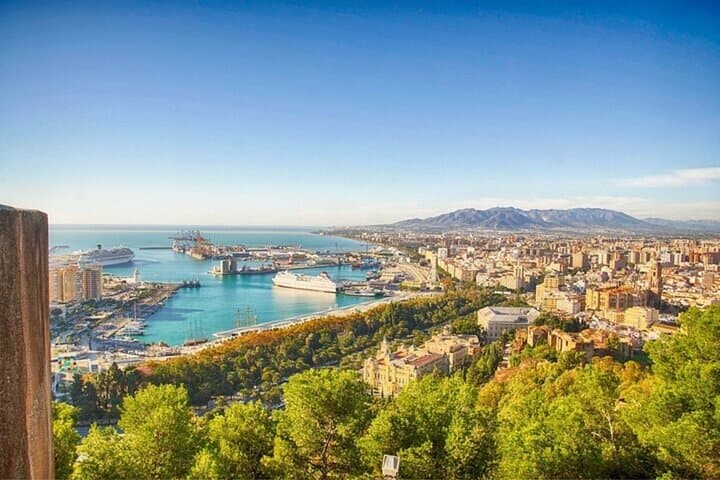

The guide steps away from the harbor and the city opens like a map under your feet: sea air pushes you along the port promenade, tiled facades catch the light, and the Alcazaba climbs the hill above, watching centuries pass.
The guide steps away from the harbor and the city opens like a map under your feet: sea air pushes you along the port promenade, tiled facades catch the light, and the Alcazaba climbs the hill above, watching centuries pass.
This two-hour guided walking tour threads through Málaga’s layered history — founded by Phoenicians, reshaped by Romans and Moors, then reborn in modern Spain. Geology is apparent in the city’s stones: limestone and sandstone walls hold Roman theater terraces and Moorish fortress arches, while the nearby Mediterranean defines a coastal climate of bright summers and mild winters that shapes daily life here.
Culture in Málaga is immediate: cafés pulse with chatter, markets spill citrus and olives, and art appears in carved capitals and small galleries—an accessible city that wears history openly. Local insights include the compact scale of the historic center, why La Manquita (the Cathedral) is unfinished on one tower, and how the Alcazaba and Roman Theatre sit in deliberate dialogue.
Practical guidance: this is a mostly flat, urban route with short climbs up to viewpoints; expect about 1.5–2 miles of walking on paved streets and some steps. Wear supportive shoes, protect against sun on summer days, and bring a small bottle of water. Guides can customize pace for families or fitness options and can advise on buying entry tickets for monuments after the walk.
Plan to start early for cooler temperatures and clearer views of the bay; arriving hungry rewards you with market tapas and a stronger sense of Málaga’s everyday rhythm.