THE ADVENTURE COLLECTIVE® · Independent discovery and booking for outdoor travel

Drive over the High Atlas, visit UNESCO-listed Aït Benhaddou, then ride camels into the Zagora dunes for a night under the stars. This two-day tour blends mountain vistas, oasis culture, and an accessible Sahara experience.
Drive over the High Atlas, visit UNESCO-listed Aït Benhaddou, then ride camels into the Zagora dunes for a night under the stars. This two-day tour blends mountain vistas, oasis culture, and an accessible Sahara experience.
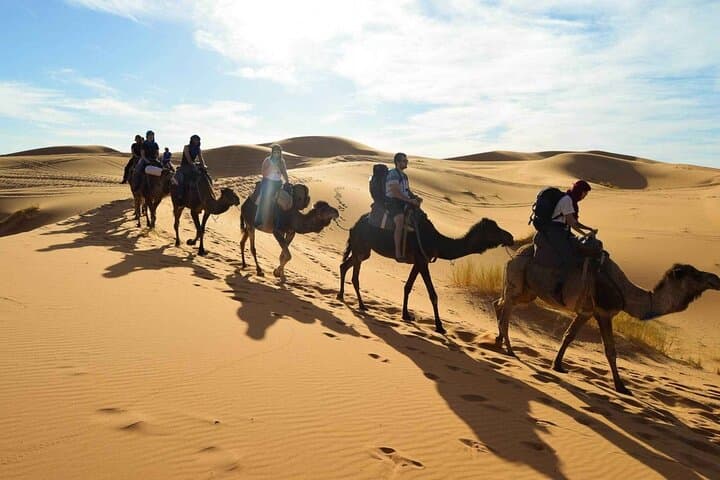
The sun slides down behind low dunes as your convoy slows on a red ribbon of road — ochre plains on one side, the High Atlas serrated against the sky on the other. You arrive in Zagora at the threshold of the Sahara, swap the air-conditioned van for a camel's sway, and follow a path that ends at a camp where drums mark the night.
Verified experiences and guided adventures in the surrounding area.
Operated by Morocco Meeting tours · Zagora, Drâa-Tafilalet
The sun slides down behind low dunes as your convoy slows on a red ribbon of road — ochre plains on one side, the High Atlas serrated against the sky on the other. You arrive in Zagora at the threshold of the Sahara, swap the air-conditioned van for a camel's sway, and follow a path that ends at a camp where drums mark the night.
This route threads centuries of trade and culture: kasbahs like Aït Benhaddou stand where mud-brick towers once watched caravans cross the Draa Valley. Geologically, the landscape is a meeting of folded Atlas ranges and alluvial plains feeding palm groves; wind carves the dunes that frame your desert camp. Local Amazigh (Berber) communities maintain pottery and architecture traditions visible in small towns along the way.
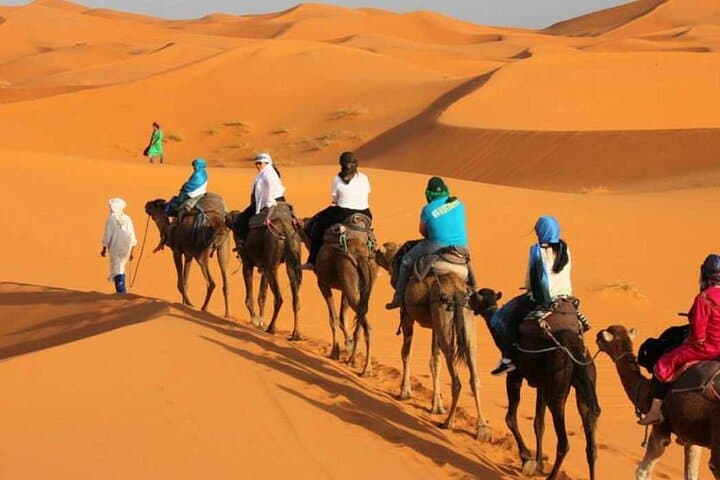
Expect practical rhythms: long, comfortable driving through mountain passes and valley oases, a 1–2 hour camel trek at sunset and sunrise, and a night in a tented camp on packed sand. Mornings are cool, afternoons can be hot; sandstone and sand demand sun protection and steady footing.
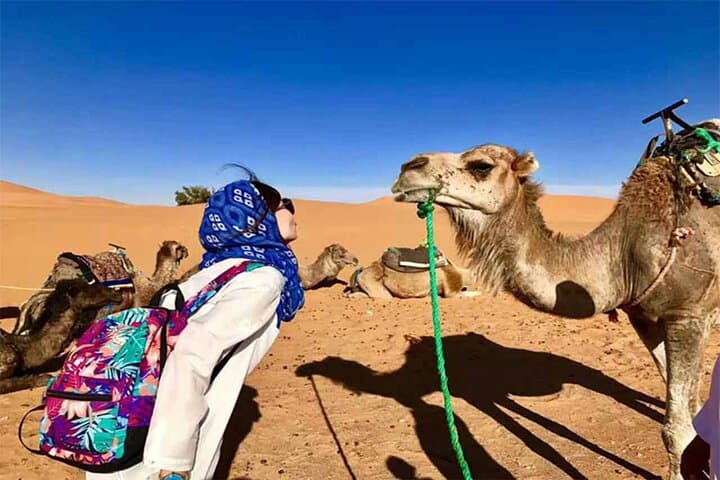
Bring a small daypack, hydrate frequently between stops, and pace yourself during camel rides — they are steady but unfamiliar. Photography windows include the kasbah at mid-day and desert light at dawn and dusk. The tour is ideal for travelers who want a compact, accessible Sahara experience with cultural stops and minimal technical demands.
easy.
2 days.
Suitable for most fitness levels; requires mobility for short walks and mounting camels
Typical camel transfer to the dune camp is about 1–2 hours, timed to reach the camp before sunset.
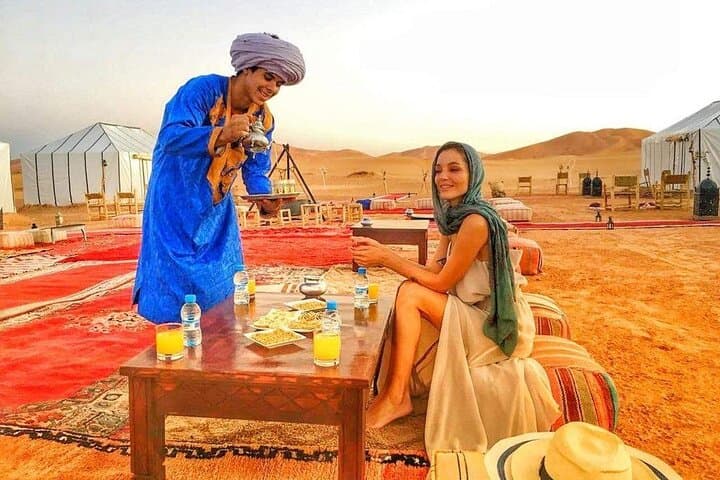
Dinner on night one and breakfast both mornings are included, with local Berber dishes in the camp and lunches during stops.
Accommodation is a traditional desert camp setup with individual or shared tents; amenities are simple but clean, designed for comfort rather than luxury.
Yes—this tour is family-friendly, but children should be comfortable with long drives and camel rides; check age/birthdate requirements at booking.
The Draa Valley was historically a caravan corridor linking sub-Saharan trade routes to North African markets; mud-brick kasbahs grew where families controlled water and trade.
Water is scarce—avoid single-use plastics and respect local water limits; camps often use locally sourced fuel and encourage low-impact visits.
Morocco Meeting tours operates guided outdoor trips and adventures with an emphasis on safety, stewardship, and memorable experiences.
The sun slides down behind low dunes as your convoy slows on a red ribbon of road — ochre plains on one side, the High Atlas serrated against the sky on the other. You arrive in Zagora at the threshold of the Sahara, swap the air-conditioned van for a camel's sway, and follow a path that ends at a camp where drums mark the night.
The sun slides down behind low dunes as your convoy slows on a red ribbon of road — ochre plains on one side, the High Atlas serrated against the sky on the other. You arrive in Zagora at the threshold of the Sahara, swap the air-conditioned van for a camel's sway, and follow a path that ends at a camp where drums mark the night.
This route threads centuries of trade and culture: kasbahs like Aït Benhaddou stand where mud-brick towers once watched caravans cross the Draa Valley. Geologically, the landscape is a meeting of folded Atlas ranges and alluvial plains feeding palm groves; wind carves the dunes that frame your desert camp. Local Amazigh (Berber) communities maintain pottery and architecture traditions visible in small towns along the way.
Expect practical rhythms: long, comfortable driving through mountain passes and valley oases, a 1–2 hour camel trek at sunset and sunrise, and a night in a tented camp on packed sand. Mornings are cool, afternoons can be hot; sandstone and sand demand sun protection and steady footing.
Bring a small daypack, hydrate frequently between stops, and pace yourself during camel rides — they are steady but unfamiliar. Photography windows include the kasbah at mid-day and desert light at dawn and dusk. The tour is ideal for travelers who want a compact, accessible Sahara experience with cultural stops and minimal technical demands.