THE ADVENTURE COLLECTIVE® · Independent discovery and booking for outdoor travel

Walk Guayaquil’s waterfront, plazas and Santa Ana Hill with a local guide—visit Malecón 2000, Iguana Park and panoramic viewpoints while learning the city’s maritime past. Ideal for travelers who want compact history, easy urban wildlife encounters, and accessible routes.
Walk Guayaquil’s waterfront, plazas and Santa Ana Hill with a local guide—visit Malecón 2000, Iguana Park and panoramic viewpoints while learning the city’s maritime past. Ideal for travelers who want compact history, easy urban wildlife encounters, and accessible routes.
The riverfront sunlight hits the pavement as you step off the Malecón and into Guayaquil’s pulse: vendors calling out, the river daring you to look past the city’s edge, and stairways that lead up to Santa Ana Hill like a slow climb through time.
Verified experiences and guided adventures in the surrounding area.
Operated by Jefferson Berlin Salvatierra Valero · Guayaquil, Guayas
The riverfront sunlight hits the pavement as you step off the Malecón and into Guayaquil’s pulse: vendors calling out, the river daring you to look past the city’s edge, and stairways that lead up to Santa Ana Hill like a slow climb through time.
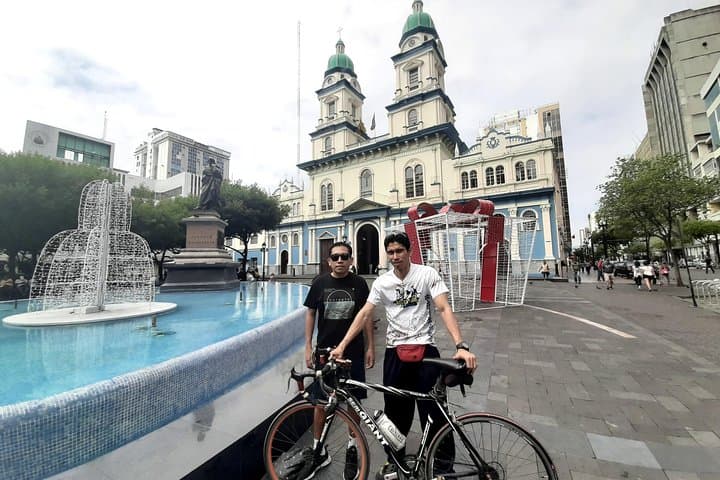
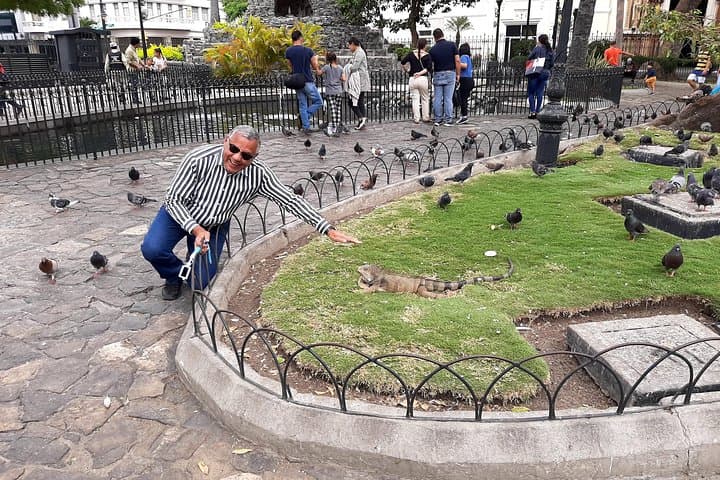
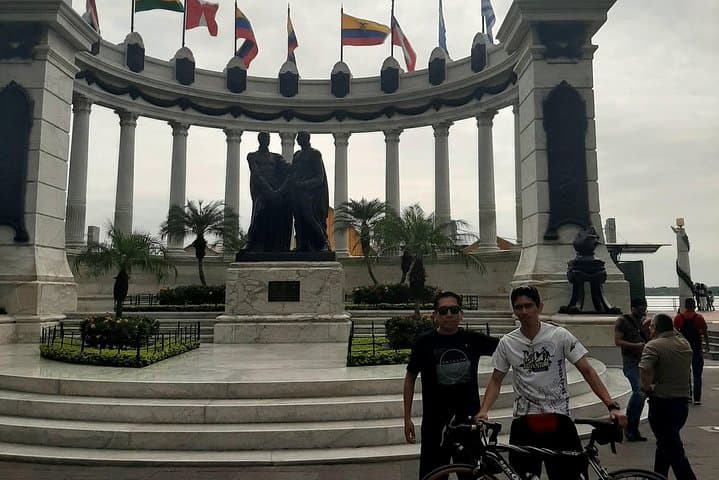
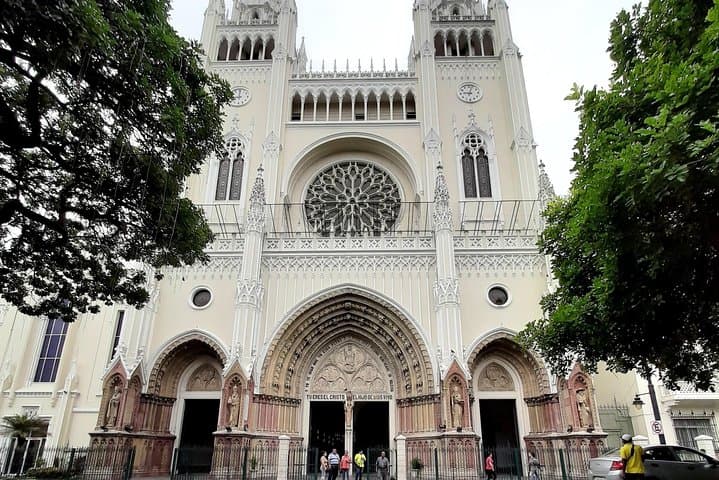
This shared walking tour threads together the port city’s colonial heart and modern waterfront. Begin at the Malecon 2000, a reclaimed riverfront promenade built on layered river sediment, then move to Plaza San Francisco and the Administration Plaza where 19th-century architecture meets municipal life. Seminario Plaza—known as Iguana Park—offers a rare urban wildlife encounter; the iguanas tolerate visitors, sunning themselves on stone and statue. Santa Ana Hill’s steps climb across brick lanes to panoramic views of the Guayas River and the steel-gray commerce beyond.
Guayaquil’s history is maritime and mercantile: a former Spanish colonial port that grew through cacao and shipping, rebuilt after major fires in the 19th century. The city’s geology is flat coastal plain interrupted by small volcanic and sedimentary rises like Santa Ana Hill. Local culture centers on seafood, river commerce, and neighborhood festivals that animate plazas in the evening.
Practical guidance: the route is 2–3 hours on mostly flat, paved surfaces with some steep stairs to Santa Ana Hill. Wear comfortable walking shoes, bring sun protection and a reusable water bottle. Guides typically include entrance logistics; tours are wheelchair-accessible up to certain points, but the hill requires stair navigation. Plan morning or late-afternoon start times to avoid midday heat and to catch the best light over the river.
easy.
2–3 hours.
Suitable for most fitness levels; participants should be comfortable walking 2–4 miles with some stairs.
The tour lasts about 2–3 hours and covers mainly flat, paved areas of the Malecón, plazas and a climb up Santa Ana Hill with several flights of stairs.
Yes—most of the route is stroller-accessible, but the stairs to Santa Ana Hill are not; consider this if you plan to reach the hilltop.
You can expect to see iguanas at Seminario Plaza (Iguana Park) and local birdlife along the riverfront, though sightings vary by season and time of day.
Local guides commonly speak Spanish and often basic English; the tour includes required entrances specified by the operator, such as certain plaza sites when applicable.
Guayaquil grew as a strategic Pacific port during the colonial and republican eras, rebuilt repeatedly after fires and floods which shaped its modern waterfront and plazas.
The Malecón redevelopment focused on riverfront restoration and public access; respect signage, avoid feeding wildlife, and use marked trash receptacles to minimize impact.
Jefferson Berlin Salvatierra Valero operates guided outdoor trips and adventures with an emphasis on safety, stewardship, and memorable experiences.
The riverfront sunlight hits the pavement as you step off the Malecón and into Guayaquil’s pulse: vendors calling out, the river daring you to look past the city’s edge, and stairways that lead up to Santa Ana Hill like a slow climb through time.
The riverfront sunlight hits the pavement as you step off the Malecón and into Guayaquil’s pulse: vendors calling out, the river daring you to look past the city’s edge, and stairways that lead up to Santa Ana Hill like a slow climb through time.
This shared walking tour threads together the port city’s colonial heart and modern waterfront. Begin at the Malecon 2000, a reclaimed riverfront promenade built on layered river sediment, then move to Plaza San Francisco and the Administration Plaza where 19th-century architecture meets municipal life. Seminario Plaza—known as Iguana Park—offers a rare urban wildlife encounter; the iguanas tolerate visitors, sunning themselves on stone and statue. Santa Ana Hill’s steps climb across brick lanes to panoramic views of the Guayas River and the steel-gray commerce beyond.
Guayaquil’s history is maritime and mercantile: a former Spanish colonial port that grew through cacao and shipping, rebuilt after major fires in the 19th century. The city’s geology is flat coastal plain interrupted by small volcanic and sedimentary rises like Santa Ana Hill. Local culture centers on seafood, river commerce, and neighborhood festivals that animate plazas in the evening.
Practical guidance: the route is 2–3 hours on mostly flat, paved surfaces with some steep stairs to Santa Ana Hill. Wear comfortable walking shoes, bring sun protection and a reusable water bottle. Guides typically include entrance logistics; tours are wheelchair-accessible up to certain points, but the hill requires stair navigation. Plan morning or late-afternoon start times to avoid midday heat and to catch the best light over the river.