THE ADVENTURE COLLECTIVE® · Independent discovery and booking for outdoor travel

Explore Guayaquil’s signature sights on a 3–4 hour private tour — from iguanas at Seminario Park to riverside promenades and panoramic views from Las Peñas. This route mixes architecture, local color and easy urban walking with an experienced guide.
Explore Guayaquil’s signature sights on a 3–4 hour private tour — from iguanas at Seminario Park to riverside promenades and panoramic views from Las Peñas. This route mixes architecture, local color and easy urban walking with an experienced guide.
You step out of an air‑conditioned vehicle onto warm stone and the chatter of the river — Guayas pushing past the Malecón as the city unfolds up Santa Ana Hill.
Verified experiences and guided adventures in the surrounding area.
Operated by PROTRIP · Guayaquil, Guayas
You step out of an air‑conditioned vehicle onto warm stone and the chatter of the river — Guayas pushing past the Malecón as the city unfolds up Santa Ana Hill.
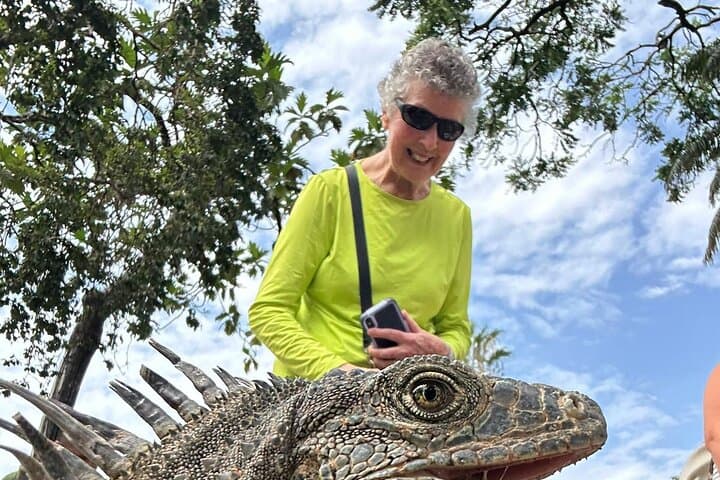
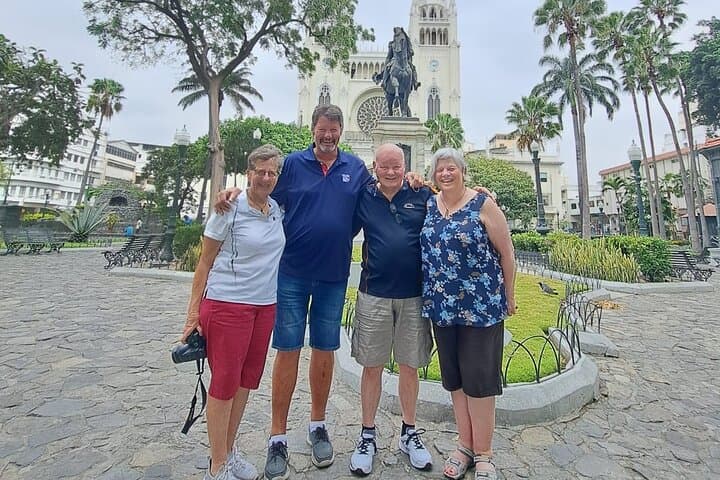
The four‑hour private route threads through Seminario Park (Iguana Park), where placid green iguanas patrol fountains and paths, then across Administration Square to the Municipal Palace with its neoclassical façades. The Metropolitan Cathedral follows: a neo‑Gothic interior of stained glass and high arches that offers a quiet contrast to the riverside bustle.
Guayaquil’s core grew as a Pacific port; its low, alluvial plain sits at the mouth of the Guayas River, shaped by tidal currents and mangrove systems. The Moorish Tower’s Mudejar details point to the city’s eclectic architectural past, while Malecón 2000 shows a modern civic reclamation — plazas, monuments and river views anchored by the Hemicycle of the Rotonda.
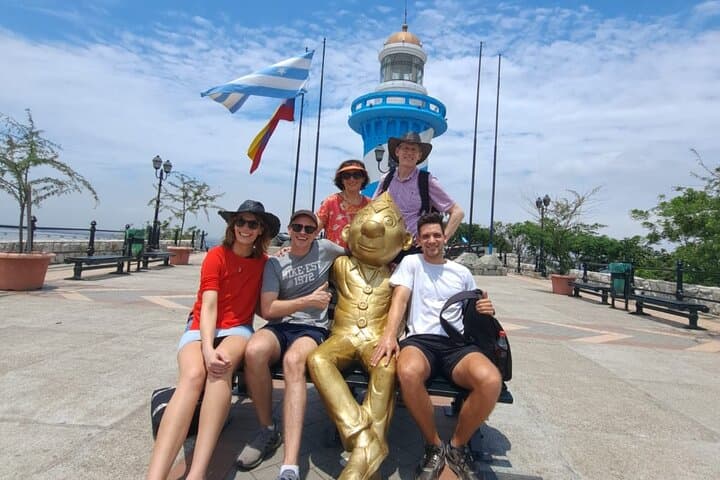
Las Peñas is the finale: cobbled alleys, painted colonial houses and a stack of steps up Santa Ana Hill with interval lookout points that frame the river and the city’s patchwork roofs.
Practical note: expect 3–4 hours on foot with short drives between stops; bring sun protection, steady shoes for cobblestones and a reusable water bottle. Morning or late afternoon visits dodge the strongest sun and give the best light for photography.
A specialized guide handles logistics and local history, so you can focus on neighborhoods, architecture and the small wildlife that gives this port city its character.
moderate.
3–4 hours.
Comfortable walking ability for repeated short stair climbs and up to a few miles of urban walking
The tour lasts about 3–4 hours with an easy to moderate walking pace, including short drives between major stops.
Yes — the tour notes say infants and small children can use strollers, but expect stairs in Las Peñas where a carrier is more practical.
This private tour includes a specialized guide and private transport; most city landmarks visited are public spaces and do not require admission, while food and optional museum fees are extra.
Photography is allowed in outdoor areas like Seminario Park; for churches, respect signs and services — many allow non‑flash photography but check with your guide for any local restrictions.
Guayaquil developed as Ecuador’s principal Pacific port; its growth across the Guayas estuary shaped its urban layout, from colonial Las Peñas to modern riverfront developments.
Riverfront improvements like Malecón 2000 aim to balance tourism and green space, and visitors are encouraged to avoid feeding wildlife and to dispose of waste in designated bins.
PROTRIP operates guided outdoor trips and adventures with an emphasis on safety, stewardship, and memorable experiences.
You step out of an air‑conditioned vehicle onto warm stone and the chatter of the river — Guayas pushing past the Malecón as the city unfolds up Santa Ana Hill.
You step out of an air‑conditioned vehicle onto warm stone and the chatter of the river — Guayas pushing past the Malecón as the city unfolds up Santa Ana Hill.
The four‑hour private route threads through Seminario Park (Iguana Park), where placid green iguanas patrol fountains and paths, then across Administration Square to the Municipal Palace with its neoclassical façades. The Metropolitan Cathedral follows: a neo‑Gothic interior of stained glass and high arches that offers a quiet contrast to the riverside bustle.
Guayaquil’s core grew as a Pacific port; its low, alluvial plain sits at the mouth of the Guayas River, shaped by tidal currents and mangrove systems. The Moorish Tower’s Mudejar details point to the city’s eclectic architectural past, while Malecón 2000 shows a modern civic reclamation — plazas, monuments and river views anchored by the Hemicycle of the Rotonda.
Las Peñas is the finale: cobbled alleys, painted colonial houses and a stack of steps up Santa Ana Hill with interval lookout points that frame the river and the city’s patchwork roofs.
Practical note: expect 3–4 hours on foot with short drives between stops; bring sun protection, steady shoes for cobblestones and a reusable water bottle. Morning or late afternoon visits dodge the strongest sun and give the best light for photography.
A specialized guide handles logistics and local history, so you can focus on neighborhoods, architecture and the small wildlife that gives this port city its character.