THE ADVENTURE COLLECTIVE® · Independent discovery and booking for outdoor travel

Head to the Mekong region for a targeted outing after Mekong catfish and Siamese carp—heavy tackle, local guidance, and a high chance of action. Read on for what to expect, how to prepare, and on-river etiquette.
Head to the Mekong region for a targeted outing after Mekong catfish and Siamese carp—heavy tackle, local guidance, and a high chance of action. Read on for what to expect, how to prepare, and on-river etiquette.
You step off the morning light onto a wide riverbank where the Mekong’s current seems to decide your pace — slow and deliberate in some runs, pushed into bright seams of movement elsewhere. The guide hands over heavy rods and braided lines; the first tug tells you this isn’t backyard bass.
Verified experiences and guided adventures in the surrounding area.
You step off the morning light onto a wide riverbank where the Mekong’s current seems to decide your pace — slow and deliberate in some runs, pushed into bright seams of movement elsewhere. The guide hands over heavy rods and braided lines; the first tug tells you this isn’t backyard bass.
The Mekong is an artery of Southeast Asia: a geological corridor carved by seasonal floods, carrying sediment and life from the Tibetan Plateau to the South China Sea. Fishing here targets two notable species—the large native Mekong catfish and the hard-fighting Siamese carp—fish with longstanding cultural value for river communities and local cuisine.
Local fishing operations blend contemporary tackle and traditional river knowledge. Expect practical instruction on heavy tackle, bait presentation, and safe landing of big fish; photos and video are usually included by the operator. Cultural context matters: riverside villages depend on seasonal runs, and many operators now emphasize selective harvesting and catch protocols to protect declining populations.
Practical guidance: this is a physically steady outing — long waits, strong pulls, and handling heavy fish. Wear non-slip footwear and sun-protective layers; bring extra water and motion-sickness remedies if you’re prone on boats. Plan for early starts to align with cooler hours and peak fish activity, and confirm catch policies in advance. The experience rewards patience: the river dares you, the current pushes you forward, and the moment a big carp or catfish breaks the surface is plenty of reason to make the trip.
moderate.
30–32 hours.
Good stamina for long waits, ability to lift and control heavy fish, and comfort with boat movement
Policies vary—confirm with the operator whether fish must be released, kept, or if there are size and species restrictions before you book.
Most guided trips provide heavy rods, reels, and bait; bring personal items like gloves, sunglasses, and rain gear.
Yes—guides provide instruction, but expect physical handling of big fish and long waiting periods; basic fitness helps.
Be prepared for strong fish pulls, slippery surfaces, and changing weather; operators should provide life vests and brief safety orientation.
The Mekong has shaped regional trade and settlement for centuries; its seasonal floods supported rice production and riverine livelihoods across Southeast Asia.
Many large river species are vulnerable from overfishing and habitat change; favor operators who practice selective harvest or catch-and-release and minimize riverbank disturbance.
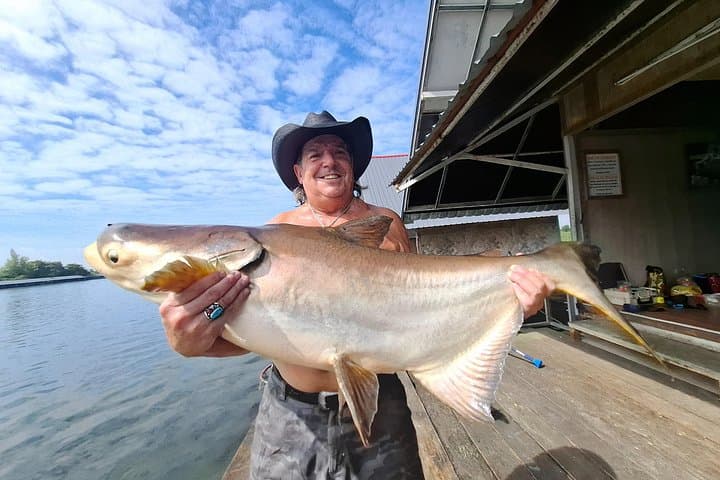
You step off the morning light onto a wide riverbank where the Mekong’s current seems to decide your pace — slow and deliberate in some runs, pushed into bright seams of movement elsewhere. The guide hands over heavy rods and braided lines; the first tug tells you this isn’t backyard bass.
You step off the morning light onto a wide riverbank where the Mekong’s current seems to decide your pace — slow and deliberate in some runs, pushed into bright seams of movement elsewhere. The guide hands over heavy rods and braided lines; the first tug tells you this isn’t backyard bass.
The Mekong is an artery of Southeast Asia: a geological corridor carved by seasonal floods, carrying sediment and life from the Tibetan Plateau to the South China Sea. Fishing here targets two notable species—the large native Mekong catfish and the hard-fighting Siamese carp—fish with longstanding cultural value for river communities and local cuisine.
Local fishing operations blend contemporary tackle and traditional river knowledge. Expect practical instruction on heavy tackle, bait presentation, and safe landing of big fish; photos and video are usually included by the operator. Cultural context matters: riverside villages depend on seasonal runs, and many operators now emphasize selective harvesting and catch protocols to protect declining populations.
Practical guidance: this is a physically steady outing — long waits, strong pulls, and handling heavy fish. Wear non-slip footwear and sun-protective layers; bring extra water and motion-sickness remedies if you’re prone on boats. Plan for early starts to align with cooler hours and peak fish activity, and confirm catch policies in advance. The experience rewards patience: the river dares you, the current pushes you forward, and the moment a big carp or catfish breaks the surface is plenty of reason to make the trip.