THE ADVENTURE COLLECTIVE® · Independent discovery and booking for outdoor travel

Learn the basics of riding and horse care in a one-hour, bilingual masterclass in Guanacaste. This practical, beginner-friendly experience teaches tack, posture, and equine body language on flat paddocks rooted in Costa Rica’s sabanero tradition.
Learn the basics of riding and horse care in a one-hour, bilingual masterclass in Guanacaste. This practical, beginner-friendly experience teaches tack, posture, and equine body language on flat paddocks rooted in Costa Rica’s sabanero tradition.
You step from the heat of the Guanacaste lowlands into the cool shade of the barn, hay dust motes drifting like slow-fireflies as a horse lifts its head to study you. The day begins with a guided walk through stalls where the rhythm of grooming and feeding sets the tempo—this is where connection is earned, not assumed.
Verified experiences and guided adventures in the surrounding area.
Operated by Finca DonTricia · Liberia, Guanacaste
You step from the heat of the Guanacaste lowlands into the cool shade of the barn, hay dust motes drifting like slow-fireflies as a horse lifts its head to study you. The day begins with a guided walk through stalls where the rhythm of grooming and feeding sets the tempo—this is where connection is earned, not assumed.
Guanacaste’s dry plains and volcanic soils shaped the work of the sabanero (Costa Rican cowboy), and local stables still teach riding with that practical heritage: balance, calm, and clear cues. Geologically, the region is defined by hardened lava flows and rolling savanna that open onto Pacific coastal plains; culturally, horsemanship here ties to cattle herding and festival traditions.
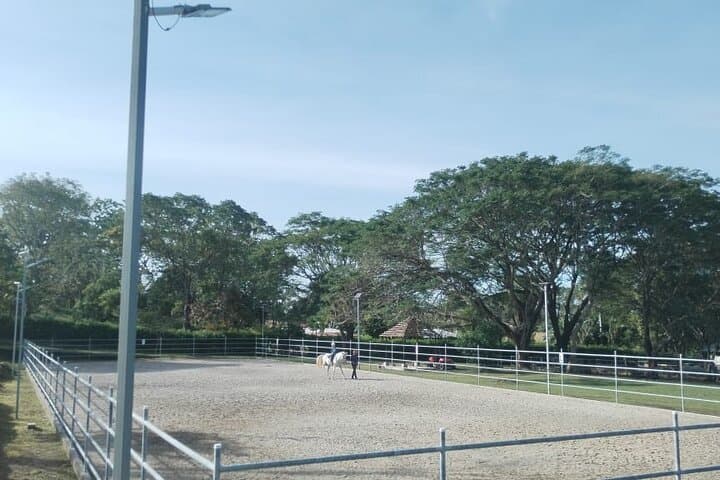
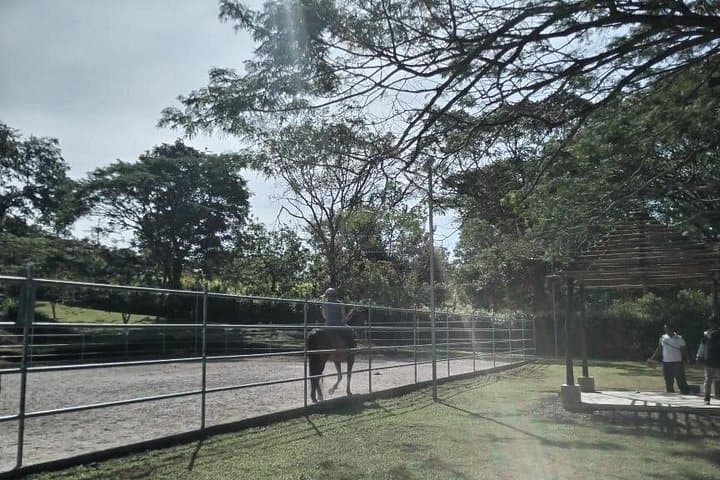
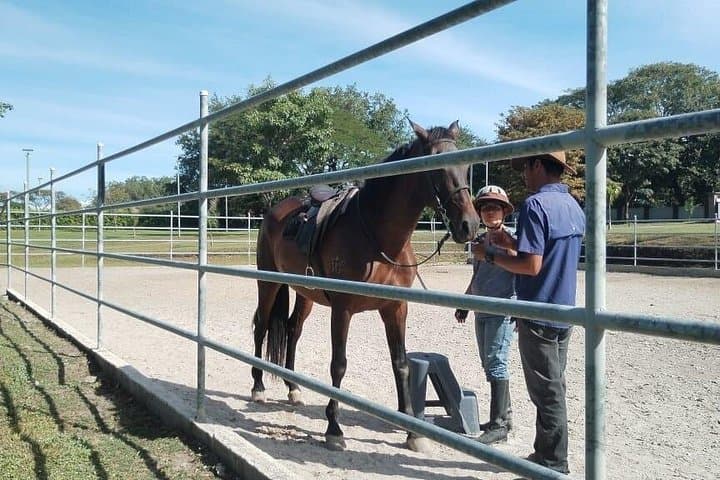
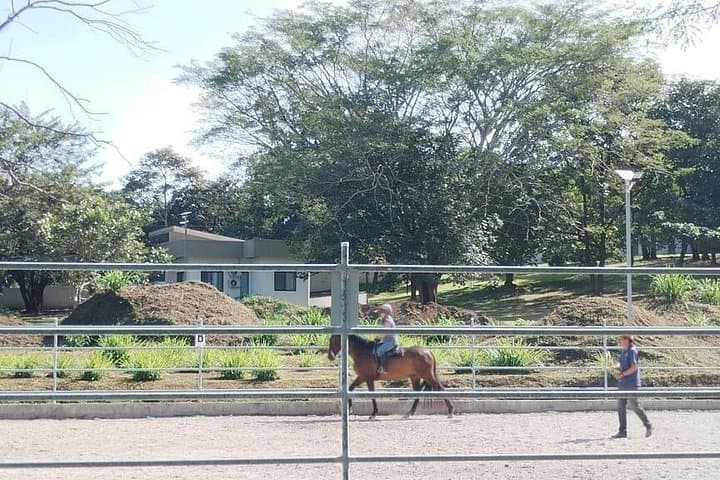
The one-hour masterclass focuses on basics: tack, posture, rein work, and reading equine body language. Instructors emphasize safety and trust-building—approaching, grooming, mounting, and simple guided rides under supervision. Expect gentle slopes and flat paddocks rather than steep trails; the experience trains control and confidence more than endurance.
Practical guidance: wear long pants and closed-toe shoes, bring sunscreen and water, and arrive 10–15 minutes early for the barn orientation. Lessons are bilingual and accessible to most fitness levels, but anyone with spinal, cardiac, or pregnancy concerns should skip mounting activities. Wheelchair access is noted for parts of the facility, though riding requires mobility.
By the end you'll have learned to listen to subtle cues—a flick of an ear, a weight shift—and perhaps walked away with a clearer sense of how rider and horse negotiate the world together.
easy.
1 hour.
Suitable for most activity levels; basic mobility and ability to follow safety instructions required
No—this is an introductory class designed for beginners; instructors teach basic posture, rein use, and mounting in a controlled environment.
Yes, the listing includes a bilingual guide and instructor to accommodate English and Spanish speakers.
The facility notes stroller accessibility, but check age or weight limits with the operator—this session is geared toward individual bookings and safety standards.
Full refunds are available if you cancel at least 24 hours before the scheduled start; the operator may cancel for bad weather.
Horsemanship in Guanacaste traces to 19th-century cattle ranching and the sabanero culture, where practical riding skills were essential for daily work and local festivals.
Respect pasturelands by staying on designated areas and following instructor guidance; many ranches practice rotational grazing to reduce erosion and protect native dry-forest patches.
Finca DonTricia operates guided outdoor trips and adventures with an emphasis on safety, stewardship, and memorable experiences.
You step from the heat of the Guanacaste lowlands into the cool shade of the barn, hay dust motes drifting like slow-fireflies as a horse lifts its head to study you. The day begins with a guided walk through stalls where the rhythm of grooming and feeding sets the tempo—this is where connection is earned, not assumed.
You step from the heat of the Guanacaste lowlands into the cool shade of the barn, hay dust motes drifting like slow-fireflies as a horse lifts its head to study you. The day begins with a guided walk through stalls where the rhythm of grooming and feeding sets the tempo—this is where connection is earned, not assumed.
Guanacaste’s dry plains and volcanic soils shaped the work of the sabanero (Costa Rican cowboy), and local stables still teach riding with that practical heritage: balance, calm, and clear cues. Geologically, the region is defined by hardened lava flows and rolling savanna that open onto Pacific coastal plains; culturally, horsemanship here ties to cattle herding and festival traditions.
The one-hour masterclass focuses on basics: tack, posture, rein work, and reading equine body language. Instructors emphasize safety and trust-building—approaching, grooming, mounting, and simple guided rides under supervision. Expect gentle slopes and flat paddocks rather than steep trails; the experience trains control and confidence more than endurance.
Practical guidance: wear long pants and closed-toe shoes, bring sunscreen and water, and arrive 10–15 minutes early for the barn orientation. Lessons are bilingual and accessible to most fitness levels, but anyone with spinal, cardiac, or pregnancy concerns should skip mounting activities. Wheelchair access is noted for parts of the facility, though riding requires mobility.
By the end you'll have learned to listen to subtle cues—a flick of an ear, a weight shift—and perhaps walked away with a clearer sense of how rider and horse negotiate the world together.