THE ADVENTURE COLLECTIVE® · Independent discovery and booking for outdoor travel

Drive inland from Alicante into limestone ridges to visit two of Costa Blanca's most photogenic villages. Spend a half-day exploring Guadalest's cliff-top castle and Altea's blue-domed old town while enjoying panoramic reservoir views and craft-filled streets.
Drive inland from Alicante into limestone ridges to visit two of Costa Blanca's most photogenic villages. Spend a half-day exploring Guadalest's cliff-top castle and Altea's blue-domed old town while enjoying panoramic reservoir views and craft-filled streets.
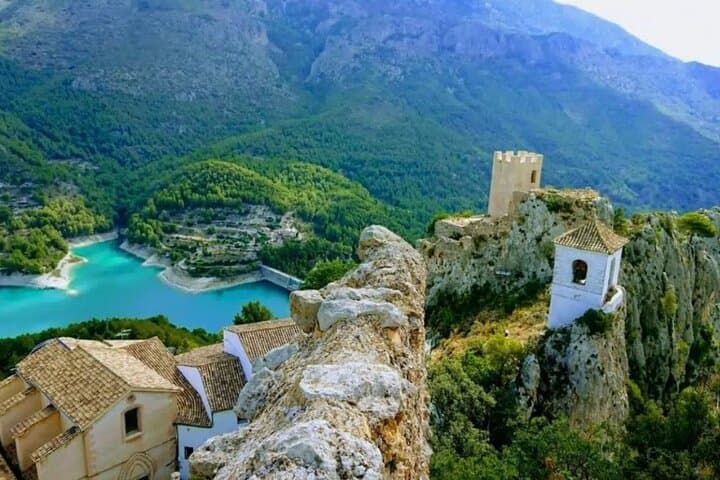
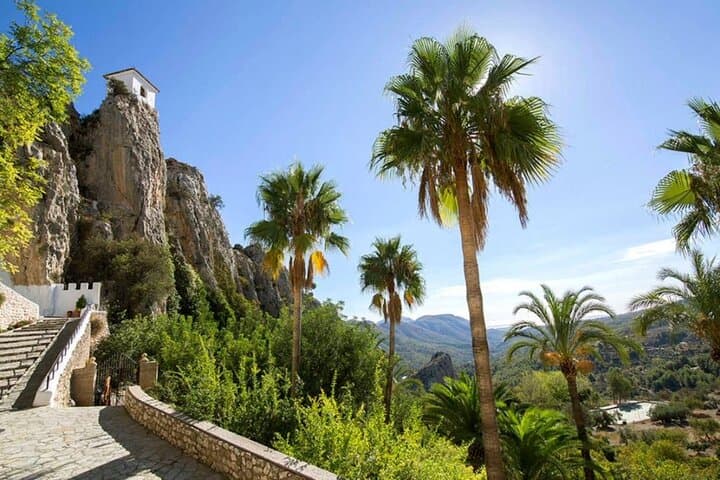
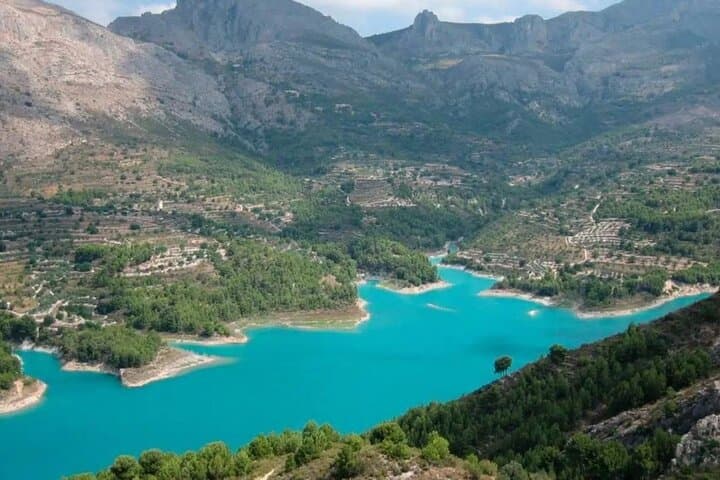
You pull away from Alicante's harbor and the coast slides behind you: a low-slung van threading a ribbon of road up into the limestone teeth of the Marina Baixa. In under an hour the air sharpens and a tunnel carved into rock announces Guadalest — a tiny medieval hamlet perched above a turquoise reservoir. Stone stairways and narrow alleys push you upward toward a ruined castle where the valley opens like a map beneath your feet.
Verified experiences and guided adventures in the surrounding area.
Operated by Paella Travel · Alicante, Alicante
You pull away from Alicante's harbor and the coast slides behind you: a low-slung van threading a ribbon of road up into the limestone teeth of the Marina Baixa. In under an hour the air sharpens and a tunnel carved into rock announces Guadalest — a tiny medieval hamlet perched above a turquoise reservoir. Stone stairways and narrow alleys push you upward toward a ruined castle where the valley opens like a map beneath your feet.
Guadalest's origin is medieval with clear Moorish and later Christian overlays; the castle and its museums give a compact history of frontier life in these mountains. Geologically, the area is limestone karst—jagged ridgelines, caves and abrupt cliffs formed by uplift and erosion, drained historically by the Guadalest river and trapped today behind a striking dam.
An hour and a half of self-guided wandering is enough to see viewpoints, small craft shops and a museum or two before the van drops you at Altea la Vella. There the rhythm changes: whitewashed houses, blue-domed church spires, narrow terraces and an artist community clustered around plazas and gallery storefronts.
Practical guide: the tour runs about 4–5 hours with roughly 90 minutes in each village; wear comfortable walking shoes for cobbles and steps, bring sun protection and water, and plan for uneven surfaces and short steep climbs. Photography is excellent in late afternoon light but mornings avoid crowds. The tour is private, suitable for most fitness levels, and does not include paid museum admissions—budget a small amount if you plan to enter exhibits.
easy.
4–5 hours.
Light walking ability; able to manage short uphill sections and cobbled streets.
No—this private tour provides transport and time to explore but paid admissions to museums or monuments are not included.
Each stop involves 60–90 minutes of self-guided walking on cobbles and steps; it’s suitable for most fitness levels but includes uneven ground.
Yes—the tour offers private transportation and collection from a designated pickup point in Alicante as listed when booking.
Yes—families and older travelers can enjoy the tour, but expect limited mobility in steep lanes; notify your operator of special needs when booking.
Guadalest developed as a strategic medieval stronghold with Moorish and later Christian layers; Altea has long been a fishing and artist community on the Costa Blanca.
The region balances tourism with fragile limestone ecosystems—stick to paths, avoid littering and support local businesses that follow sustainable practices.
Paella Travel operates guided outdoor trips and adventures with an emphasis on safety, stewardship, and memorable experiences.

You pull away from Alicante's harbor and the coast slides behind you: a low-slung van threading a ribbon of road up into the limestone teeth of the Marina Baixa. In under an hour the air sharpens and a tunnel carved into rock announces Guadalest — a tiny medieval hamlet perched above a turquoise reservoir. Stone stairways and narrow alleys push you upward toward a ruined castle where the valley opens like a map beneath your feet.
You pull away from Alicante's harbor and the coast slides behind you: a low-slung van threading a ribbon of road up into the limestone teeth of the Marina Baixa. In under an hour the air sharpens and a tunnel carved into rock announces Guadalest — a tiny medieval hamlet perched above a turquoise reservoir. Stone stairways and narrow alleys push you upward toward a ruined castle where the valley opens like a map beneath your feet.
Guadalest's origin is medieval with clear Moorish and later Christian overlays; the castle and its museums give a compact history of frontier life in these mountains. Geologically, the area is limestone karst—jagged ridgelines, caves and abrupt cliffs formed by uplift and erosion, drained historically by the Guadalest river and trapped today behind a striking dam.
An hour and a half of self-guided wandering is enough to see viewpoints, small craft shops and a museum or two before the van drops you at Altea la Vella. There the rhythm changes: whitewashed houses, blue-domed church spires, narrow terraces and an artist community clustered around plazas and gallery storefronts.
Practical guide: the tour runs about 4–5 hours with roughly 90 minutes in each village; wear comfortable walking shoes for cobbles and steps, bring sun protection and water, and plan for uneven surfaces and short steep climbs. Photography is excellent in late afternoon light but mornings avoid crowds. The tour is private, suitable for most fitness levels, and does not include paid museum admissions—budget a small amount if you plan to enter exhibits.