THE ADVENTURE COLLECTIVE® · Independent discovery and booking for outdoor travel

Follow Akerselva through Grünerløkka and experience Oslo’s bohemian side: street art, vintage shops, riverside cafés and a food hall tasting stop. This two-hour walking tour mixes urban history with local flavors and practical tips for getting the most out of Løkka.
Follow Akerselva through Grünerløkka and experience Oslo’s bohemian side: street art, vintage shops, riverside cafés and a food hall tasting stop. This two-hour walking tour mixes urban history with local flavors and practical tips for getting the most out of Løkka.
You step off the tram and the Akerselva river greets you, narrow and restless, daring you to follow its line of iron bridges, small waterfalls and factory façades turned cafés. Grünerløkka opens with the sound of bicycles, the smell of brewing coffee and mural-covered brick that tells its working-class story in color.
Verified experiences and guided adventures in the surrounding area.
Operated by Alla Kaleis · Oslo, Oslo
You step off the tram and the Akerselva river greets you, narrow and restless, daring you to follow its line of iron bridges, small waterfalls and factory façades turned cafés. Grünerløkka opens with the sound of bicycles, the smell of brewing coffee and mural-covered brick that tells its working-class story in color.
Once a 19th-century industrial quarter, Grünerløkka was remade from mills and warehouses into a neighborhood of craftsmen, vintage shops and food halls. The river itself traces a glacial lowland carved at the end of the last ice age; today its falls and canals are urban landmarks that powered Oslo’s growth.
Culture here is tactile: street art that argues with history, workshops where leather is still stitched by hand, and Mathallen’s tasting counters serving brown cheeses and waffles beside Nordic charcuterie. The route passes Old Aker Church and Our Saviour’s Memorial Cemetery—sites that hint at Oslo’s deeper past—while Hausmania and Birkelunden park showcase the area’s alternative scene.
Practical side: this is an easy, mostly flat urban walk of about 2–2.5 hours with short detours for shopping or sampling. Footwear should be comfortable for cobbles and river paths; weather can change fast, so layer and carry a light rain shell. Public transport (tram/bus) drops you at multiple access points, and many spots accept cards; have small cash for market vendors. Peak life is late spring through early autumn—plan mornings for quieter streets or early evenings for lively cafés. Respect private courtyards and stay on marked paths along the river to protect riparian plants.
easy.
2–2.5 hours.
Suitable for most fitness levels; requires basic mobility for short steps and cobbled surfaces
The itinerary runs about 135 minutes with mostly flat, urban walking and short stops; expect gentle pace with options to linger at cafés or shops.
Many streets and riverfront paths are wheelchair friendly and the tour notes wheelchair accessibility, though some older cobbles and bridges may be uneven—check with operator for specific access details.
The itinerary may include a stop at Mathallen with a chance to sample Norwegian specialties, but specifics can vary—confirm inclusion when booking.
Late spring through early autumn offers the liveliest street life and outdoor seating; winter is quieter but atmospheric if you dress warmly.
Grünerløkka grew from 19th-century mills and factories into a working-class district before becoming an artistic hub in the late 20th century.
Stay on paths along the river to protect riparian vegetation, bring reusable containers when sampling food, and support independent shops to help sustain the neighborhood economy.
Alla Kaleis operates guided outdoor trips and adventures with an emphasis on safety, stewardship, and memorable experiences.

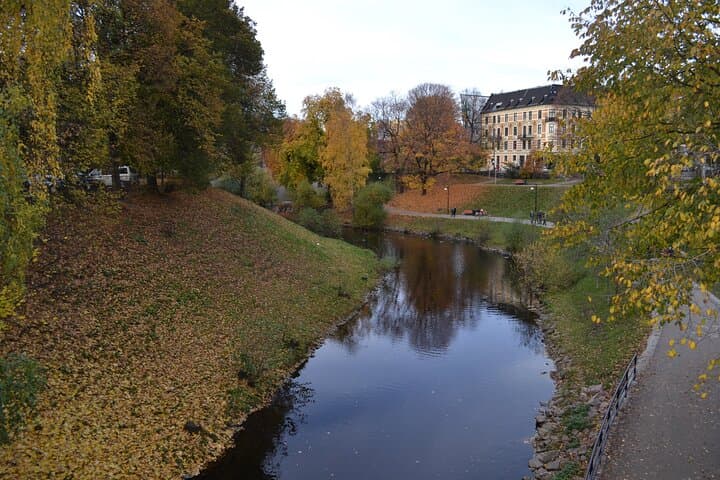
You step off the tram and the Akerselva river greets you, narrow and restless, daring you to follow its line of iron bridges, small waterfalls and factory façades turned cafés. Grünerløkka opens with the sound of bicycles, the smell of brewing coffee and mural-covered brick that tells its working-class story in color.
You step off the tram and the Akerselva river greets you, narrow and restless, daring you to follow its line of iron bridges, small waterfalls and factory façades turned cafés. Grünerløkka opens with the sound of bicycles, the smell of brewing coffee and mural-covered brick that tells its working-class story in color.
Once a 19th-century industrial quarter, Grünerløkka was remade from mills and warehouses into a neighborhood of craftsmen, vintage shops and food halls. The river itself traces a glacial lowland carved at the end of the last ice age; today its falls and canals are urban landmarks that powered Oslo’s growth.
Culture here is tactile: street art that argues with history, workshops where leather is still stitched by hand, and Mathallen’s tasting counters serving brown cheeses and waffles beside Nordic charcuterie. The route passes Old Aker Church and Our Saviour’s Memorial Cemetery—sites that hint at Oslo’s deeper past—while Hausmania and Birkelunden park showcase the area’s alternative scene.
Practical side: this is an easy, mostly flat urban walk of about 2–2.5 hours with short detours for shopping or sampling. Footwear should be comfortable for cobbles and river paths; weather can change fast, so layer and carry a light rain shell. Public transport (tram/bus) drops you at multiple access points, and many spots accept cards; have small cash for market vendors. Peak life is late spring through early autumn—plan mornings for quieter streets or early evenings for lively cafés. Respect private courtyards and stay on marked paths along the river to protect riparian plants.