THE ADVENTURE COLLECTIVE® · Independent discovery and booking for outdoor travel

Watch the Great Migration test the Grumeti River from the comfort of luxury tented lodges. This eight-day private safari (May–July) pairs high-probability wildlife viewing with curated service across Tarangire, Serengeti, and Ngorongoro.
Watch the Great Migration test the Grumeti River from the comfort of luxury tented lodges. This eight-day private safari (May–July) pairs high-probability wildlife viewing with curated service across Tarangire, Serengeti, and Ngorongoro.
The Land Rover eases to a stop and the plains open like a stage. Dust hangs low, the air warmed by the afternoon sun, and a ragged river of wildebeest pushes toward the Grumeti’s dark water where crocodiles wait. From a raised veranda at a tented lodge, the plain looks endless—rolling grass, scattered acacia, and a horizon that refuses to quit.
Verified experiences and guided adventures in the surrounding area.
Operated by Gosheni Safaris (T) Limited · Arusha, Arusha Region
The Land Rover eases to a stop and the plains open like a stage. Dust hangs low, the air warmed by the afternoon sun, and a ragged river of wildebeest pushes toward the Grumeti’s dark water where crocodiles wait. From a raised veranda at a tented lodge, the plain looks endless—rolling grass, scattered acacia, and a horizon that refuses to quit.
This eight-day luxury circuit threads Tarangire, Lake Manyara, the Western Serengeti, and the Ngorongoro Crater. It’s designed around one headline act: the Grumeti River crossings, the pulse of the Great Migration between May and July. Private 4x4s, curated bush lunches, and high-end tented camps give travelers front-row seats without the crowds—an approach that balances adrenaline and comfort.
Geologically, the Serengeti and Ngorongoro lie on the East African Rift’s uplands. Soils alternate between volcanic highlands and sandy plains, shaping the seasonal grass waves that drive herbivore movements. Human history here is intimate and local: Maasai pastoralists have shared and managed these lands for generations, and conservation partnerships with local communities are a central part of how the parks function today.
Days begin early—dawn game drives when predators are active and dust is a fine golden mist—and end with sundowners on kopjes and meals served under starlight. The itinerary moves from Tarangire’s baobab-studded avenues and elephant herds, through Lake Manyara’s forest and flamingo fringe, out across the Grumeti’s dramatic river corridor, and into the Seronera concentration zones before a final descent into Ngorongoro’s crater amphitheater.
Practicalities: arrivals are routed through Kilimanjaro International Airport with meet-and-greet service; domestic flights are included if routing requires them. Park entry and Ngorongoro fees are covered, and private transfers are part of the package. Expect dusty tracks and occasional bumpy drives—suspension-friendly vehicles and patient guides make the difference.
What to pack: layered clothes for hot days and cool nights, neutral colors that won’t spook wildlife, a good pair of binoculars and a telephoto lens for predator work, and insect repellent. Vaccinations and malaria prevention should be up-to-date; travel insurance and passport checks are essentials. Peak-season weather is dry and clear—ideal for crossings, but mornings and evenings are crisp.
Who this suits: travelers who want high-probability wildlife viewing without sacrificing comfort—photographers, small private groups, and anyone seeking curated wildlife encounters. For those chasing the migration, May through July delivers the most dramatic river action on the Grumeti, when the plains themselves seem to move.
easy.
8 days.
Suitable for most fitness levels; involves game drives with short, guided walks and occasional uneven ground at viewpoints.
May through July is the peak window for Grumeti crossings when herds move through the Western Corridor—book early as lodges sell out.
Yes—this itinerary includes park entry fees, Ngorongoro fees, domestic flights if required, and airport transfers as listed in the inclusions.
Luxury tented lodges here often have raised verandas and accessible paths; transportation and many accommodations are wheelchair-friendly but check specific room accessibility when booking.
Consult your travel clinic—yellow fever may be required depending on travel history, and malaria prophylaxis is strongly recommended for these regions.
Children can join but policies vary by lodge; the tour notes infant and child accommodations and requires infants to sit on laps—confirm age restrictions before booking.
A DSLR or mirrorless body with a 200–400mm lens is ideal; a solid zoom and a backup battery will cover most wildlife scenarios without lugging excessive gear.
The Serengeti ecosystem has supported seasonal pastoralists for centuries; the Great Migration is an ancient movement shaped by rains and grass growth.
Conservation here balances tourism revenue with community programs and anti-poaching efforts—choosing operators that invest in local projects helps protect the migration route.
Gosheni Safaris (T) Limited operates guided outdoor trips and adventures with an emphasis on safety, stewardship, and memorable experiences.
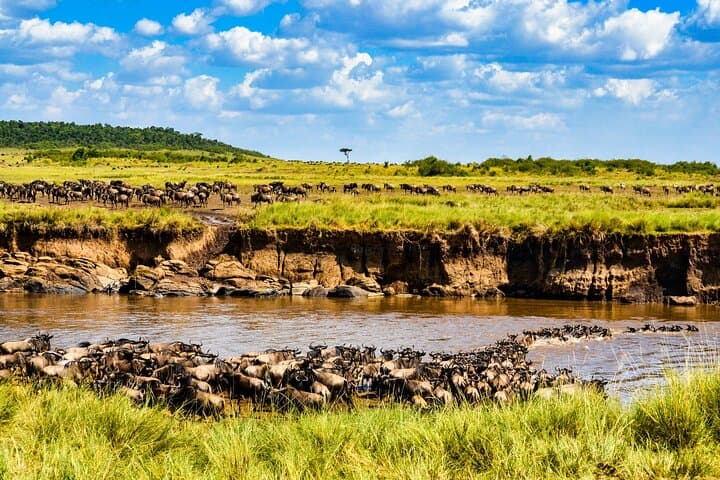
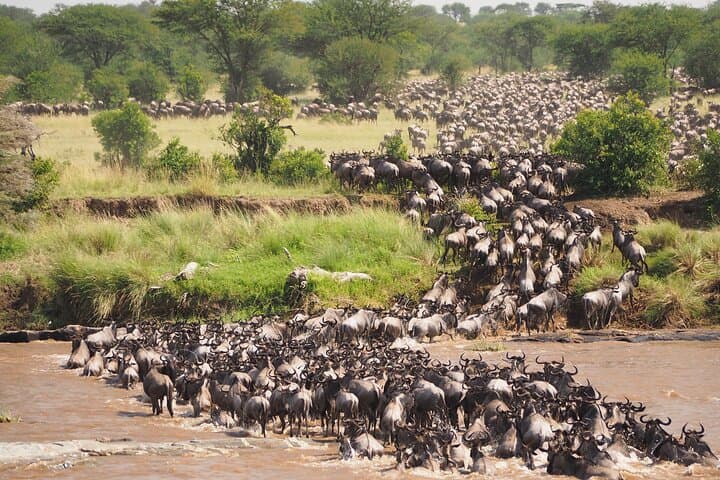
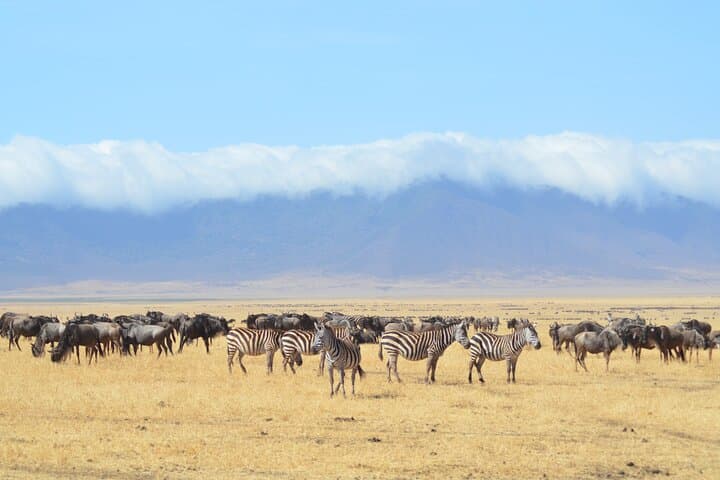
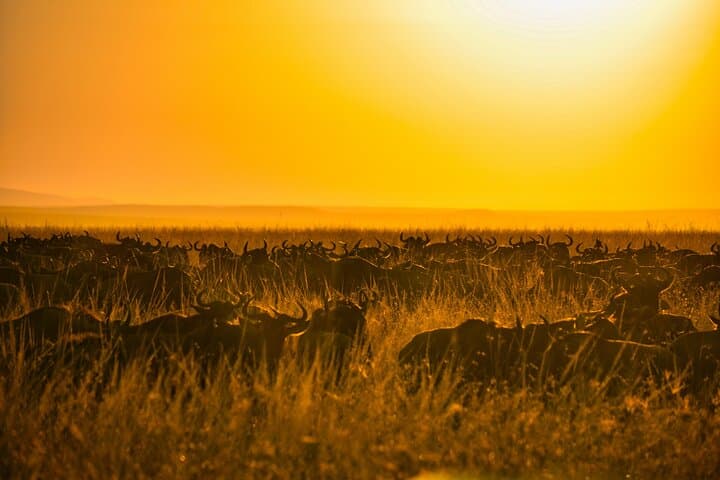
The Land Rover eases to a stop and the plains open like a stage. Dust hangs low, the air warmed by the afternoon sun, and a ragged river of wildebeest pushes toward the Grumeti’s dark water where crocodiles wait. From a raised veranda at a tented lodge, the plain looks endless—rolling grass, scattered acacia, and a horizon that refuses to quit.
The Land Rover eases to a stop and the plains open like a stage. Dust hangs low, the air warmed by the afternoon sun, and a ragged river of wildebeest pushes toward the Grumeti’s dark water where crocodiles wait. From a raised veranda at a tented lodge, the plain looks endless—rolling grass, scattered acacia, and a horizon that refuses to quit.
This eight-day luxury circuit threads Tarangire, Lake Manyara, the Western Serengeti, and the Ngorongoro Crater. It’s designed around one headline act: the Grumeti River crossings, the pulse of the Great Migration between May and July. Private 4x4s, curated bush lunches, and high-end tented camps give travelers front-row seats without the crowds—an approach that balances adrenaline and comfort.
Geologically, the Serengeti and Ngorongoro lie on the East African Rift’s uplands. Soils alternate between volcanic highlands and sandy plains, shaping the seasonal grass waves that drive herbivore movements. Human history here is intimate and local: Maasai pastoralists have shared and managed these lands for generations, and conservation partnerships with local communities are a central part of how the parks function today.
Days begin early—dawn game drives when predators are active and dust is a fine golden mist—and end with sundowners on kopjes and meals served under starlight. The itinerary moves from Tarangire’s baobab-studded avenues and elephant herds, through Lake Manyara’s forest and flamingo fringe, out across the Grumeti’s dramatic river corridor, and into the Seronera concentration zones before a final descent into Ngorongoro’s crater amphitheater.
Practicalities: arrivals are routed through Kilimanjaro International Airport with meet-and-greet service; domestic flights are included if routing requires them. Park entry and Ngorongoro fees are covered, and private transfers are part of the package. Expect dusty tracks and occasional bumpy drives—suspension-friendly vehicles and patient guides make the difference.
What to pack: layered clothes for hot days and cool nights, neutral colors that won’t spook wildlife, a good pair of binoculars and a telephoto lens for predator work, and insect repellent. Vaccinations and malaria prevention should be up-to-date; travel insurance and passport checks are essentials. Peak-season weather is dry and clear—ideal for crossings, but mornings and evenings are crisp.
Who this suits: travelers who want high-probability wildlife viewing without sacrificing comfort—photographers, small private groups, and anyone seeking curated wildlife encounters. For those chasing the migration, May through July delivers the most dramatic river action on the Grumeti, when the plains themselves seem to move.