THE ADVENTURE COLLECTIVE® · Independent discovery and booking for outdoor travel

Ride Swiss trains from Interlaken to Grindelwald, climb by cogwheel to Kleine Scheidegg for sweeping views of Eiger, Mönch and Jungfrau, then descend to Lauterbrunnen to see the Staubbach waterfall. This private day trip balances scenic rail travel with easy village walks and flexible time for lunch and photos.
Ride Swiss trains from Interlaken to Grindelwald, climb by cogwheel to Kleine Scheidegg for sweeping views of Eiger, Mönch and Jungfrau, then descend to Lauterbrunnen to see the Staubbach waterfall. This private day trip balances scenic rail travel with easy village walks and flexible time for lunch and photos.
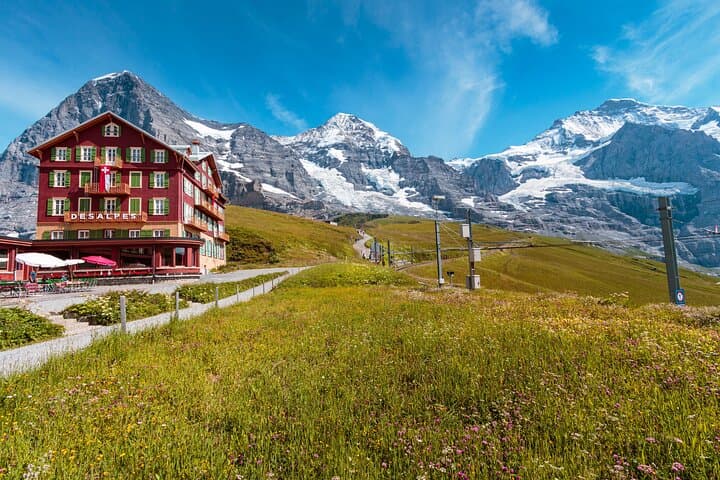
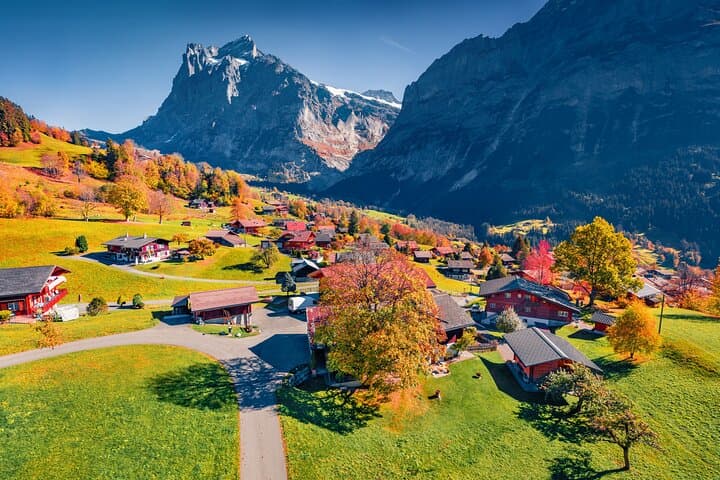
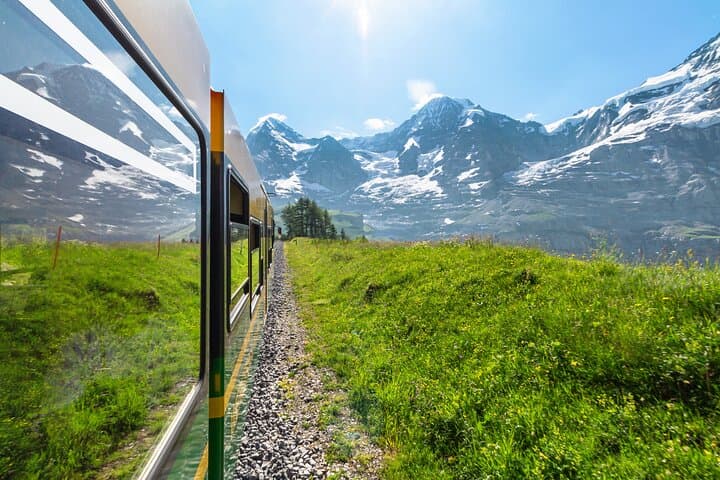
You step out of Interlaken station into air that tastes faintly of snowmelt and mountain grass, then settle into Swiss punctuality as the local train hums toward Grindelwald. Timber-fronted chalets give way to pastures, and the jagged north face of the Eiger grows from skyline to presence as you climb toward Kleine Scheidegg.
Verified experiences and guided adventures in the surrounding area.
Operated by SwissTravelGuide.ch · Interlaken, Bern
You step out of Interlaken station into air that tastes faintly of snowmelt and mountain grass, then settle into Swiss punctuality as the local train hums toward Grindelwald. Timber-fronted chalets give way to pastures, and the jagged north face of the Eiger grows from skyline to presence as you climb toward Kleine Scheidegg.
The route threads classic Jungfrau-region history: 19th-century alpinists made these valleys famous and cogwheel railways—engineering answers to steep alpine grades—opened access for travelers a century ago. Geology here is blunt and visible: vertical limestone and gneiss faces, moraine-fed streams, and valley walls carved by repeated ice flows. In Lauterbrunnen the nearly vertical cliffs channel dozens of waterfalls; Staubbach, one of the tallest free-falling waterfalls in Europe, drops in a ribbon that flutters in the wind.
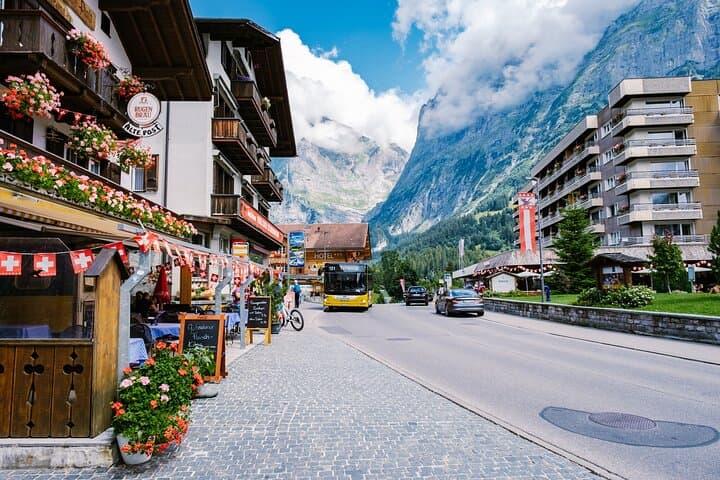
Culturally the villages retain German-speaking Bernese traditions—simple bakeries, wooden facades, and mountain hospitality focused on practical comfort rather than show.
Practical guidance: plan a 6–7 hour outing that’s mostly rail travel with short, easy walks at stops. Kleine Scheidegg sits at about 2,060 m elevation—expect cooler temperatures and stronger sun. Bring layered clothing, a solid pair of shoes for uneven village streets and alpine paths, and a daypack with water. Trains and platforms are regular but can have steps; allow time for photo stops and a relaxed lunch with views of Eiger, Mönch and Jungfrau.
This private format means a tailored pace and local insight, but the route’s popularity makes an early start and advance booking sensible.
easy.
6–7 hours.
Suitable for travelers in average fitness—mostly seated train travel with short, easy walks and moderate standing time.
Yes—2nd-class train travel and all necessary tickets for the planned route are included in the tour price.
Lunch is not included; you’ll have roughly two hours at Kleine Scheidegg to choose a restaurant or bring your own food.
The guide typically meets guests in the hotel lobby or at an arranged pickup point in Interlaken—details are given after booking.
The tour involves train travel and short walks in stations and villages; while much is accessible, some platforms and older buildings may have steps—contact the operator to discuss accessibility needs.
The Jungfrau region rose to prominence during the 19th-century golden age of alpinism; cogwheel lines were built to open high passes to visitors and mountaineers.
Alpine meadows and waterfalls are sensitive to trampling—stay on marked paths, use public transport, and pack out trash to protect fragile habitats.
SwissTravelGuide.ch operates guided outdoor trips and adventures with an emphasis on safety, stewardship, and memorable experiences.
You step out of Interlaken station into air that tastes faintly of snowmelt and mountain grass, then settle into Swiss punctuality as the local train hums toward Grindelwald. Timber-fronted chalets give way to pastures, and the jagged north face of the Eiger grows from skyline to presence as you climb toward Kleine Scheidegg.
You step out of Interlaken station into air that tastes faintly of snowmelt and mountain grass, then settle into Swiss punctuality as the local train hums toward Grindelwald. Timber-fronted chalets give way to pastures, and the jagged north face of the Eiger grows from skyline to presence as you climb toward Kleine Scheidegg.
The route threads classic Jungfrau-region history: 19th-century alpinists made these valleys famous and cogwheel railways—engineering answers to steep alpine grades—opened access for travelers a century ago. Geology here is blunt and visible: vertical limestone and gneiss faces, moraine-fed streams, and valley walls carved by repeated ice flows. In Lauterbrunnen the nearly vertical cliffs channel dozens of waterfalls; Staubbach, one of the tallest free-falling waterfalls in Europe, drops in a ribbon that flutters in the wind.
Culturally the villages retain German-speaking Bernese traditions—simple bakeries, wooden facades, and mountain hospitality focused on practical comfort rather than show.
Practical guidance: plan a 6–7 hour outing that’s mostly rail travel with short, easy walks at stops. Kleine Scheidegg sits at about 2,060 m elevation—expect cooler temperatures and stronger sun. Bring layered clothing, a solid pair of shoes for uneven village streets and alpine paths, and a daypack with water. Trains and platforms are regular but can have steps; allow time for photo stops and a relaxed lunch with views of Eiger, Mönch and Jungfrau.
This private format means a tailored pace and local insight, but the route’s popularity makes an early start and advance booking sensible.