THE ADVENTURE COLLECTIVE® · Independent discovery and booking for outdoor travel

When storms shut the trails, Grindelwald’s indoor ropes park brings alpine verticality under a roof. Family-friendly courses and staff-led safety let visitors sample climbing skills and zip lines in a controlled setting—perfect for training days or weatherproof thrills.
When storms shut the trails, Grindelwald’s indoor ropes park brings alpine verticality under a roof. Family-friendly courses and staff-led safety let visitors sample climbing skills and zip lines in a controlled setting—perfect for training days or weatherproof thrills.
The room hums with clipped carabiners and percussive footsteps as participants step into a sky of ropes, platforms and zip lines—the Alps paused just outside the hall's windows. Inside, the course channels alpine movement into a controlled environment: balance beams test steadiness, suspended bridges demand focus, and a final zip warns you the mountains are never far even when the weather keeps you indoors.
Verified experiences and guided adventures in the surrounding area.
The room hums with clipped carabiners and percussive footsteps as participants step into a sky of ropes, platforms and zip lines—the Alps paused just outside the hall's windows. Inside, the course channels alpine movement into a controlled environment: balance beams test steadiness, suspended bridges demand focus, and a final zip warns you the mountains are never far even when the weather keeps you indoors.
Grindelwald’s reputation as a mountaineering gateway dates to the 19th century, when guides and early climbers made the Eiger and surrounding peaks famous. Geologically, the village sits beneath glacial-carved valleys and steep limestone and gneiss faces; indoors, course designers echo that verticality in scaled elements that train the same coordination used on exposed routes. Culturally, this is Swiss mountain tourism refined—safety-first, accessible, and designed for families as much as adrenaline-seekers.
Practically, expect a 2–2.5 hour session with full harnessing and staff-led briefings. The facility suits a wide range of ages and fitness levels; participants progress through graded lines and can opt out of higher elements. Footwear must be secure; long hair and loose clothing should be controlled. Peak tourist seasons in Grindelwald mean booking ahead; the indoor option is ideal when storms or heavy snow make alpine trails unsafe. Hydrate, arrive 15 minutes early for orientation, and bring a lightweight layer for briefings and transitions.
This indoor ropes course is a pragmatic way to practice vertical movement, build confidence for real rock, or simply burn energy on a wet Alpine day.
moderate.
2–2.5 hours.
Light to moderate fitness; comfortable with heights and balance is helpful
Yes—many indoor ropes parks offer age-graded courses; check minimum height and age restrictions with the operator before booking.
Yes, the facility supplies certified harnesses and helmets and staff oversee fittings and belay systems.
No prior experience is required; staff provide instruction and progressive elements allow beginners to build confidence.
Yes—being indoors makes this an ideal option during storms or heavy snow when outdoor trails are unsafe.
Grindelwald grew into an international mountaineering hub in the 19th century, hosting early ascents of the Eiger and developing guide culture that still shapes local tourism.
The Bernese Alps prioritize sustainable tourism—stay on marked routes outside and follow local waste rules; indoor venues reduce seasonal pressure on fragile alpine trails.
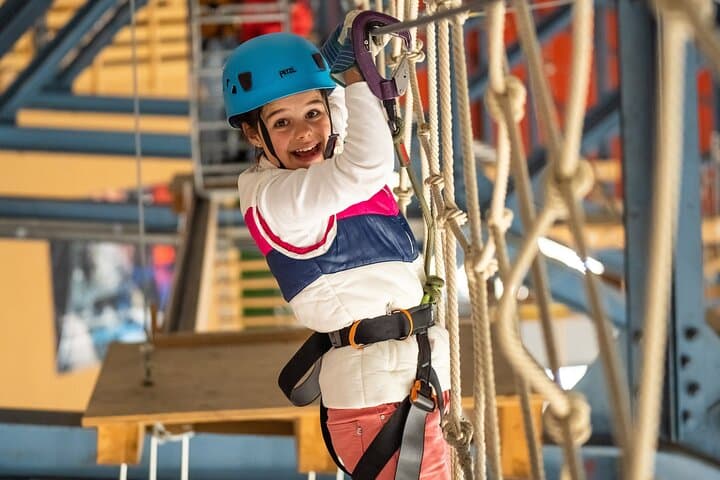
The room hums with clipped carabiners and percussive footsteps as participants step into a sky of ropes, platforms and zip lines—the Alps paused just outside the hall's windows. Inside, the course channels alpine movement into a controlled environment: balance beams test steadiness, suspended bridges demand focus, and a final zip warns you the mountains are never far even when the weather keeps you indoors.
The room hums with clipped carabiners and percussive footsteps as participants step into a sky of ropes, platforms and zip lines—the Alps paused just outside the hall's windows. Inside, the course channels alpine movement into a controlled environment: balance beams test steadiness, suspended bridges demand focus, and a final zip warns you the mountains are never far even when the weather keeps you indoors.
Grindelwald’s reputation as a mountaineering gateway dates to the 19th century, when guides and early climbers made the Eiger and surrounding peaks famous. Geologically, the village sits beneath glacial-carved valleys and steep limestone and gneiss faces; indoors, course designers echo that verticality in scaled elements that train the same coordination used on exposed routes. Culturally, this is Swiss mountain tourism refined—safety-first, accessible, and designed for families as much as adrenaline-seekers.
Practically, expect a 2–2.5 hour session with full harnessing and staff-led briefings. The facility suits a wide range of ages and fitness levels; participants progress through graded lines and can opt out of higher elements. Footwear must be secure; long hair and loose clothing should be controlled. Peak tourist seasons in Grindelwald mean booking ahead; the indoor option is ideal when storms or heavy snow make alpine trails unsafe. Hydrate, arrive 15 minutes early for orientation, and bring a lightweight layer for briefings and transitions.
This indoor ropes course is a pragmatic way to practice vertical movement, build confidence for real rock, or simply burn energy on a wet Alpine day.