THE ADVENTURE COLLECTIVE® · Independent discovery and booking for outdoor travel

Trade the village bustle for a day in the Bernese Alps: a guided hike from Grindelwald offers tailored routes under the Eiger’s shadow, glacier lookouts, and cow-belled pastures. Read on for what to expect and how to prepare.
Trade the village bustle for a day in the Bernese Alps: a guided hike from Grindelwald offers tailored routes under the Eiger’s shadow, glacier lookouts, and cow-belled pastures. Read on for what to expect and how to prepare.
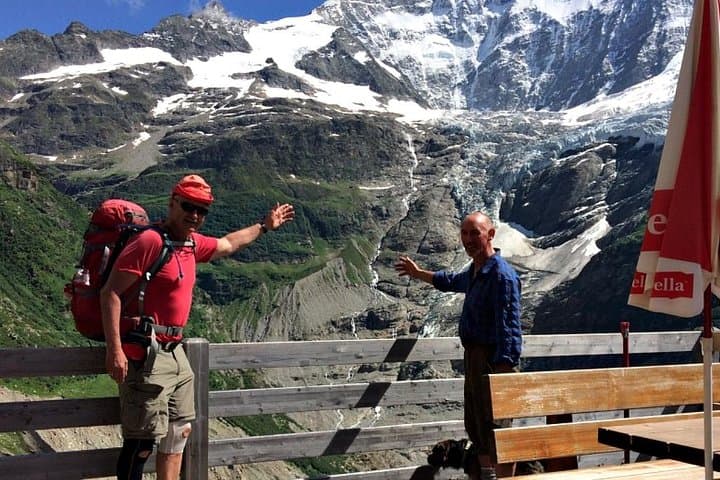
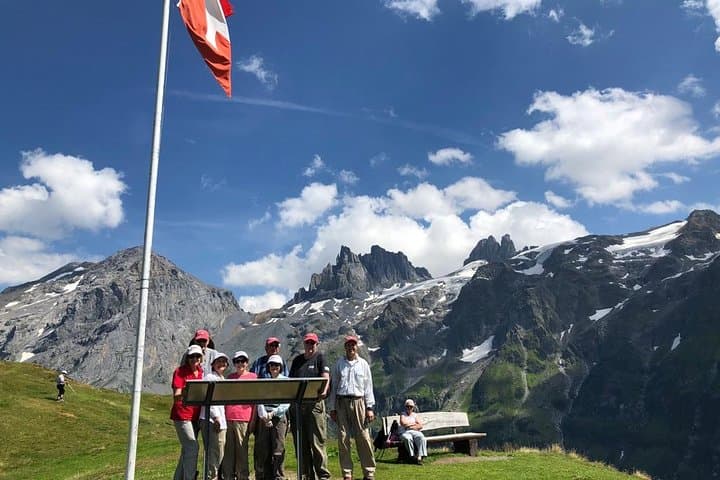
Dawn in Grindelwald arrives like a curtain lifted on stone: the jagged faces of the Eiger, Mönch and Jungfrau sharpen from pale to bronze as you gather at the train station. You meet your Swiss guide—map in hand, knowing smile—and soon the village dissolves behind you as the trail climbs into open pasture. Cowbells punctuate the air; a glacier sits in the distance like an indifferent ruler, slow and enormous.
Verified experiences and guided adventures in the surrounding area.
Operated by ECHO Rails & Trails · Grindelwald, Bern
Dawn in Grindelwald arrives like a curtain lifted on stone: the jagged faces of the Eiger, Mönch and Jungfrau sharpen from pale to bronze as you gather at the train station. You meet your Swiss guide—map in hand, knowing smile—and soon the village dissolves behind you as the trail climbs into open pasture. Cowbells punctuate the air; a glacier sits in the distance like an indifferent ruler, slow and enormous.
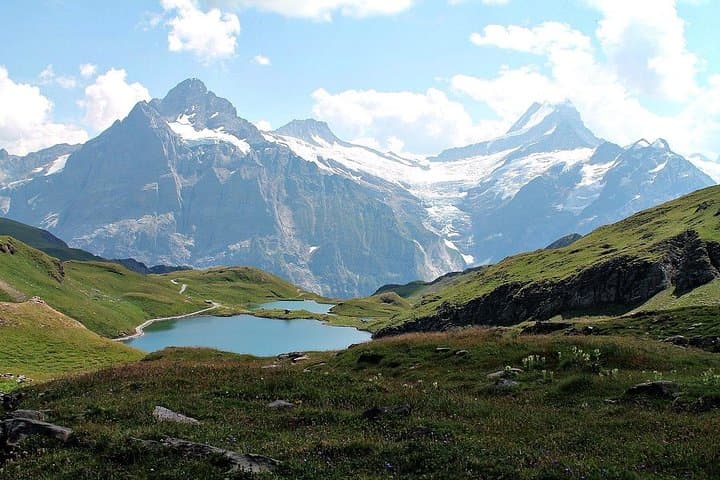
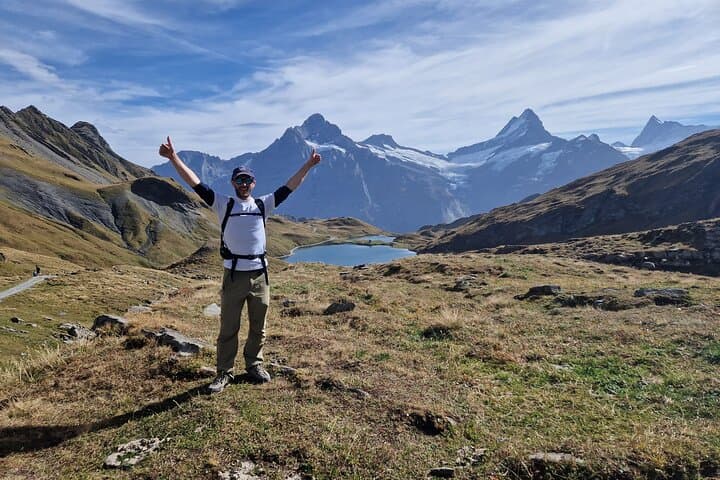
The guided day hike is less an itinerary and more an expertly read room of the weather and your legs. Guides choose between three routes—short and gentle to long and lung-testing—so you might find yourself following a ridge to a panoramic bench, trudging past Bachalpsee's glassy surface, or contouring beneath hanging glaciers. Trails are marked and maintained, alpine in character: rocky switchbacks, grass benches, and sun-exposed ridgelines where wind has a voice.
Geology here is immediate. The Bernese Alps are a folded archive of limestone and gneiss thrust skyward by tectonic impatience; the Eiger’s north face cut a reputation in the early 20th century as one of Europe’s sternest climbing challenges. Glacial action carved the valleys you now cross—U-shaped basins and moraines that betray slow, patient ice rather than sudden drama.
Culture threads through the hike: seasonal cow pastures, wooden chalets with carved eaves, and local guides who can read the landscape and the weather equally well. Grindelwald itself grew from a farming village to an alpine resort in the 19th century; tourism and pastoral life still share the slopes.
Practical details are straightforward. The tour lasts about six to seven hours, including transport; hiking segments range from three to four hours depending on the route chosen. Expect elevation changes of roughly 200–700 meters and distances of 6–12 kilometers across uneven terrain. Footwear with good traction, layered clothing, sun protection, and at least 1.5–2 liters of water are essential. Guides adjust the route to prevailing conditions and group fitness, so communicate any concerns at the morning meeting at 08:45.
Timing matters: morning windows often offer the clearest light and safest footing before afternoon convection builds. Weather in the high Alps can flip quickly—cloud, wind, even hail—so pack a waterproof shell. The hike is suitable for those with moderate fitness; it is not recommended for people with serious heart conditions. Bring coins or a card if you want a post-hike coffee in Grindelwald.
On a clear day the rewards are plain: glacier-sliced horizons, the scent of alpine herbs, and the tiny, stubborn industry of mountain life. The guide’s local insights turn panoramic views into a deeper story—of geology, farming rhythms, and the stubborn allure of the high trail.
moderate.
6–7 hours.
You should have a moderate level of fitness: comfortable walking on uneven terrain for 3–4 hours with short climbs.
Routes are selected to match the group; options range from easy, 3-hour walks with modest ascent to challenging 4-hour routes with up to 700 m elevation gain.
Yes—local transport to trailheads is included and the guide organizes pickups from Grindelwald meeting points.
Children must be accompanied by an adult and should be accustomed to several hours of walking on uneven terrain.
The operator runs in most weather; guides may alter the route for safety. Cancel at least 24 hours prior for a full refund.
No technical mountaineering skills are required; sturdy footwear and a moderate fitness level suffice.
Facilities are available in village and at some mountain huts; on-trail options are limited, so plan accordingly.
The region shifted from pastoral farming to alpine tourism in the 19th century; the Eiger’s north face became world-famous after early, dangerous ascents in the 1930s and 1950s.
Stick to marked trails to protect fragile alpine flora; seasonal grazing is managed to balance agriculture and biodiversity, so respect pasture boundaries.
ECHO Rails & Trails operates guided outdoor trips and adventures with an emphasis on safety, stewardship, and memorable experiences.
Dawn in Grindelwald arrives like a curtain lifted on stone: the jagged faces of the Eiger, Mönch and Jungfrau sharpen from pale to bronze as you gather at the train station. You meet your Swiss guide—map in hand, knowing smile—and soon the village dissolves behind you as the trail climbs into open pasture. Cowbells punctuate the air; a glacier sits in the distance like an indifferent ruler, slow and enormous.
Dawn in Grindelwald arrives like a curtain lifted on stone: the jagged faces of the Eiger, Mönch and Jungfrau sharpen from pale to bronze as you gather at the train station. You meet your Swiss guide—map in hand, knowing smile—and soon the village dissolves behind you as the trail climbs into open pasture. Cowbells punctuate the air; a glacier sits in the distance like an indifferent ruler, slow and enormous.
The guided day hike is less an itinerary and more an expertly read room of the weather and your legs. Guides choose between three routes—short and gentle to long and lung-testing—so you might find yourself following a ridge to a panoramic bench, trudging past Bachalpsee's glassy surface, or contouring beneath hanging glaciers. Trails are marked and maintained, alpine in character: rocky switchbacks, grass benches, and sun-exposed ridgelines where wind has a voice.
Geology here is immediate. The Bernese Alps are a folded archive of limestone and gneiss thrust skyward by tectonic impatience; the Eiger’s north face cut a reputation in the early 20th century as one of Europe’s sternest climbing challenges. Glacial action carved the valleys you now cross—U-shaped basins and moraines that betray slow, patient ice rather than sudden drama.
Culture threads through the hike: seasonal cow pastures, wooden chalets with carved eaves, and local guides who can read the landscape and the weather equally well. Grindelwald itself grew from a farming village to an alpine resort in the 19th century; tourism and pastoral life still share the slopes.
Practical details are straightforward. The tour lasts about six to seven hours, including transport; hiking segments range from three to four hours depending on the route chosen. Expect elevation changes of roughly 200–700 meters and distances of 6–12 kilometers across uneven terrain. Footwear with good traction, layered clothing, sun protection, and at least 1.5–2 liters of water are essential. Guides adjust the route to prevailing conditions and group fitness, so communicate any concerns at the morning meeting at 08:45.
Timing matters: morning windows often offer the clearest light and safest footing before afternoon convection builds. Weather in the high Alps can flip quickly—cloud, wind, even hail—so pack a waterproof shell. The hike is suitable for those with moderate fitness; it is not recommended for people with serious heart conditions. Bring coins or a card if you want a post-hike coffee in Grindelwald.
On a clear day the rewards are plain: glacier-sliced horizons, the scent of alpine herbs, and the tiny, stubborn industry of mountain life. The guide’s local insights turn panoramic views into a deeper story—of geology, farming rhythms, and the stubborn allure of the high trail.