THE ADVENTURE COLLECTIVE® · Independent discovery and booking for outdoor travel

Learn Chef Steven’s science-forward grilling methods in a hands-on Portland class that blends Southern barbecue roots with global sauces. Over two-and-a-half hours you’ll brine, sear, smoke and eat—walking away with techniques that work every time.
Learn Chef Steven’s science-forward grilling methods in a hands-on Portland class that blends Southern barbecue roots with global sauces. Over two-and-a-half hours you’ll brine, sear, smoke and eat—walking away with techniques that work every time.
The grill clicks awake under a low Portland sky: a ribbon of orange flame licking the edges of a cedar plank, smoke rising like a rumor through the covered patio. You step up to a stainless prep table; beside you a plate of overnight-brined chicken waits, its skin taut and ready. Chef Steven moves with practiced economy—hands that have worked charcoal in Argentina, coals in Korea, and kitchens in France—introducing a method that turns guesswork into reliable heat and flavor.
Verified experiences and guided adventures in the surrounding area.
Operated by Chef Steven · Portland, Oregon
The grill clicks awake under a low Portland sky: a ribbon of orange flame licking the edges of a cedar plank, smoke rising like a rumor through the covered patio. You step up to a stainless prep table; beside you a plate of overnight-brined chicken waits, its skin taut and ready. Chef Steven moves with practiced economy—hands that have worked charcoal in Argentina, coals in Korea, and kitchens in France—introducing a method that turns guesswork into reliable heat and flavor.
This isn't backyard posturing; it's a compact study in applied culinary science. The class traces the arc of grilling traditions that feed Portland’s dinner tables: Pacific Northwest salmon seared on cedar, Southern barbecue rhythms that taught Chef Steven to coax smoke and sweet into harmony, and bright immigrant sauces—chimichurri, aji verde, satay—that push each protein in new directions.
Portland’s culinary geography matters here. The city sits where the Willamette River cuts a route through volcanic soils and sedimentary plains; its markets brim with heritage pork, wild salmon runs, and farmers whose produce still tastes of soil. That local supply shapes the menu: cedar-planked salmon that still smells faintly of the river, lamb chops from regional ranchers, and shrimp glossed in a sauce that borrows from the South and the Pacific Rim.
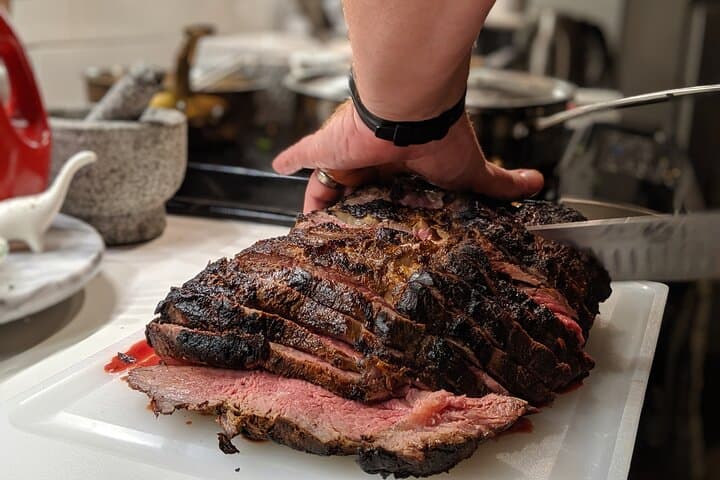
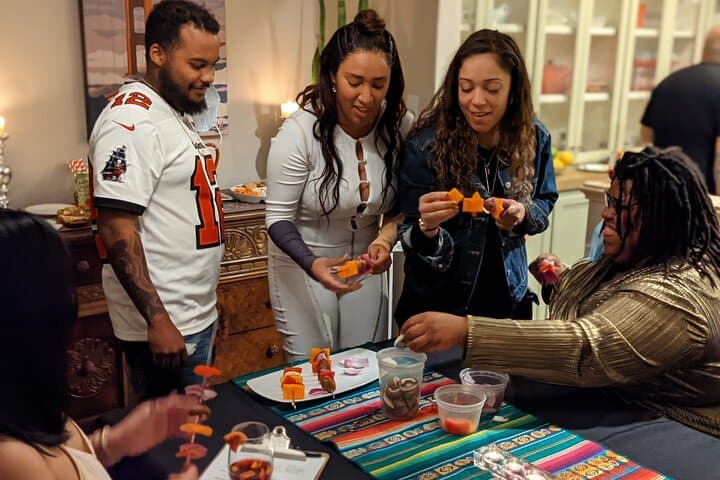
The class is built for hands-on learning. Over roughly two and a half hours you’ll cover brining, dry rub chemistry, direct vs. indirect heat, and the chef’s “Golden Eight” rules for reliably juicy proteins. Each technique is followed by cooking and eating—the best laboratory for testing a hypothesis is a plate. Conversations move from the science of keratin and collagen to small practicalities: how to read smoke color, how to set vents, why you should rest meat under foil.
Beyond the grill, this evening is a practical primer for urban cooks: shopping smart at local markets, minimizing food waste, and pairing simple sides with boldly seasoned mains. The patio is covered and heated in chilly months, so rain rarely cancels the lesson; the host advises arriving on time and wearing closed-toe shoes for safety.
For travelers who want a tactile Portland memory, this class is both social and skill-focused: you leave with recipes, technique, and a clearer sense of how heat, time, and seasoning conspire to make a protein sing. If you want to build confidence over bravado—if you want to know exactly why a crust forms or how to coax a cedar-plank smoke without burning—this is a classroom that ends at the table.
easy.
2–3 hours.
Light standing and basic kitchen mobility; no special fitness required
No—classes are designed for home cooks of all levels; Chef Steven explains fundamentals and builds toward more advanced techniques.
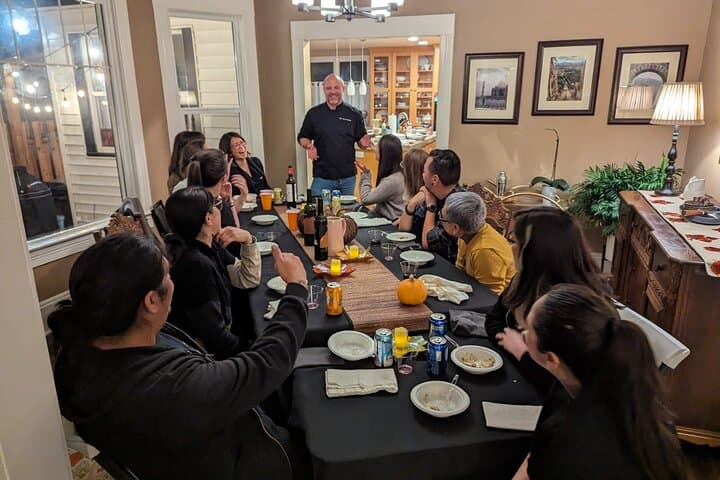
All food and non-alcoholic beverages are included; students cook and eat a multi-course grilled meal.
Classes are hands-on and limited to booked participants; observers are discouraged unless arranged in advance.
The menu emphasizes proteins but the host can usually accommodate vegetarian options with advance notice—use the special requirements field when booking.
The grilling patio is covered and equipped with heaters; classes run as scheduled unless severe conditions force cancellation.
Solo bookings are possible last-minute, but larger parties should book at least 12 hours ahead; a two-person minimum applies for private hosting.
Portland’s grill culture blends Pacific Northwest seafood traditions with Southern barbecue influences and global immigrant flavors, which shows up in locally sourced proteins and bold sauces.
Chef Steven sources ingredients from regional suppliers when possible and emphasizes minimizing food waste and composting scraps after class.
Chef Steven operates guided outdoor trips and adventures with an emphasis on safety, stewardship, and memorable experiences.
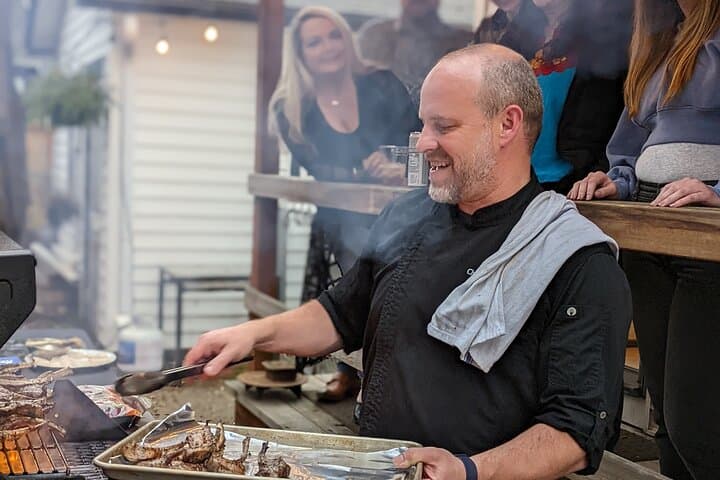
The grill clicks awake under a low Portland sky: a ribbon of orange flame licking the edges of a cedar plank, smoke rising like a rumor through the covered patio. You step up to a stainless prep table; beside you a plate of overnight-brined chicken waits, its skin taut and ready. Chef Steven moves with practiced economy—hands that have worked charcoal in Argentina, coals in Korea, and kitchens in France—introducing a method that turns guesswork into reliable heat and flavor.
The grill clicks awake under a low Portland sky: a ribbon of orange flame licking the edges of a cedar plank, smoke rising like a rumor through the covered patio. You step up to a stainless prep table; beside you a plate of overnight-brined chicken waits, its skin taut and ready. Chef Steven moves with practiced economy—hands that have worked charcoal in Argentina, coals in Korea, and kitchens in France—introducing a method that turns guesswork into reliable heat and flavor.
This isn't backyard posturing; it's a compact study in applied culinary science. The class traces the arc of grilling traditions that feed Portland’s dinner tables: Pacific Northwest salmon seared on cedar, Southern barbecue rhythms that taught Chef Steven to coax smoke and sweet into harmony, and bright immigrant sauces—chimichurri, aji verde, satay—that push each protein in new directions.
Portland’s culinary geography matters here. The city sits where the Willamette River cuts a route through volcanic soils and sedimentary plains; its markets brim with heritage pork, wild salmon runs, and farmers whose produce still tastes of soil. That local supply shapes the menu: cedar-planked salmon that still smells faintly of the river, lamb chops from regional ranchers, and shrimp glossed in a sauce that borrows from the South and the Pacific Rim.
The class is built for hands-on learning. Over roughly two and a half hours you’ll cover brining, dry rub chemistry, direct vs. indirect heat, and the chef’s “Golden Eight” rules for reliably juicy proteins. Each technique is followed by cooking and eating—the best laboratory for testing a hypothesis is a plate. Conversations move from the science of keratin and collagen to small practicalities: how to read smoke color, how to set vents, why you should rest meat under foil.
Beyond the grill, this evening is a practical primer for urban cooks: shopping smart at local markets, minimizing food waste, and pairing simple sides with boldly seasoned mains. The patio is covered and heated in chilly months, so rain rarely cancels the lesson; the host advises arriving on time and wearing closed-toe shoes for safety.
For travelers who want a tactile Portland memory, this class is both social and skill-focused: you leave with recipes, technique, and a clearer sense of how heat, time, and seasoning conspire to make a protein sing. If you want to build confidence over bravado—if you want to know exactly why a crust forms or how to coax a cedar-plank smoke without burning—this is a classroom that ends at the table.