THE ADVENTURE COLLECTIVE® · Independent discovery and booking for outdoor travel

Watch the sun drop behind the Belledonne range, then join a guided night walk in Grenoble to explore constellations, cross-cultural myths and telescope views of planets and nebulae. Suitable for families and newcomers, the 2.5-hour experience blends storytelling with real observing.
Watch the sun drop behind the Belledonne range, then join a guided night walk in Grenoble to explore constellations, cross-cultural myths and telescope views of planets and nebulae. Suitable for families and newcomers, the 2.5-hour experience blends storytelling with real observing.
The sun slips behind the Belledonne ridgeline and a cool hush settles over Grenoble as a small group gathers under a wide, black vault. Your guide checks the telescope, the lamp’s warm beam cutting a neat circle on the gravel; overhead, familiar constellations begin to assert themselves, bright as punctuation. On this evening walk you’ll watch daylight surrender, follow myths mapped to the stars, and then lean close as the telescope threads galaxies, nebulae and planets into sharp view.
Verified experiences and guided adventures in the surrounding area.
Operated by Vincent Desestret · Grenoble, Isère
The sun slips behind the Belledonne ridgeline and a cool hush settles over Grenoble as a small group gathers under a wide, black vault. Your guide checks the telescope, the lamp’s warm beam cutting a neat circle on the gravel; overhead, familiar constellations begin to assert themselves, bright as punctuation. On this evening walk you’ll watch daylight surrender, follow myths mapped to the stars, and then lean close as the telescope threads galaxies, nebulae and planets into sharp view.
The walk sits where urban lights meet mountain dark: the Alps frame the skyline and centuries of scientific curiosity in Grenoble make astronomy a local pursuit — the city is a regional hub for research and mountain science. The route pairs simple night-hiking with storytelling: Greek constellations, cross-cultural creation tales and practical astronomy notes from a modern telescope operator.
Expect gently rolling terrain, short on elevation but long on sky. The experience uses a portable telescope to show planets, bright nebulae or star clusters when conditions allow; the guide alternates between myth, basic celestial mechanics and hands-on observing. Families with children 8+ are welcome; physical demands are low but evenings are cold and footing can be uneven.
Practical: dress in layers, bring a red-light headlamp, and arrive by public transport or car with parking nearby. Sessions run about 2.5 hours; refunds require 24-hour notice. If clouds dominate the forecast, check with the operator before travel. This is an accessible, low-impact way to meet the night — the sky dares you to look up.
easy.
2–3 hours.
Minimal fitness required — able to walk short, sometimes uneven sections and stand for brief periods.
The operator may reschedule or advise based on conditions; cancellations for a full refund require notice 24 hours before departure.
Yes — recommended for ages 8 and up; content is family-friendly and the physical demand is low.
Meeting is typically in central Grenoble or a nearby foothill access point; public transport is recommended as parking can be limited.
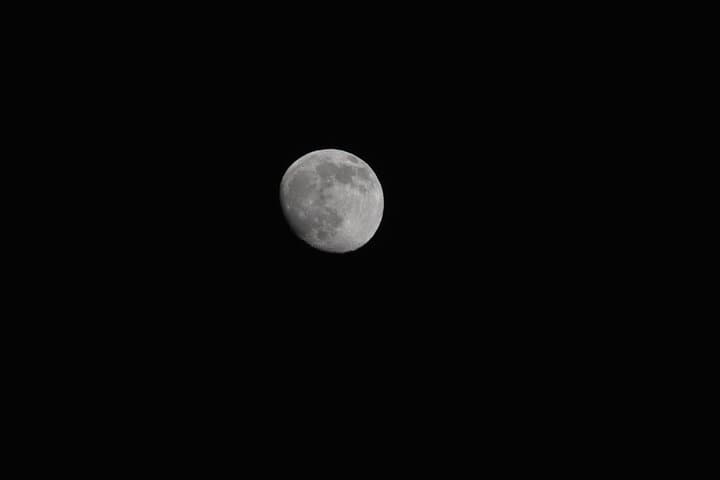
Depending on conditions and season, the telescope can reveal planets (Jupiter, Saturn), bright star clusters, and some nebulae or galaxies visible from the site.
Grenoble’s position at the foot of the Alps and its scientific institutions have fostered a long local interest in natural science and mountain research.
Light pollution is the main issue; operators emphasize dark-adapted observing, minimal light use and staying on designated paths to protect nocturnal wildlife.
Vincent Desestret operates guided outdoor trips and adventures with an emphasis on safety, stewardship, and memorable experiences.
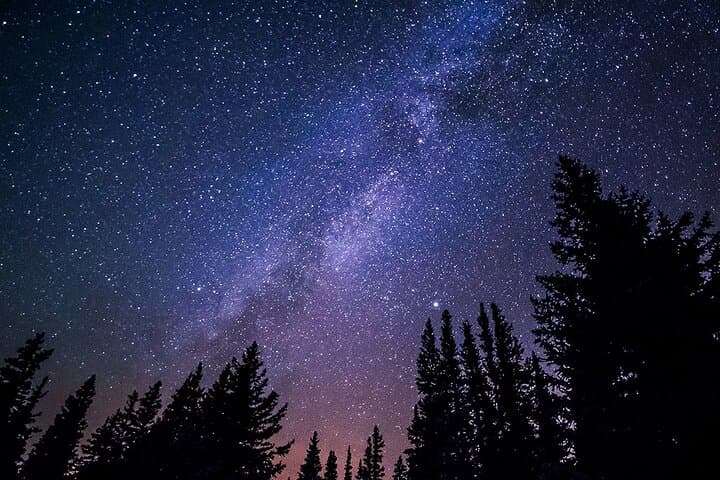
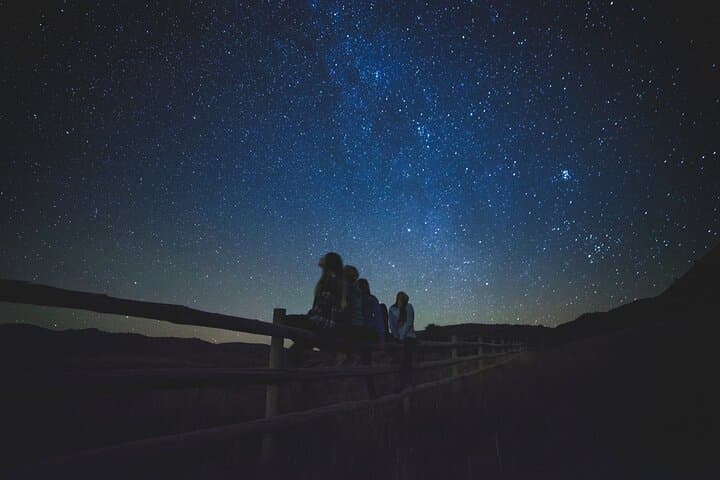

The sun slips behind the Belledonne ridgeline and a cool hush settles over Grenoble as a small group gathers under a wide, black vault. Your guide checks the telescope, the lamp’s warm beam cutting a neat circle on the gravel; overhead, familiar constellations begin to assert themselves, bright as punctuation. On this evening walk you’ll watch daylight surrender, follow myths mapped to the stars, and then lean close as the telescope threads galaxies, nebulae and planets into sharp view.
The sun slips behind the Belledonne ridgeline and a cool hush settles over Grenoble as a small group gathers under a wide, black vault. Your guide checks the telescope, the lamp’s warm beam cutting a neat circle on the gravel; overhead, familiar constellations begin to assert themselves, bright as punctuation. On this evening walk you’ll watch daylight surrender, follow myths mapped to the stars, and then lean close as the telescope threads galaxies, nebulae and planets into sharp view.
The walk sits where urban lights meet mountain dark: the Alps frame the skyline and centuries of scientific curiosity in Grenoble make astronomy a local pursuit — the city is a regional hub for research and mountain science. The route pairs simple night-hiking with storytelling: Greek constellations, cross-cultural creation tales and practical astronomy notes from a modern telescope operator.
Expect gently rolling terrain, short on elevation but long on sky. The experience uses a portable telescope to show planets, bright nebulae or star clusters when conditions allow; the guide alternates between myth, basic celestial mechanics and hands-on observing. Families with children 8+ are welcome; physical demands are low but evenings are cold and footing can be uneven.
Practical: dress in layers, bring a red-light headlamp, and arrive by public transport or car with parking nearby. Sessions run about 2.5 hours; refunds require 24-hour notice. If clouds dominate the forecast, check with the operator before travel. This is an accessible, low-impact way to meet the night — the sky dares you to look up.