THE ADVENTURE COLLECTIVE® · Independent discovery and booking for outdoor travel

Walk Greenwich Village with a private guide and trade Midtown’s noise for shaded streets, brownstone stoops, and stories—from Beat poets to Stonewall. This 2-hour stroll mixes cultural history, local lore, and practical tips for seeing the Village like a native.
Walk Greenwich Village with a private guide and trade Midtown’s noise for shaded streets, brownstone stoops, and stories—from Beat poets to Stonewall. This 2-hour stroll mixes cultural history, local lore, and practical tips for seeing the Village like a native.
You meet your guide on the NE corner of Waverly Place and 6th Avenue as the city moves around you—delivery bikes humming, café doors opening, the first warm light catching brownstone stoops. Footsteps fall on old-flagstone sidewalks; a guide’s voice threads history into the shape of streets, and Washington Square Park’s arch frames the sky like a town gate.
Verified experiences and guided adventures in the surrounding area.
Operated by Metro NYC Tours · New York, NY
You meet your guide on the NE corner of Waverly Place and 6th Avenue as the city moves around you—delivery bikes humming, café doors opening, the first warm light catching brownstone stoops. Footsteps fall on old-flagstone sidewalks; a guide’s voice threads history into the shape of streets, and Washington Square Park’s arch frames the sky like a town gate.
Greenwich Village grew from colonial farmland into a 19th-century residential quarter and then an incubator for writers, jazz, the Beat poets and the LGBTQ+ rights movement—Stonewall’s legacy is visible on the map and in quieter back alleys. Underfoot Manhattan schist and filled-in creek beds shaped how blocks were laid; you’ll notice cobblestones and narrow lanes surviving the city’s grid. Cultural markers — off-Broadway theaters, veteran cafés and single-room clubhouses — give the neighborhood its character.
Practically: plan for roughly 1.5–2 miles of easy walking over two hours with frequent stops for stories and photo ops. Elevation is negligible, terrain is entirely paved but can be uneven where original stone remains. Wear supportive shoes, carry water, and bring a transit card for post-tour hopping. Tours are private (up to 10), accessible, and suitable for people with moderate fitness. Listen and respect residents: many streets are residential, and photography can be intrusive in private courtyards.
Your guide can point to lesser-known alleys, recommend early-morning coffee, and help you navigate back to transit or dinner — this is a walking experience built as much around people and memory as around bricks and façades.
moderate.
2–2.5 hours.
Moderate fitness: able to stand and walk for two hours with short stops.
Yes — the operator lists wheelchair accessibility and most route sections are on paved surfaces; notify the operator of specific needs when booking.
Tours are private for your group and priced per group with a maximum of 10 participants.
Yes — guides typically end the tour near restaurants and transit and can suggest dinner spots, theaters and directions back to your hotel.
The cancellation policy allows a full refund if you cancel at least 24 hours in advance; the operator may cancel for bad weather—check confirmation details.
Greenwich Village was a 19th-century residential district that became the birthplace of key cultural movements—Beat literature, jazz scenes and the Gay Liberation movement centered around the Stonewall Inn.
Small community gardens and local preservation groups protect green space and historic streetscapes; visitors should stay on paths and avoid disturbing plantings to minimize impact.
Metro NYC Tours operates guided outdoor trips and adventures with an emphasis on safety, stewardship, and memorable experiences.
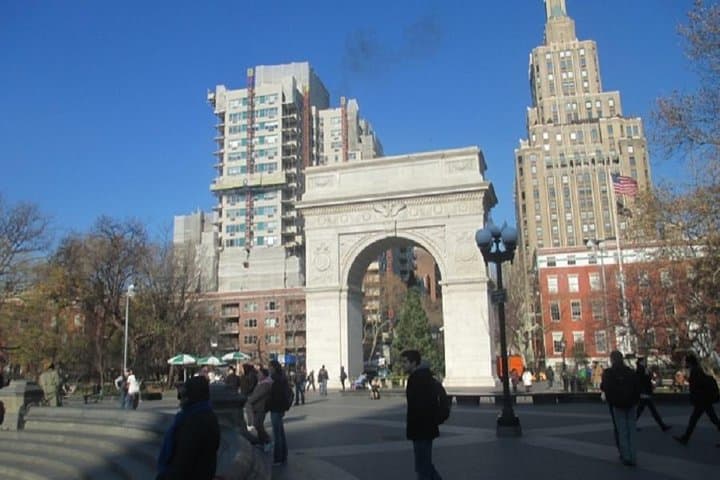
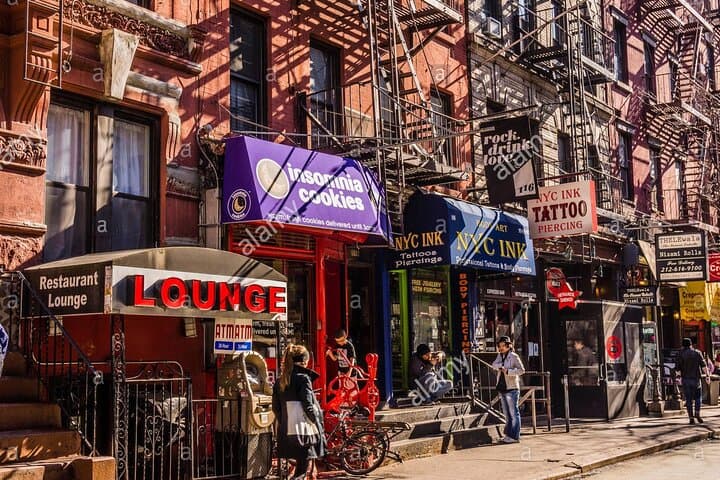


You meet your guide on the NE corner of Waverly Place and 6th Avenue as the city moves around you—delivery bikes humming, café doors opening, the first warm light catching brownstone stoops. Footsteps fall on old-flagstone sidewalks; a guide’s voice threads history into the shape of streets, and Washington Square Park’s arch frames the sky like a town gate.
You meet your guide on the NE corner of Waverly Place and 6th Avenue as the city moves around you—delivery bikes humming, café doors opening, the first warm light catching brownstone stoops. Footsteps fall on old-flagstone sidewalks; a guide’s voice threads history into the shape of streets, and Washington Square Park’s arch frames the sky like a town gate.
Greenwich Village grew from colonial farmland into a 19th-century residential quarter and then an incubator for writers, jazz, the Beat poets and the LGBTQ+ rights movement—Stonewall’s legacy is visible on the map and in quieter back alleys. Underfoot Manhattan schist and filled-in creek beds shaped how blocks were laid; you’ll notice cobblestones and narrow lanes surviving the city’s grid. Cultural markers — off-Broadway theaters, veteran cafés and single-room clubhouses — give the neighborhood its character.
Practically: plan for roughly 1.5–2 miles of easy walking over two hours with frequent stops for stories and photo ops. Elevation is negligible, terrain is entirely paved but can be uneven where original stone remains. Wear supportive shoes, carry water, and bring a transit card for post-tour hopping. Tours are private (up to 10), accessible, and suitable for people with moderate fitness. Listen and respect residents: many streets are residential, and photography can be intrusive in private courtyards.
Your guide can point to lesser-known alleys, recommend early-morning coffee, and help you navigate back to transit or dinner — this is a walking experience built as much around people and memory as around bricks and façades.