THE ADVENTURE COLLECTIVE® · Independent discovery and booking for outdoor travel

Explore Greenwich in a single day with a pass that links the Prime Meridian, the Cutty Sark and Britain’s first classical house. This guide covers what to expect, timing, access and practical tips for getting the most from the day.
Explore Greenwich in a single day with a pass that links the Prime Meridian, the Cutty Sark and Britain’s first classical house. This guide covers what to expect, timing, access and practical tips for getting the most from the day.
Stand on a painted line and feel a subtle recalibration of time: the Prime Meridian at the Royal Observatory slices north–south through Greenwich Park, a thin, decisive marker that has shaped navigation and global clocks for centuries.
Verified experiences and guided adventures in the surrounding area.
Operated by National Maritime Museum · Greenwich, Greater London
Stand on a painted line and feel a subtle recalibration of time: the Prime Meridian at the Royal Observatory slices north–south through Greenwich Park, a thin, decisive marker that has shaped navigation and global clocks for centuries.
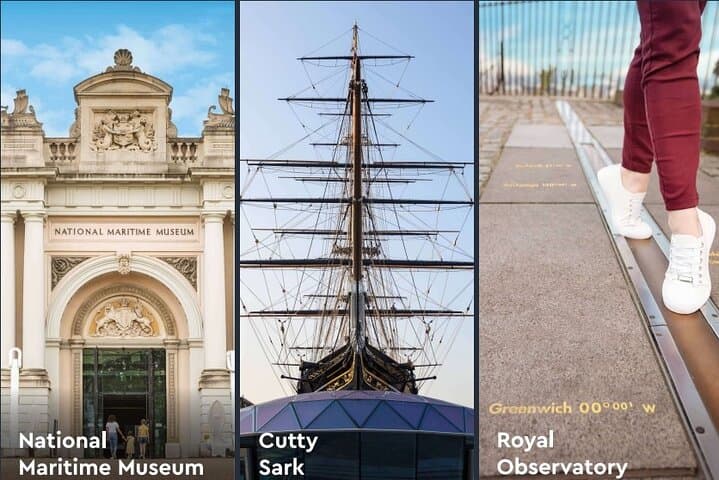
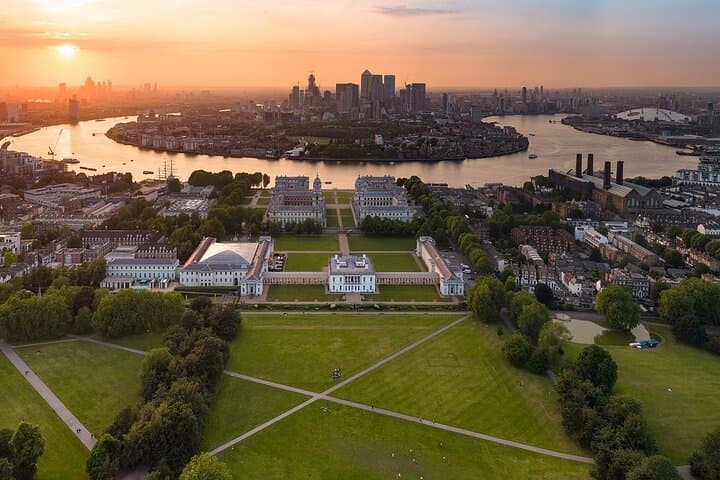
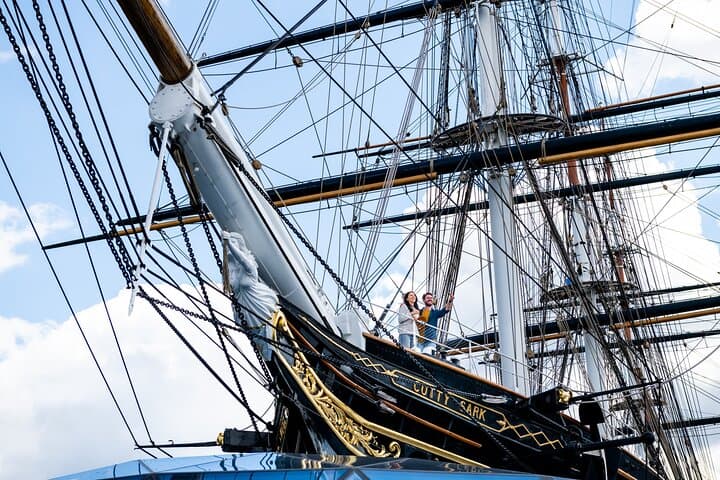
This day-pass stitches together naval history and classical architecture. The Royal Observatory (founded 1675 by Charles II) maps the science of longitude and hosts the Peter Harrison Planetarium; the Cutty Sark, the world’s surviving tea clipper, still dares visitors to imagine salt spray and whipping sails beneath her copper-clad hull. Nearby, the Queen’s House — Inigo Jones’s 17th-century classical villa — and the National Maritime Museum expand the story to imperial trade, naval strategy and the everyday artifacts that made Britain a seafaring power.
Geology here is urban parkland: layered chalk beneath rolling green, with views over the Thames that were once strategic observation points. Cultural threads run from maritime commerce to Greenwich Market’s artisan stalls.
Plan practically: tickets cover entry to both the Observatory and Cutty Sark on the same day (last entry 4pm). The sites sit a short 10–12 minute walk apart across varied paving and park paths. Allow 3–5 hours to move at a measured pace between galleries, ship decks and the hilltop viewpoint. Public transport (DLR, Southeastern trains, river services) drops you close; the venue is wheelchair accessible but check specific exhibition access. Bring a charged phone, a compact rain shell, and comfortable shoes—the route alternates cobbles, museum ramps and park turf. Visit early to avoid midday crowds at the Meridian line and leave time for the free National Maritime Museum or a stroll through Greenwich Market.
easy.
3–5 hours.
Suitable for all fitness levels; involves short uphill walk in Greenwich Park and stairs on the historic ship
Yes—the pass requires entry to both the Royal Observatory and Cutty Sark on the date printed on your ticket, and both visits must occur the same day.
Yes—mobile or paper tickets are accepted; have your booking ready for scanning at each attraction.
Both sites list wheelchair and stroller access, though the Cutty Sark has some steep ramps and restricted areas—contact the venue for specifics if you need full step-free access.
The Queen’s House and National Maritime Museum are free to enter, though some guided tours or special exhibitions may charge extra.
The Royal Observatory was established in 1675 to improve navigation at sea; the Prime Meridian line later became the global standard for longitude and timekeeping.
Cutty Sark’s conservation after the 2007 fire highlights long-term preservation efforts; visitors are encouraged to use public transport and follow site rules to reduce wear on historic fabric.
National Maritime Museum operates guided outdoor trips and adventures with an emphasis on safety, stewardship, and memorable experiences.
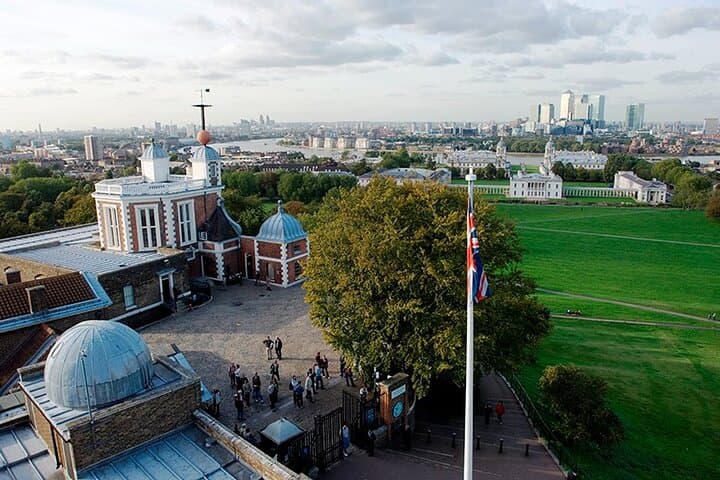
Stand on a painted line and feel a subtle recalibration of time: the Prime Meridian at the Royal Observatory slices north–south through Greenwich Park, a thin, decisive marker that has shaped navigation and global clocks for centuries.
Stand on a painted line and feel a subtle recalibration of time: the Prime Meridian at the Royal Observatory slices north–south through Greenwich Park, a thin, decisive marker that has shaped navigation and global clocks for centuries.
This day-pass stitches together naval history and classical architecture. The Royal Observatory (founded 1675 by Charles II) maps the science of longitude and hosts the Peter Harrison Planetarium; the Cutty Sark, the world’s surviving tea clipper, still dares visitors to imagine salt spray and whipping sails beneath her copper-clad hull. Nearby, the Queen’s House — Inigo Jones’s 17th-century classical villa — and the National Maritime Museum expand the story to imperial trade, naval strategy and the everyday artifacts that made Britain a seafaring power.
Geology here is urban parkland: layered chalk beneath rolling green, with views over the Thames that were once strategic observation points. Cultural threads run from maritime commerce to Greenwich Market’s artisan stalls.
Plan practically: tickets cover entry to both the Observatory and Cutty Sark on the same day (last entry 4pm). The sites sit a short 10–12 minute walk apart across varied paving and park paths. Allow 3–5 hours to move at a measured pace between galleries, ship decks and the hilltop viewpoint. Public transport (DLR, Southeastern trains, river services) drops you close; the venue is wheelchair accessible but check specific exhibition access. Bring a charged phone, a compact rain shell, and comfortable shoes—the route alternates cobbles, museum ramps and park turf. Visit early to avoid midday crowds at the Meridian line and leave time for the free National Maritime Museum or a stroll through Greenwich Market.