THE ADVENTURE COLLECTIVE® · Independent discovery and booking for outdoor travel

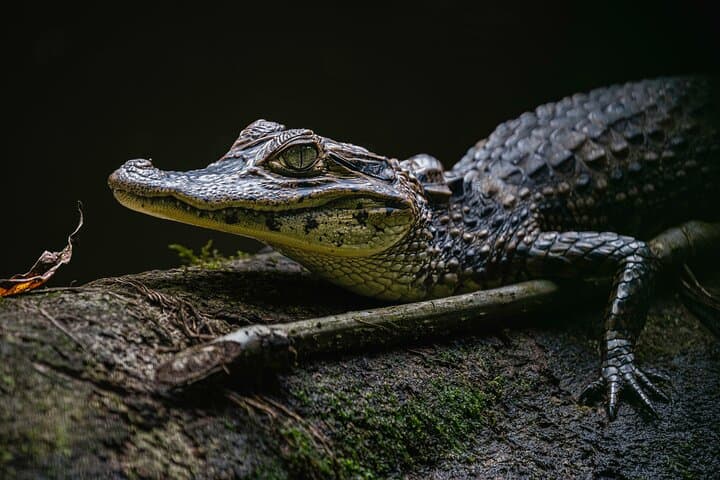
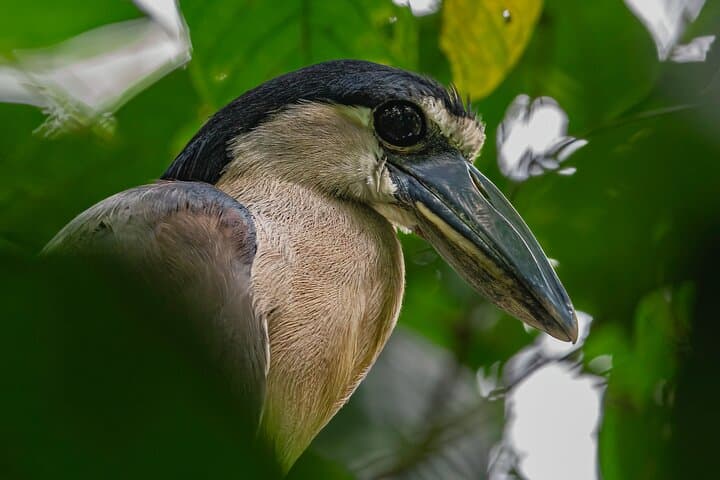
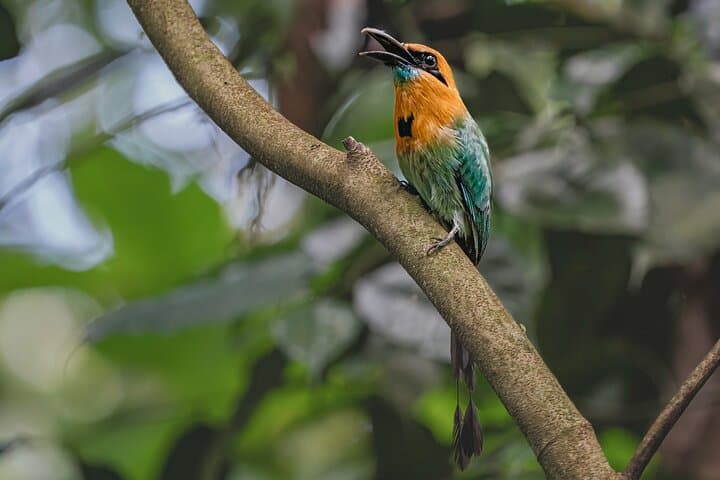
Trade La Fortuna’s bustle for shaded trails and wildlife sightings at Green Ecopark. This self-guided entrance guarantees flexible access to sloths, iguanas, frogs, and tropical birds in an uncaged, observational setting.
Trade La Fortuna’s bustle for shaded trails and wildlife sightings at Green Ecopark. This self-guided entrance guarantees flexible access to sloths, iguanas, frogs, and tropical birds in an uncaged, observational setting.
The trail opens under a humid, green ceiling; air thick with leaf-litter and the distant rumble of Arenal’s drainage basins. Visitors step onto soft earth and immediately trade the town’s bustle for a mosaic of frogs calling, bird wings flicking, and a sloth pausing mid-reach—as if time here prefers to move deliberately.
Verified experiences and guided adventures in the surrounding area.
Operated by Elias Nature Tours · La Fortuna, Alajuela
The trail opens under a humid, green ceiling; air thick with leaf-litter and the distant rumble of Arenal’s drainage basins. Visitors step onto soft earth and immediately trade the town’s bustle for a mosaic of frogs calling, bird wings flicking, and a sloth pausing mid-reach—as if time here prefers to move deliberately.
Green Ecopark sits on the lowland fringe of La Fortuna, where volcanic soils and tropical rainfall create wetlands, secondary forest, and shaded paths that sustain reptiles, amphibians, and a diverse avifauna. The park was developed to protect habitat adjacent to agricultural lands and to offer non-invasive wildlife viewing—no cages, no performances—just intact behavior in plain sight.
Geologically, the area inherits Arenal’s volcanic legacy: fertile ash layers and well-drained ridges that shape small streams and ponds within the park. Culturally, La Fortuna remains a gateway town: lodging, local eateries serving gallo pinto, and guides available for deeper treks into the Arenal watershed.
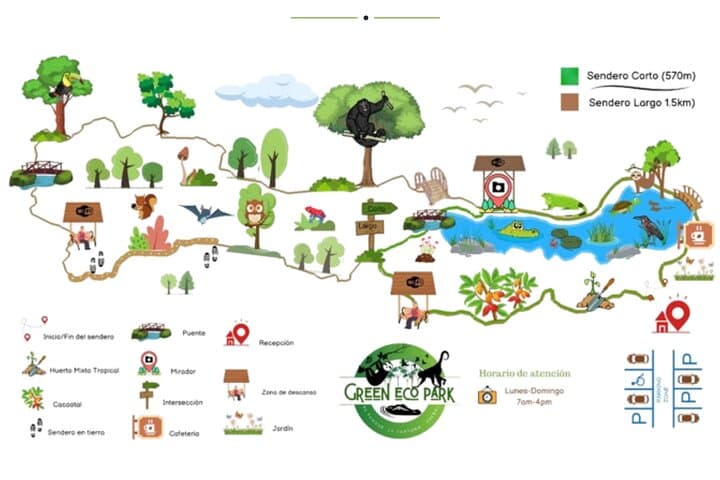
Practically, the self-guided loop takes a minimum of an hour; many visitors linger two hours or more to scan canopy and understory. Trails are mostly flat with occasional muddy sections—good footwear and rain protection matter. Bring insect repellent, a small pair of binoculars, and a camera with a quiet shutter. Move slowly, keep to the paths, and silence phones to increase wildlife encounters.
This is a flexible, low-effort way to experience Costa Rica’s biodiversity—ideal for travelers who prefer independent exploration with conservation-friendly practices.
easy.
1–4 hours.
Suitable for most fitness levels; expect flat to gently uneven ground and short muddy sections
The pass allows a minimum of one hour; most visitors spend 1–2 hours, but you can stay all day to photograph and observe at leisure.
This is a self-guided pass; local guides can be arranged separately in La Fortuna if you want expert interpretation.
Some paths are suitable for strollers, but sections may be uneven or muddy—a robust stroller or carrier is recommended for infants.
You may bring snacks, but avoid feeding wildlife and carry out all trash to protect the habitat.
Green Ecopark was established as a conservation-minded space to protect fragmented habitat near La Fortuna and give visitors a non-invasive way to observe local species.
The park enforces a no-cages, no-shows policy and asks visitors to stay on trails, avoid feeding wildlife, and pack out waste to minimize human impact.
Elias Nature Tours operates guided outdoor trips and adventures with an emphasis on safety, stewardship, and memorable experiences.
The trail opens under a humid, green ceiling; air thick with leaf-litter and the distant rumble of Arenal’s drainage basins. Visitors step onto soft earth and immediately trade the town’s bustle for a mosaic of frogs calling, bird wings flicking, and a sloth pausing mid-reach—as if time here prefers to move deliberately.
The trail opens under a humid, green ceiling; air thick with leaf-litter and the distant rumble of Arenal’s drainage basins. Visitors step onto soft earth and immediately trade the town’s bustle for a mosaic of frogs calling, bird wings flicking, and a sloth pausing mid-reach—as if time here prefers to move deliberately.
Green Ecopark sits on the lowland fringe of La Fortuna, where volcanic soils and tropical rainfall create wetlands, secondary forest, and shaded paths that sustain reptiles, amphibians, and a diverse avifauna. The park was developed to protect habitat adjacent to agricultural lands and to offer non-invasive wildlife viewing—no cages, no performances—just intact behavior in plain sight.
Geologically, the area inherits Arenal’s volcanic legacy: fertile ash layers and well-drained ridges that shape small streams and ponds within the park. Culturally, La Fortuna remains a gateway town: lodging, local eateries serving gallo pinto, and guides available for deeper treks into the Arenal watershed.
Practically, the self-guided loop takes a minimum of an hour; many visitors linger two hours or more to scan canopy and understory. Trails are mostly flat with occasional muddy sections—good footwear and rain protection matter. Bring insect repellent, a small pair of binoculars, and a camera with a quiet shutter. Move slowly, keep to the paths, and silence phones to increase wildlife encounters.
This is a flexible, low-effort way to experience Costa Rica’s biodiversity—ideal for travelers who prefer independent exploration with conservation-friendly practices.