THE ADVENTURE COLLECTIVE® · Independent discovery and booking for outdoor travel

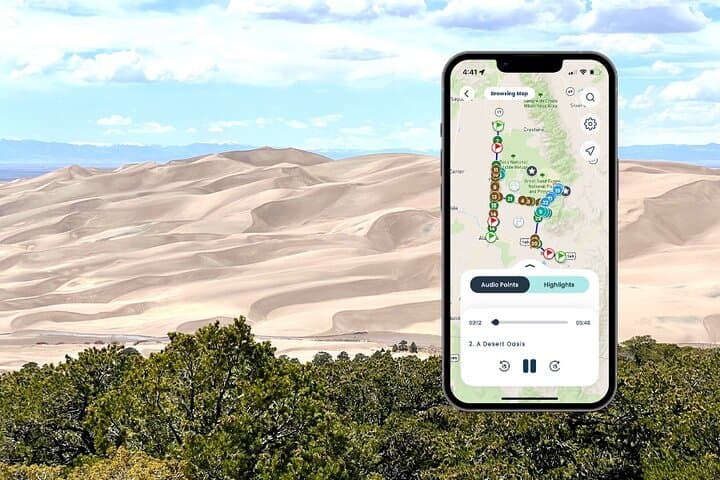
Walk the tallest dunes in North America at your own pace with an offline audio guide that explains the park’s geology, human history, and best side hikes. Ideal for families and independent explorers who want turn-by-turn directions and flexible stops.
Walk the tallest dunes in North America at your own pace with an offline audio guide that explains the park’s geology, human history, and best side hikes. Ideal for families and independent explorers who want turn-by-turn directions and flexible stops.
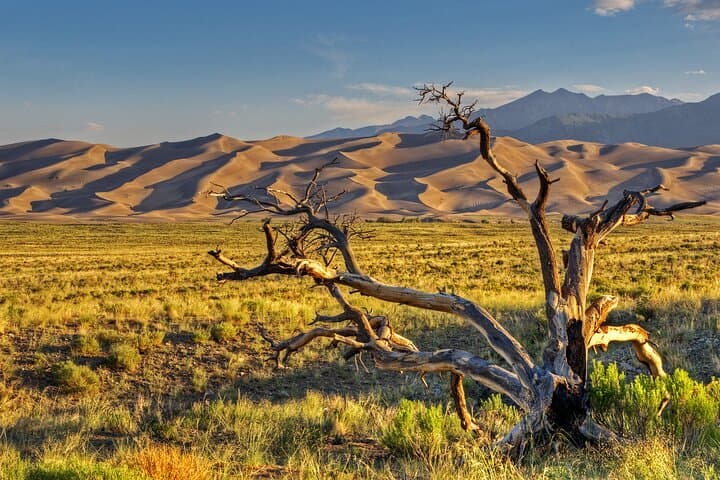
The first step onto the dune field feels like entering a different planet: wind sculpts ridges that rise and fall like a frozen ocean, and each footstep writes a temporary map across the sand.
Verified experiences and guided adventures in the surrounding area.
Operated by Shaka Guide Apps · Mosca, Colorado
The first step onto the dune field feels like entering a different planet: wind sculpts ridges that rise and fall like a frozen ocean, and each footstep writes a temporary map across the sand.
This self-guided audio tour leads you from the Visitor Center out onto the tallest sand dunes in North America, with narrated stops that explain how the Rio Grande, alpine runoff, and seasonal winds delivered and shaped millions of tons of sand. The story also threads human history — Ute and other Indigenous presence, early settlers in the San Luis Valley, and twentieth-century land use that reshaped local wetlands.
Geology here is simple and dramatic: sand blown from the valley collects against the Sangre de Cristo range, producing dunes that can reach several hundred feet high; Medano Creek pushes and surges each spring, daring visitors to splash at its temporary beach. Cultural side trips include Fort Garland’s adobe fort and oddball local stops like the UFO watchtower.
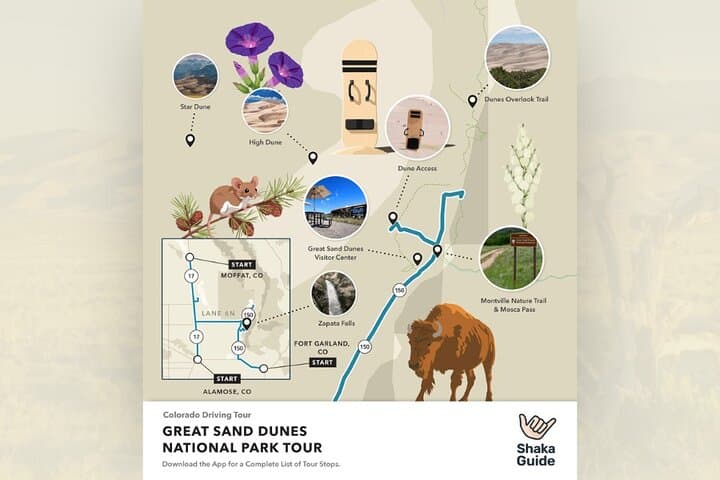
Practical guidance folds naturally into the narration: plan 10–12 hours if you follow multiple stops, expect high-elevation sun and sudden winds, and prepare for short, steep dune climbs that are harder than trail miles suggest. The tour points out Montville Nature Trail (0.5 mi), Zapata Falls (short but rocky scramble to a 25-ft falls), Mosca Pass (7 mi), and Sand Ramp Trail (up to 11 mi one way), letting you customize effort and timing.
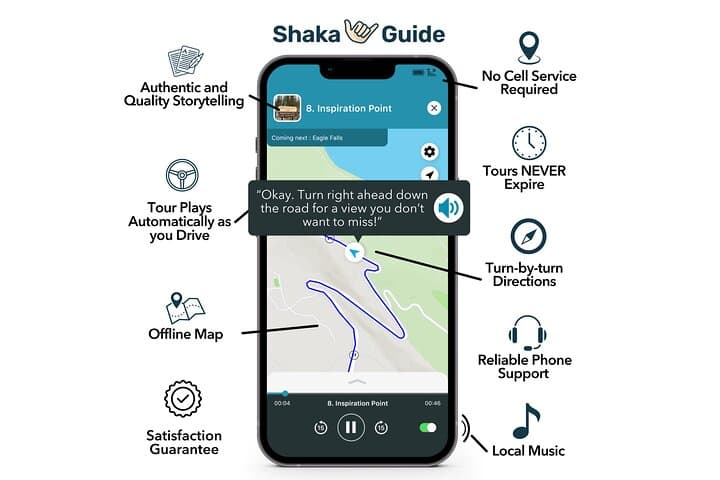
Download the Shaka Guide audio before you go for offline GPS directions, hydrate for altitude, wear sturdy shoes for rock and sand transitions, and leave room in your schedule to watch Medano’s waves form and fade.
moderate.
10–12 hours (full recommended loop).
Moderate fitness recommended—expect steep, energy-sapping dune climbs and short scrambles; altitude (~7,500 ft) increases effort.
No—the Shaka Guide audio tour works offline after download; redeem and download the tour on Wi‑Fi before you arrive.
Visitor Center and short boardwalks are stroller-accessible, but dune climbs and Zapata Falls require children to be able to hike and scramble; bring carriers for rough sections.
Yes—Great Sand Dunes National Park requires an entrance fee or valid pass; audio tour doesn’t include park admission.
No—Medano Pass is a rough 22-mile backcountry road that requires high-clearance 4WD; check conditions and permit requirements before attempting.
The dunes built up over millennia as valley sediments were blown against the Sangre de Cristo range; the San Luis Valley also bears deep Indigenous and frontier histories, including Ute presence and 19th-century military posts.
Dune plants and Medano Creek habitats are fragile—stick to trails where posted, avoid walking on vegetation, and pack out all trash to protect nesting and riparian zones.
Shaka Guide Apps operates guided outdoor trips and adventures with an emphasis on safety, stewardship, and memorable experiences.
The first step onto the dune field feels like entering a different planet: wind sculpts ridges that rise and fall like a frozen ocean, and each footstep writes a temporary map across the sand.
The first step onto the dune field feels like entering a different planet: wind sculpts ridges that rise and fall like a frozen ocean, and each footstep writes a temporary map across the sand.
This self-guided audio tour leads you from the Visitor Center out onto the tallest sand dunes in North America, with narrated stops that explain how the Rio Grande, alpine runoff, and seasonal winds delivered and shaped millions of tons of sand. The story also threads human history — Ute and other Indigenous presence, early settlers in the San Luis Valley, and twentieth-century land use that reshaped local wetlands.
Geology here is simple and dramatic: sand blown from the valley collects against the Sangre de Cristo range, producing dunes that can reach several hundred feet high; Medano Creek pushes and surges each spring, daring visitors to splash at its temporary beach. Cultural side trips include Fort Garland’s adobe fort and oddball local stops like the UFO watchtower.
Practical guidance folds naturally into the narration: plan 10–12 hours if you follow multiple stops, expect high-elevation sun and sudden winds, and prepare for short, steep dune climbs that are harder than trail miles suggest. The tour points out Montville Nature Trail (0.5 mi), Zapata Falls (short but rocky scramble to a 25-ft falls), Mosca Pass (7 mi), and Sand Ramp Trail (up to 11 mi one way), letting you customize effort and timing.
Download the Shaka Guide audio before you go for offline GPS directions, hydrate for altitude, wear sturdy shoes for rock and sand transitions, and leave room in your schedule to watch Medano’s waves form and fade.