THE ADVENTURE COLLECTIVE® · Independent discovery and booking for outdoor travel

Scramble up the Great Saint in Meteora on a 3-hour guided hike that mixes exposed scrambles with short via-cordata sections. Small groups, helmets and harnesses included—expect steep rock, sweeping views, and a dose of local history.
Scramble up the Great Saint in Meteora on a 3-hour guided hike that mixes exposed scrambles with short via-cordata sections. Small groups, helmets and harnesses included—expect steep rock, sweeping views, and a dose of local history.
A morning on the Great Saint in Meteora begins with village stonework underfoot and the sharp scent of sun-warmed rock. The guide gathers the small group in Kastraki’s old habitation square, issues helmets and harnesses, and points toward a band of sandstone towers that rise like weathered pillars from the Thessalian plain.
Verified experiences and guided adventures in the surrounding area.
Operated by Visit Meteora · Kastraki, Thessaly
A morning on the Great Saint in Meteora begins with village stonework underfoot and the sharp scent of sun-warmed rock. The guide gathers the small group in Kastraki’s old habitation square, issues helmets and harnesses, and points toward a band of sandstone towers that rise like weathered pillars from the Thessalian plain.
Geology here is raw: conglomerate sandstone sculpted by millennia of wind and river action into steep pillars and ledges. The area’s human story follows—hermit monks and the Byzantine-era monasteries that cling to cliffs—so climbing these routes feels like walking through layers of history. Local culture is rural and observant; shepherds still move flocks below while tourists pass briefly to stare upward.
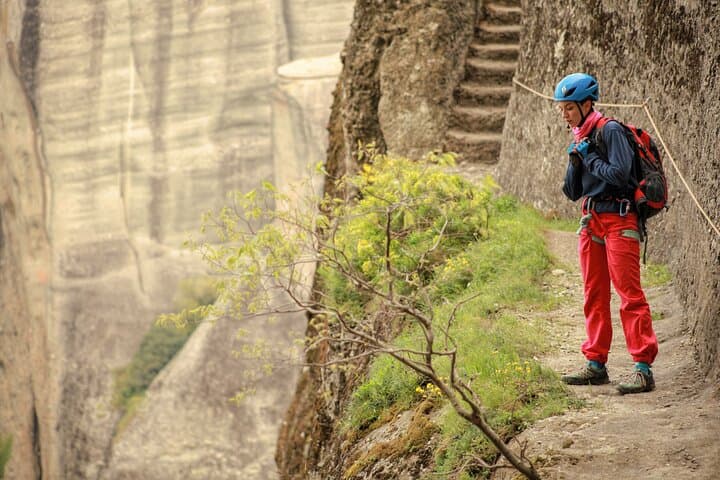
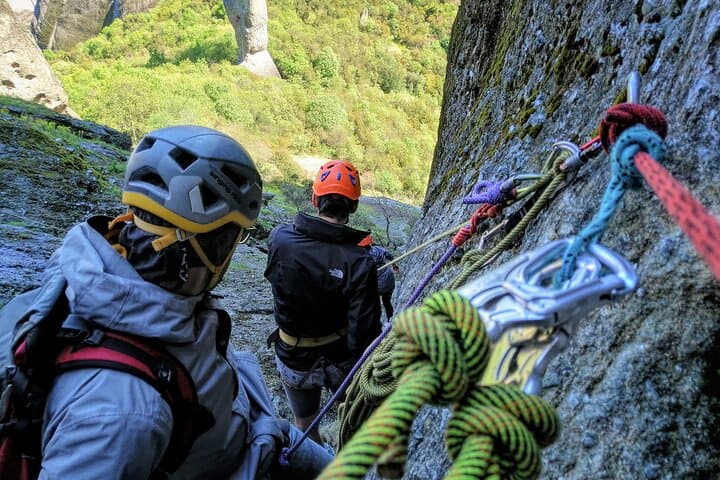
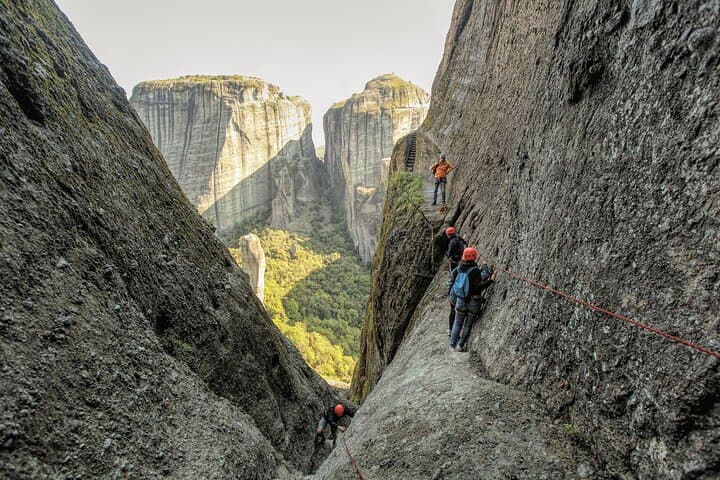
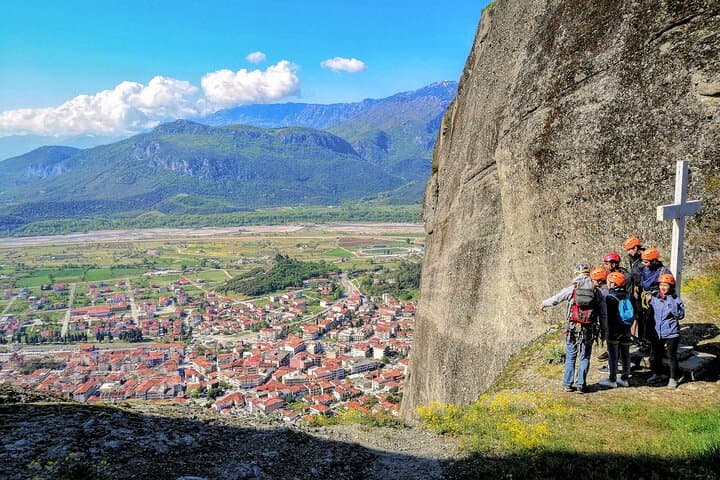
The route blends steep walking, exposed scrambles and short via-cordata sections where fixed cables and anchors make vertical moves accessible. Expect roughly 2–3 hours on trail, compacted soils, carved steps and sections requiring balance and low-level climbing; guides maintain a slow, steady pace with frequent stops to enjoy 360-degree views of Meteora and the distant peaks of Pindus.
Practical guidance: wear grippy hiking shoes, bring layered clothing for rapid temperature changes, and carry 1–1.5 liters of water—the operator supplies helmets, harnesses and via ferrata gear. Tours cancel in heavy rain for safety; a full refund or rebooking is offered. This is a compact, high-reward outing: short in time but concentrated in exposure, views and geological theater. Ideal for fit hikers who want hands-on scrambling with expert supervision.
challenging.
2–3 hours.
Suitable for hikers with good cardiovascular fitness, balance, and some prior scrambling experience; must manage sustained uphill walking and exposed sections.
The route includes exposed scrambling and short vertical moves secured by cables; guides provide harnesses and instruction for clipping in and moving safely.
No formal experience is required, but participants should be comfortable with exposure, scrambling and basic climbing movements; guides coach technique throughout.
Tours are cancelled in rainy or unsafe conditions for safety reasons; the operator offers a full refund or an alternative date if weather forces cancellation.
Age and fitness requirements vary; because of exposure and physical demands, check with the operator—children must be physically capable and supervised by an adult.
Meteora’s cliffs were used by hermit monks from the 9th century; several monasteries rose on pillars during the Byzantine period to create a unique cliffside monastic culture.
Visitors are asked to stay on designated paths and avoid climbing on fragile rock surfaces; local guides help minimize erosion by managing groups and using established routes.
Visit Meteora operates guided outdoor trips and adventures with an emphasis on safety, stewardship, and memorable experiences.
A morning on the Great Saint in Meteora begins with village stonework underfoot and the sharp scent of sun-warmed rock. The guide gathers the small group in Kastraki’s old habitation square, issues helmets and harnesses, and points toward a band of sandstone towers that rise like weathered pillars from the Thessalian plain.
A morning on the Great Saint in Meteora begins with village stonework underfoot and the sharp scent of sun-warmed rock. The guide gathers the small group in Kastraki’s old habitation square, issues helmets and harnesses, and points toward a band of sandstone towers that rise like weathered pillars from the Thessalian plain.
Geology here is raw: conglomerate sandstone sculpted by millennia of wind and river action into steep pillars and ledges. The area’s human story follows—hermit monks and the Byzantine-era monasteries that cling to cliffs—so climbing these routes feels like walking through layers of history. Local culture is rural and observant; shepherds still move flocks below while tourists pass briefly to stare upward.
The route blends steep walking, exposed scrambles and short via-cordata sections where fixed cables and anchors make vertical moves accessible. Expect roughly 2–3 hours on trail, compacted soils, carved steps and sections requiring balance and low-level climbing; guides maintain a slow, steady pace with frequent stops to enjoy 360-degree views of Meteora and the distant peaks of Pindus.
Practical guidance: wear grippy hiking shoes, bring layered clothing for rapid temperature changes, and carry 1–1.5 liters of water—the operator supplies helmets, harnesses and via ferrata gear. Tours cancel in heavy rain for safety; a full refund or rebooking is offered. This is a compact, high-reward outing: short in time but concentrated in exposure, views and geological theater. Ideal for fit hikers who want hands-on scrambling with expert supervision.