THE ADVENTURE COLLECTIVE® · Independent discovery and booking for outdoor travel

Trace the footsteps of Beatles, Bowie and the Stones across central London in a two‑hour walking tour. Visit Denmark Street, Carnaby Street and the tiny club rooms where rock history unfolded, with practical tips for timing, transport and what to bring.
Trace the footsteps of Beatles, Bowie and the Stones across central London in a two‑hour walking tour. Visit Denmark Street, Carnaby Street and the tiny club rooms where rock history unfolded, with practical tips for timing, transport and what to bring.
You step off Carnaby Street into a swell of city noise and history—shopfronts, neon, and the faint echo of riffs that once rewired popular music. For two hours the pavement becomes a timeline: a narrow Denmark Street alley where songwriters stamped plates, the pub corner where punk first howled, and the recessed doorway where a young Elton John punched his timecard.
Verified experiences and guided adventures in the surrounding area.
You step off Carnaby Street into a swell of city noise and history—shopfronts, neon, and the faint echo of riffs that once rewired popular music. For two hours the pavement becomes a timeline: a narrow Denmark Street alley where songwriters stamped plates, the pub corner where punk first howled, and the recessed doorway where a young Elton John punched his timecard.
London's rock story is civic as much as cultural. The West End’s streets carry the layered geology of theatre and commerce that gave bands stages and audiences; postwar affluence and 1960s fashion corridors like Carnaby Street fed the look as much as the sound. The Beatles’ final UK appearances, the Stones’ early rehearsal hacks, Bowie’s Ziggy persona emerging from club rooms—all map onto neighborhoods reshaped by music, fashion, and youth culture.
Expect tight streets, a steady urban crowd, and blocks of hard pavement—this is city walking, not a hike. Guides usually point out façades, former rehearsal spaces, and plaque-marked locations while dropping archival anecdotes that connect a lyric to a lane.
Practical: plan for standing and short bursts of walking, wear supportive shoes, and check the weather—London rain can interrupt photo stops. Bring a contactless card for a quick Tube ride if you want to arrive early or linger after the tour. The route is dense with cafés and record shops for post-tour digging; allow time to browse.
easy.
2 hours.
Light urban stamina—comfortable walking for two hours with brief standing stops
Most tours start in central Soho/Carnaby Street and finish within a short walk of Piccadilly or Covent Garden—confirm exact meeting and finish points with the operator.
Parts of the route use narrow pavements and stepped doorways; accessibility varies—check with the operator before booking for specific accommodations.
Yes—guides expect photography; some indoor locations may restrict photos, which the guide will note as you go.
Yes—guides typically leave room at the end to browse nearby record stores and cafés, so plan extra time if you want to explore.
Postwar London’s Soho and the West End became crucibles for popular music—cheap rehearsal spaces, publishing houses on Denmark Street, and fashion streets like Carnaby drove a creative economy that produced global acts.
Walking tours have a low environmental footprint; support small local businesses on the route and follow city litter and noise regulations to minimize impact.
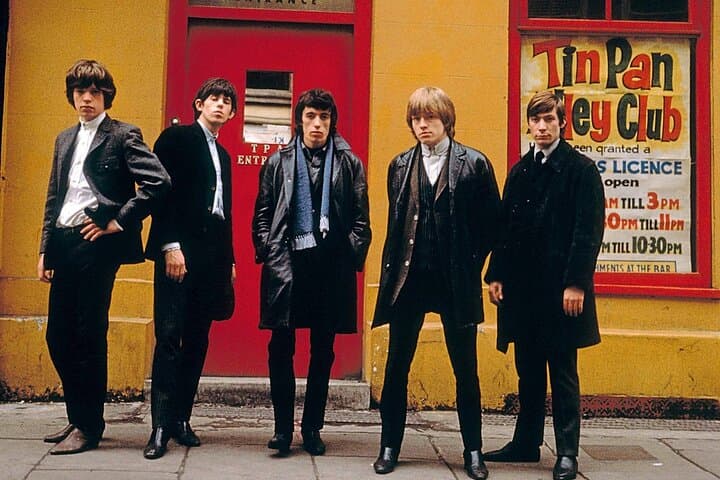
You step off Carnaby Street into a swell of city noise and history—shopfronts, neon, and the faint echo of riffs that once rewired popular music. For two hours the pavement becomes a timeline: a narrow Denmark Street alley where songwriters stamped plates, the pub corner where punk first howled, and the recessed doorway where a young Elton John punched his timecard.
You step off Carnaby Street into a swell of city noise and history—shopfronts, neon, and the faint echo of riffs that once rewired popular music. For two hours the pavement becomes a timeline: a narrow Denmark Street alley where songwriters stamped plates, the pub corner where punk first howled, and the recessed doorway where a young Elton John punched his timecard.
London's rock story is civic as much as cultural. The West End’s streets carry the layered geology of theatre and commerce that gave bands stages and audiences; postwar affluence and 1960s fashion corridors like Carnaby Street fed the look as much as the sound. The Beatles’ final UK appearances, the Stones’ early rehearsal hacks, Bowie’s Ziggy persona emerging from club rooms—all map onto neighborhoods reshaped by music, fashion, and youth culture.
Expect tight streets, a steady urban crowd, and blocks of hard pavement—this is city walking, not a hike. Guides usually point out façades, former rehearsal spaces, and plaque-marked locations while dropping archival anecdotes that connect a lyric to a lane.
Practical: plan for standing and short bursts of walking, wear supportive shoes, and check the weather—London rain can interrupt photo stops. Bring a contactless card for a quick Tube ride if you want to arrive early or linger after the tour. The route is dense with cafés and record shops for post-tour digging; allow time to browse.