THE ADVENTURE COLLECTIVE® · Independent discovery and booking for outdoor travel

A 15-day circuit through Peru’s defining landscapes — from Lima’s museums and the Nasca overflight to Colca’s condors, Lake Titicaca’s living islands, and Machu Picchu’s terraces. This expedition mixes cultural depth with high-altitude scenery and practical logistics.
A 15-day circuit through Peru’s defining landscapes — from Lima’s museums and the Nasca overflight to Colca’s condors, Lake Titicaca’s living islands, and Machu Picchu’s terraces. This expedition mixes cultural depth with high-altitude scenery and practical logistics.
Dawn breaks over Lima as the tour van slips east toward the highlands; the salt-bleached coast gives way to desert ridges, then to rolling puna where winds toss tufts of ichu grass like restless hands. Over 15 days you move through changing worlds — the fog-cooled Ballestas Islands, the volcanic ramparts of Arequipa, the vertiginous Colca Canyon, and at last the stone terraces of Machu Picchu perched above the Urubamba’s canyon.
Verified experiences and guided adventures in the surrounding area.
Operated by VIPAC Travel · Cusco, Cusco
Dawn breaks over Lima as the tour van slips east toward the highlands; the salt-bleached coast gives way to desert ridges, then to rolling puna where winds toss tufts of ichu grass like restless hands. Over 15 days you move through changing worlds — the fog-cooled Ballestas Islands, the volcanic ramparts of Arequipa, the vertiginous Colca Canyon, and at last the stone terraces of Machu Picchu perched above the Urubamba’s canyon.
This route follows millennia of Andean history: pre-Inca cultures on the coast, the agricultural experiments at Moray, colonial churches in Arequipa and Cusco’s Spanish plazas built atop Inca foundations. Geology carves the itinerary — volcanic cones, uplifted altiplano, and the river-worn gorge that gives Machu Picchu its dramatic stance. Local communities keep textile and farming traditions alive; on Lake Titicaca, Uros reed islands still float by hand.
Expect long travel days punctuated by short walks and guided site visits rather than sustained mountaineering. Altitude is the defining challenge — passes approach 4,900 m — so days ease you into thin air. Practical tips: hydrate steadily, sleep low and move high when possible, carry layers for sun, wind and nighttime cold, and bring any personal altitude medication your doctor recommends. Footwear should be sturdy for uneven cobbles and terraces; a compact daypack keeps camera, rain shell and water within reach. The itinerary balances sensory moments — the cry of condors, the wind shaping salt pans — with structured logistics: trains to Aguas Calientes, bilingual guides, and included transfers, making this a layered, accessible expedition through the heart of the Andes.
challenging.
15 days.
Suitable for travelers in good general fitness who can handle multiple long transfer days, short on-site walks, and sustained exposure to high altitude.
The route reaches passes near 4,900 m (Patapampa); many travelers feel mild symptoms. Gradual pacing, hydration, and rest help; consult your doctor about medication.
Train segments and Machu Picchu entrance are provided as described; train class depends on booking option and access shifts are coordinated on arrival in Cusco.
Most breakfasts (14) and several lunches are included per itinerary; accommodations for 14 nights are provided according to chosen category.
Overflights are not recommended for children under 8 due to aircraft constraints and safety guidance; the plane used is small and holds up to 12 passengers.
The route threads pre-Columbian sites, Inca engineering in the Sacred Valley and colonial-era Spanish monuments that reused Inca foundations, reflecting layered cultural continuity.
Many sites limit visitor circuits and enforce timing to reduce erosion and crowding; support local communities by buying handicrafts directly and following Leave No Trace principles.
VIPAC Travel operates guided outdoor trips and adventures with an emphasis on safety, stewardship, and memorable experiences.


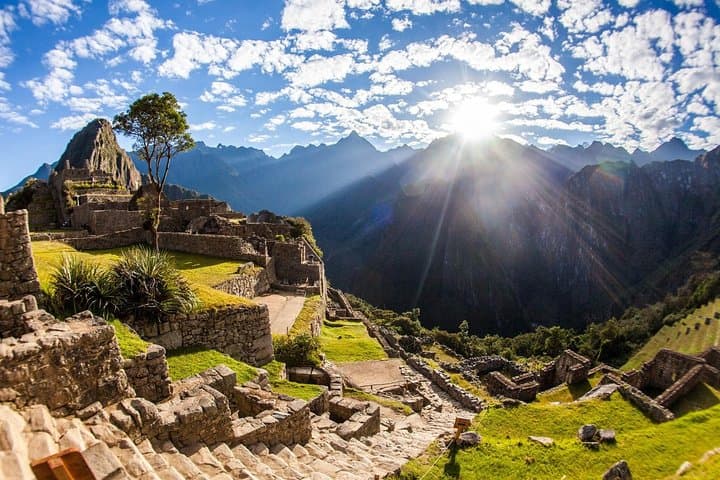

Dawn breaks over Lima as the tour van slips east toward the highlands; the salt-bleached coast gives way to desert ridges, then to rolling puna where winds toss tufts of ichu grass like restless hands. Over 15 days you move through changing worlds — the fog-cooled Ballestas Islands, the volcanic ramparts of Arequipa, the vertiginous Colca Canyon, and at last the stone terraces of Machu Picchu perched above the Urubamba’s canyon.
Dawn breaks over Lima as the tour van slips east toward the highlands; the salt-bleached coast gives way to desert ridges, then to rolling puna where winds toss tufts of ichu grass like restless hands. Over 15 days you move through changing worlds — the fog-cooled Ballestas Islands, the volcanic ramparts of Arequipa, the vertiginous Colca Canyon, and at last the stone terraces of Machu Picchu perched above the Urubamba’s canyon.
This route follows millennia of Andean history: pre-Inca cultures on the coast, the agricultural experiments at Moray, colonial churches in Arequipa and Cusco’s Spanish plazas built atop Inca foundations. Geology carves the itinerary — volcanic cones, uplifted altiplano, and the river-worn gorge that gives Machu Picchu its dramatic stance. Local communities keep textile and farming traditions alive; on Lake Titicaca, Uros reed islands still float by hand.
Expect long travel days punctuated by short walks and guided site visits rather than sustained mountaineering. Altitude is the defining challenge — passes approach 4,900 m — so days ease you into thin air. Practical tips: hydrate steadily, sleep low and move high when possible, carry layers for sun, wind and nighttime cold, and bring any personal altitude medication your doctor recommends. Footwear should be sturdy for uneven cobbles and terraces; a compact daypack keeps camera, rain shell and water within reach. The itinerary balances sensory moments — the cry of condors, the wind shaping salt pans — with structured logistics: trains to Aguas Calientes, bilingual guides, and included transfers, making this a layered, accessible expedition through the heart of the Andes.