THE ADVENTURE COLLECTIVE® · Independent discovery and booking for outdoor travel

Join a hands-on grape-stomping harvest in Chianti, then sit for a guided tasting of Chianti Classico and Super Tuscan wines. Family-friendly and private, this countryside experience blends tradition with accessible, sensory learning.
Join a hands-on grape-stomping harvest in Chianti, then sit for a guided tasting of Chianti Classico and Super Tuscan wines. Family-friendly and private, this countryside experience blends tradition with accessible, sensory learning.
Morning light slices across terraces of Sangiovese vines as you step from an air-conditioned van into a yard that smells of crushed grass and warm earth. Children laugh as they choose clusters to pick; adults follow the guide between rows learning the difference between Chianti Classico fruit and a riper bunch meant for a Super Tuscan blend. Feet sink into rounded wooden vats for the stomping ritual—playful, slightly messy, and utterly rooted in local harvest tradition.
Verified experiences and guided adventures in the surrounding area.
Operated by Pek Tuscany in Limo · Greve in Chianti, Tuscany
Morning light slices across terraces of Sangiovese vines as you step from an air-conditioned van into a yard that smells of crushed grass and warm earth. Children laugh as they choose clusters to pick; adults follow the guide between rows learning the difference between Chianti Classico fruit and a riper bunch meant for a Super Tuscan blend. Feet sink into rounded wooden vats for the stomping ritual—playful, slightly messy, and utterly rooted in local harvest tradition.
Chianti’s hills are Pliocene-era clay and limestone, soils that give Sangiovese its cherry acidity and savory edge. Family estates here often trace winemaking back generations; many houses built before the 20th century still press grapes the old way alongside modern tanks. The black rooster of Chianti Classico and terrace-lined roads reflect a culture that values terroir, community festivals, and slow food.
Practically, the experience blends hands-on farmwork with a seated tasting: expect a guided sip progression from Vernaccia whites to Chianti Classico DOCG and a robust Super Tuscan. The activity is accessible—no hiking fitness required—but the stomping vat and farm surfaces can be slippery. Bring sturdy sandals or shoes you don’t mind wetting, sun protection, and a camera for vineyard panoramas.
Timing matters: harvest runs August–October; late summer offers sunflowers and warmer weather, while autumn brings cooler air and fuller-flavored grapes. The outing is ideal for families wanting a tactile introduction to Italian wine culture paired with scenic country roads and a personable winemaker’s narrative.
easy.
4–5 hours.
Suitable for all fitness levels—basic mobility needed for light walking and stepping into shallow vats
Yes—most family estates provide a smaller, safe vat for children and supervise the activity; note age limits when booking.
Private air-conditioned transportation is included from your pickup point and returns you after the experience.
Yes—non-drinkers can participate in the tasting segment and enjoy grape-juice alternatives; drivers can enjoy the tour but should disclose preferences at booking.
Wear clothes you don’t mind getting stained, and bring a change of footwear and a towel; some guests prefer quick-dry garments.
Chianti Classico’s winemaking dates back centuries; many family estates in the region modernized in the late 19th and early 20th centuries while keeping older production rituals.
Many small producers in Chianti practice sustainable or organic viticulture; visitors are encouraged to follow leave-no-trace principles and avoid disturbing vineyards during cultivation.
Pek Tuscany in Limo operates guided outdoor trips and adventures with an emphasis on safety, stewardship, and memorable experiences.
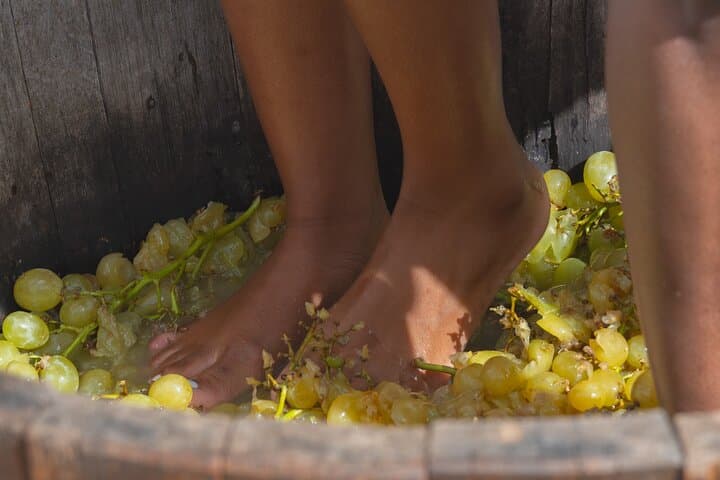
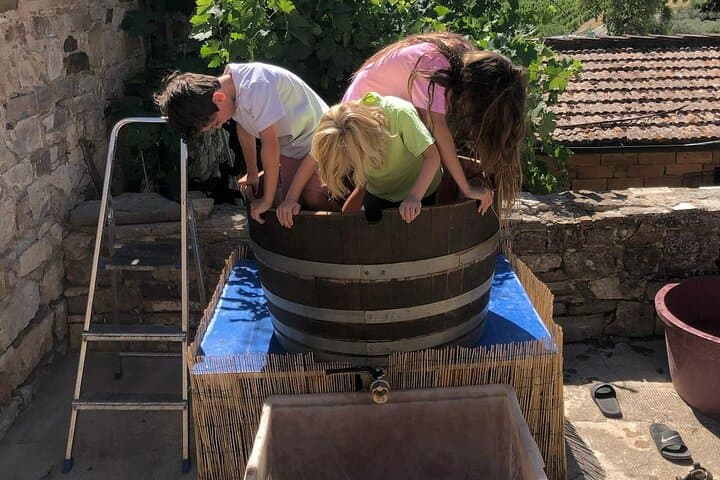

Morning light slices across terraces of Sangiovese vines as you step from an air-conditioned van into a yard that smells of crushed grass and warm earth. Children laugh as they choose clusters to pick; adults follow the guide between rows learning the difference between Chianti Classico fruit and a riper bunch meant for a Super Tuscan blend. Feet sink into rounded wooden vats for the stomping ritual—playful, slightly messy, and utterly rooted in local harvest tradition.
Morning light slices across terraces of Sangiovese vines as you step from an air-conditioned van into a yard that smells of crushed grass and warm earth. Children laugh as they choose clusters to pick; adults follow the guide between rows learning the difference between Chianti Classico fruit and a riper bunch meant for a Super Tuscan blend. Feet sink into rounded wooden vats for the stomping ritual—playful, slightly messy, and utterly rooted in local harvest tradition.
Chianti’s hills are Pliocene-era clay and limestone, soils that give Sangiovese its cherry acidity and savory edge. Family estates here often trace winemaking back generations; many houses built before the 20th century still press grapes the old way alongside modern tanks. The black rooster of Chianti Classico and terrace-lined roads reflect a culture that values terroir, community festivals, and slow food.
Practically, the experience blends hands-on farmwork with a seated tasting: expect a guided sip progression from Vernaccia whites to Chianti Classico DOCG and a robust Super Tuscan. The activity is accessible—no hiking fitness required—but the stomping vat and farm surfaces can be slippery. Bring sturdy sandals or shoes you don’t mind wetting, sun protection, and a camera for vineyard panoramas.
Timing matters: harvest runs August–October; late summer offers sunflowers and warmer weather, while autumn brings cooler air and fuller-flavored grapes. The outing is ideal for families wanting a tactile introduction to Italian wine culture paired with scenic country roads and a personable winemaker’s narrative.