THE ADVENTURE COLLECTIVE® · Independent discovery and booking for outdoor travel

Step into Egypt’s newest archaeological landmark on a limited-access guided tour of the Grand Egyptian Museum. Spend roughly three hours exploring exterior gardens, select galleries, and museum viewpoints with expert commentary and practical access for most travelers.
Step into Egypt’s newest archaeological landmark on a limited-access guided tour of the Grand Egyptian Museum. Spend roughly three hours exploring exterior gardens, select galleries, and museum viewpoints with expert commentary and practical access for most travelers.
A cool morning lifts off the Giza Plateau as the Grand Egyptian Museum’s glass and stone façade catches the first light. Visitors step from air-conditioned cars into broad plazas where coffee stalls hum and the pyramids hover on the horizon, a low, constant presence that frames the day. Guides gather groups and, in measured tones, open doors that lead into the museum’s vast circulation spaces and the limited-access galleries currently available.
Verified experiences and guided adventures in the surrounding area.
Operated by Ramasside Tours · Giza, Giza
A cool morning lifts off the Giza Plateau as the Grand Egyptian Museum’s glass and stone façade catches the first light. Visitors step from air-conditioned cars into broad plazas where coffee stalls hum and the pyramids hover on the horizon, a low, constant presence that frames the day. Guides gather groups and, in measured tones, open doors that lead into the museum’s vast circulation spaces and the limited-access galleries currently available.
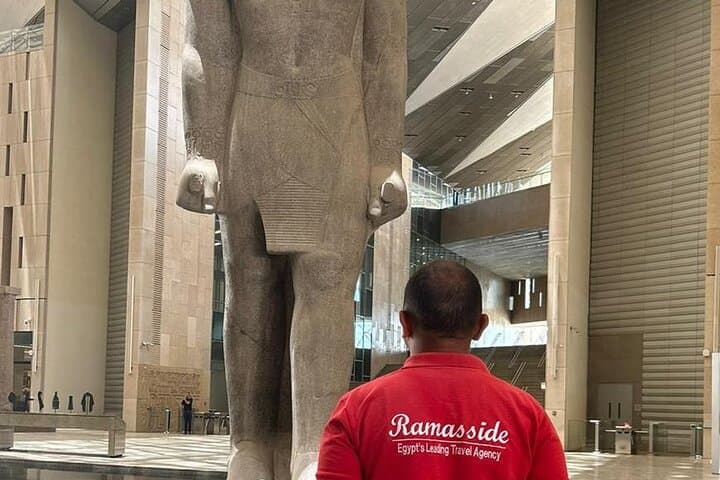
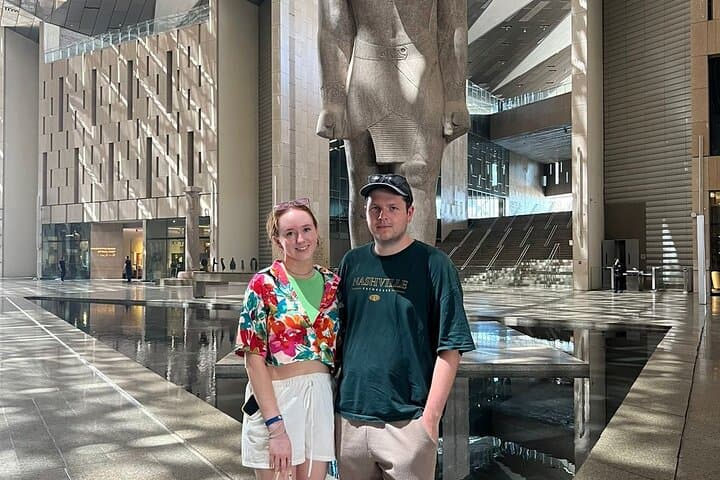
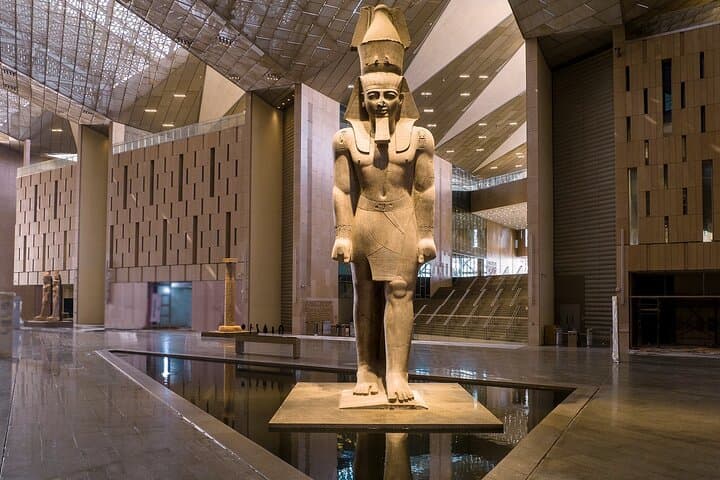
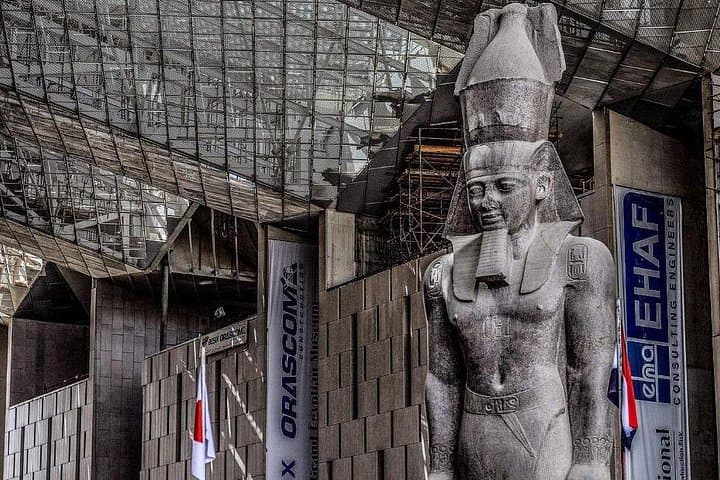
The museum itself is the newest chapter in millennia of Egyptian curation — a modern repository for ancient pharaonic art built on limestone near the same bedrock that supported the pyramids. Many objects were transferred from older, cramped galleries to purpose-built halls designed for conservation; visitors will see royal statuary, a hanging obelisk, and a selection of Tutankhamun-era pieces on phased display.
Culturally, the GEM signals Egypt’s intent to present its antiquities with contemporary museology: climate control, interpretive panels, and a commercial boulevard for local crafts. Geologically, the plateau’s limestone and desert light shape your sightlines — stone and sky work together to make the artifacts feel inseparable from place.
Practically: plan three hours for the limited-access tour, arrive early for cooler temperatures and clearer photos, and expect structured, guided circulation with some areas viewable only at a distance. Wear comfortable shoes for walking over polished floors and outdoor paving, carry water, and follow signage — flash photography and touching displays are restricted to protect fragile surfaces. The experience is accessible but paced; bring curiosity and patience to appreciate the scale and ongoing conservation work.
easy.
3 hours.
Light walking and standing for several short periods; suitable for most fitness levels.
Options vary—confirm at booking whether tickets are included in your selected package; some limited-access tours include admission, others require separate purchase.
Yes — the facility and transportation options listed indicate wheelchair-accessible routes and services; advise the operator of needs when booking.
The standard limited-access tour runs about three hours, which covers exterior spaces, the Grand Hall, and selected limited galleries with guided commentary.
Non-flash photography is typically allowed in public areas; restricted zones and conservation areas prohibit photography — follow signage and your guide’s directions.
Conceived as the world’s largest museum dedicated to ancient Egypt, the GEM consolidates collections long housed in older Cairo museums and emphasizes conservation-ready display spaces.
The museum uses strict climate control and restricted access areas to preserve fragile artifacts; visitors should avoid flash photography and adhere to barriers to limit wear.
Ramasside Tours operates guided outdoor trips and adventures with an emphasis on safety, stewardship, and memorable experiences.
A cool morning lifts off the Giza Plateau as the Grand Egyptian Museum’s glass and stone façade catches the first light. Visitors step from air-conditioned cars into broad plazas where coffee stalls hum and the pyramids hover on the horizon, a low, constant presence that frames the day. Guides gather groups and, in measured tones, open doors that lead into the museum’s vast circulation spaces and the limited-access galleries currently available.
A cool morning lifts off the Giza Plateau as the Grand Egyptian Museum’s glass and stone façade catches the first light. Visitors step from air-conditioned cars into broad plazas where coffee stalls hum and the pyramids hover on the horizon, a low, constant presence that frames the day. Guides gather groups and, in measured tones, open doors that lead into the museum’s vast circulation spaces and the limited-access galleries currently available.
The museum itself is the newest chapter in millennia of Egyptian curation — a modern repository for ancient pharaonic art built on limestone near the same bedrock that supported the pyramids. Many objects were transferred from older, cramped galleries to purpose-built halls designed for conservation; visitors will see royal statuary, a hanging obelisk, and a selection of Tutankhamun-era pieces on phased display.
Culturally, the GEM signals Egypt’s intent to present its antiquities with contemporary museology: climate control, interpretive panels, and a commercial boulevard for local crafts. Geologically, the plateau’s limestone and desert light shape your sightlines — stone and sky work together to make the artifacts feel inseparable from place.
Practically: plan three hours for the limited-access tour, arrive early for cooler temperatures and clearer photos, and expect structured, guided circulation with some areas viewable only at a distance. Wear comfortable shoes for walking over polished floors and outdoor paving, carry water, and follow signage — flash photography and touching displays are restricted to protect fragile surfaces. The experience is accessible but paced; bring curiosity and patience to appreciate the scale and ongoing conservation work.