THE ADVENTURE COLLECTIVE® · Independent discovery and booking for outdoor travel

Leave the Strip for a day and stand at the edge of a geological giant. This full-day bus tour from Las Vegas visits Hoover Dam, Eagle Point, Guano Point, and offers an optional Skywalk—perfect for travelers who want maximum canyon impact with minimal planning.
Leave the Strip for a day and stand at the edge of a geological giant. This full-day bus tour from Las Vegas visits Hoover Dam, Eagle Point, Guano Point, and offers an optional Skywalk—perfect for travelers who want maximum canyon impact with minimal planning.
The bus pulls away from Las Vegas before sunrise, headlights painting the Mojave scrub as the Strip’s glow shrinks behind you. Morning light picks out the stumpy silhouettes of Joshua trees for mile after mile, and the guide’s voice—part storyteller, part logistics manager—frames the day: Hoover Dam, the Colorado River, then the Hualapai land where cliffs throw long shadows into a canyon that refuses casual description.
Verified experiences and guided adventures in the surrounding area.
Operated by TakeYourTrip · Peach Springs, Arizona
The bus pulls away from Las Vegas before sunrise, headlights painting the Mojave scrub as the Strip’s glow shrinks behind you. Morning light picks out the stumpy silhouettes of Joshua trees for mile after mile, and the guide’s voice—part storyteller, part logistics manager—frames the day: Hoover Dam, the Colorado River, then the Hualapai land where cliffs throw long shadows into a canyon that refuses casual description.
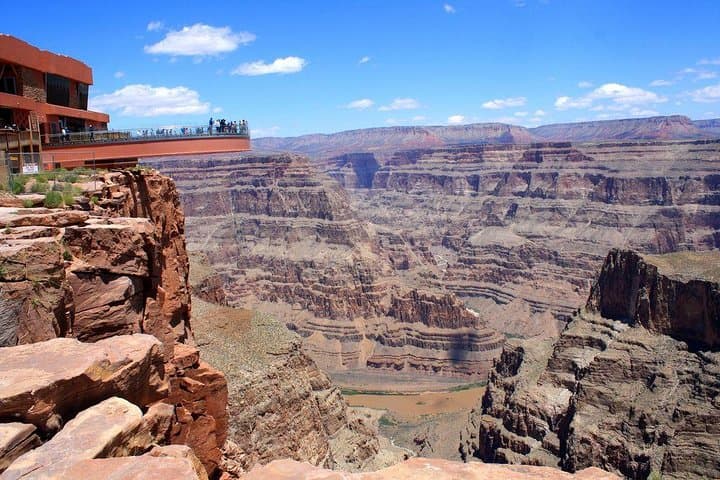
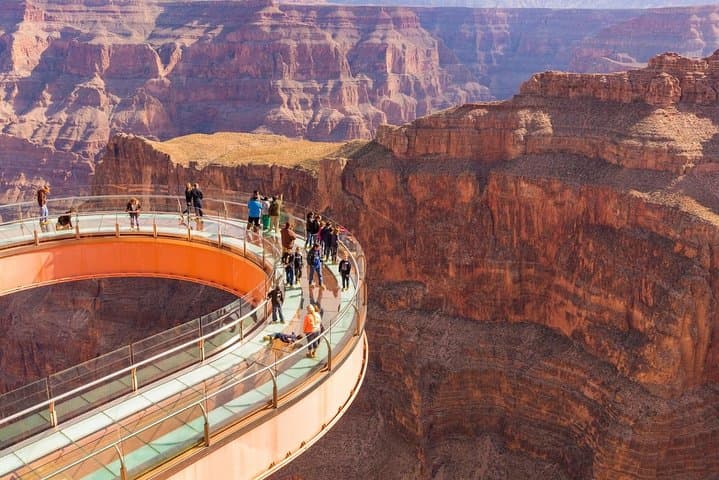
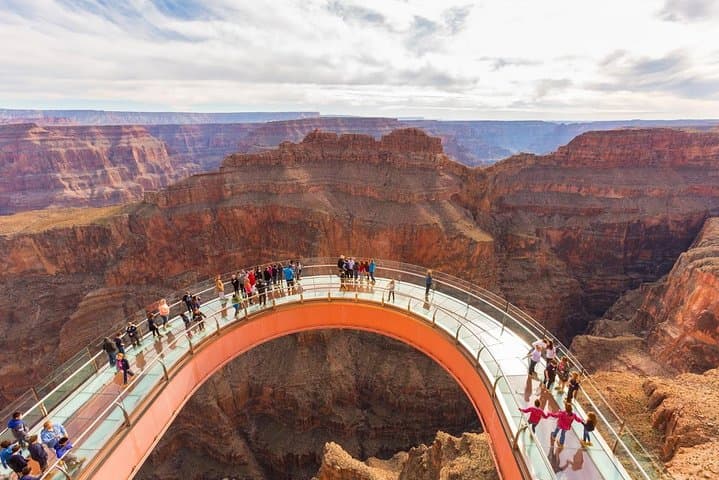
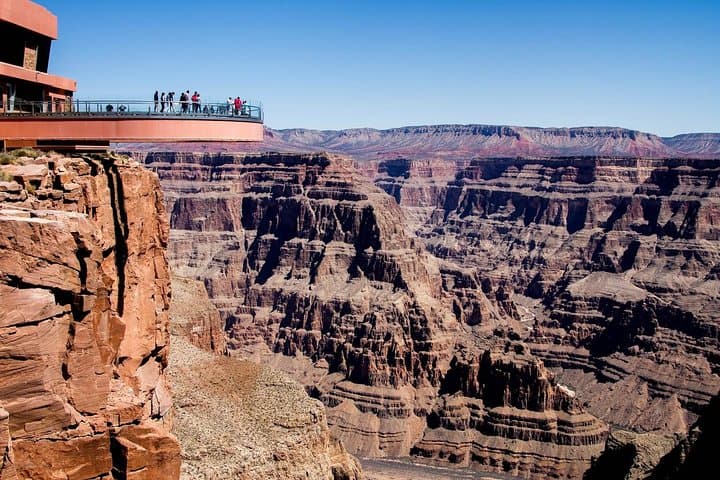
By the time you cross the Mike O’Callaghan–Pat Tillman Memorial Bridge, steel and concrete give way to rock older than any city. The West Rim sits on the Hualapai Reservation, where the canyon’s vertical walls read like an open page of geological time—banded layers that once lay under shallow seas now carved by the river daring itself downstream. The Skywalk juts over that void like a modern dare: a glass crescent hovering 4,000 feet above the canyon floor, equal parts engineering and theatre.
This is also living landscape. The Hualapai Tribe operates cultural exhibits at Eagle Point and the Western Hualapai Ranch; dancers, storytellers, and small museums anchor the scenery to people and practice. Guano Point keeps a quieter watch—remnants of a historic tramway and a short, rocky Highpoint Trail that rewards steady feet with 360-degree views that feel unapologetically vast.
Practicalities arrive with the drama. The standard tour from Las Vegas runs about 10 hours round-trip, with roughly three hours of free time across viewpoints; bring a daypack, water, and shoes that can handle loose rock and dust. If height is part of your itinerary, buy the Skywalk upgrade in advance—ticketing is controlled and time-staggered. Expect strong sun and big temperature swings between shade and rim exposure; sunscreen and layered clothing change the day from pleasant to miserable.
For photographers, morning departure means softer east light at Eagle Point and richer contrast at Guano Point later in the day. Watch the wind on the rim—the canyon exerts its own weather, tugging at jackets and making exposed ledges feel wilder than the map suggests. Respect tribal signage: trails on reservation land are maintained for access and culture, and staying on marked paths protects both visitors and fragile desert ecosystems.
In short: the West Rim is a high-value, low-effort way to stand at one of North America’s great edges without backpacking into the abyss. Plan for sun, plan for crowds, and leave room in your schedule to let the canyon do what it does best—slow you down until you can hear the rock.
easy.
10 hours.
Suitable for travelers in normal walking shape; involves short walks on uneven ground and steps at viewpoints.
Expect about 10 hours total; pickup early morning with return to Las Vegas in the evening—times vary slightly by pickup location.
The Skywalk is optional; you must choose the upgrade when booking or pay on-site if available—access is timed and limited.
Infant seats are available, but some optional rides may not allow infants—check supplier notes and list special requirements at booking.
Walking consists of short distances at viewpoints—typically under a mile between areas—but surfaces can be uneven and dusty.
Yes, professional bilingual (Chinese and English) guides are listed among inclusions; confirm language needs when booking.
All sales are final for this product; no refunds for cancellations, and tours may be canceled in bad weather.
The West Rim sits on Hualapai land; the tribe manages visitor sites and cultural programs that interpret their long connection to the canyon.
Stay on designated paths and avoid disturbing archaeological or cultural displays; supporting Hualapai-run services helps sustain local stewardship.
TakeYourTrip operates guided outdoor trips and adventures with an emphasis on safety, stewardship, and memorable experiences.
The bus pulls away from Las Vegas before sunrise, headlights painting the Mojave scrub as the Strip’s glow shrinks behind you. Morning light picks out the stumpy silhouettes of Joshua trees for mile after mile, and the guide’s voice—part storyteller, part logistics manager—frames the day: Hoover Dam, the Colorado River, then the Hualapai land where cliffs throw long shadows into a canyon that refuses casual description.
The bus pulls away from Las Vegas before sunrise, headlights painting the Mojave scrub as the Strip’s glow shrinks behind you. Morning light picks out the stumpy silhouettes of Joshua trees for mile after mile, and the guide’s voice—part storyteller, part logistics manager—frames the day: Hoover Dam, the Colorado River, then the Hualapai land where cliffs throw long shadows into a canyon that refuses casual description.
By the time you cross the Mike O’Callaghan–Pat Tillman Memorial Bridge, steel and concrete give way to rock older than any city. The West Rim sits on the Hualapai Reservation, where the canyon’s vertical walls read like an open page of geological time—banded layers that once lay under shallow seas now carved by the river daring itself downstream. The Skywalk juts over that void like a modern dare: a glass crescent hovering 4,000 feet above the canyon floor, equal parts engineering and theatre.
This is also living landscape. The Hualapai Tribe operates cultural exhibits at Eagle Point and the Western Hualapai Ranch; dancers, storytellers, and small museums anchor the scenery to people and practice. Guano Point keeps a quieter watch—remnants of a historic tramway and a short, rocky Highpoint Trail that rewards steady feet with 360-degree views that feel unapologetically vast.
Practicalities arrive with the drama. The standard tour from Las Vegas runs about 10 hours round-trip, with roughly three hours of free time across viewpoints; bring a daypack, water, and shoes that can handle loose rock and dust. If height is part of your itinerary, buy the Skywalk upgrade in advance—ticketing is controlled and time-staggered. Expect strong sun and big temperature swings between shade and rim exposure; sunscreen and layered clothing change the day from pleasant to miserable.
For photographers, morning departure means softer east light at Eagle Point and richer contrast at Guano Point later in the day. Watch the wind on the rim—the canyon exerts its own weather, tugging at jackets and making exposed ledges feel wilder than the map suggests. Respect tribal signage: trails on reservation land are maintained for access and culture, and staying on marked paths protects both visitors and fragile desert ecosystems.
In short: the West Rim is a high-value, low-effort way to stand at one of North America’s great edges without backpacking into the abyss. Plan for sun, plan for crowds, and leave room in your schedule to let the canyon do what it does best—slow you down until you can hear the rock.