THE ADVENTURE COLLECTIVE® · Independent discovery and booking for outdoor travel

Experience the South Rim on a private, family-friendly tour that prioritizes time at viewpoints and small-group flexibility. Spend the day watching the canyon change color while learning the geology and cultural history that shaped this iconic landscape.
Experience the South Rim on a private, family-friendly tour that prioritizes time at viewpoints and small-group flexibility. Spend the day watching the canyon change color while learning the geology and cultural history that shaped this iconic landscape.
A wind off the rim lifts the dust and the world opens into a canyon that dares you to look deeper. On a private South Rim tour you stand where the plateau ends and the Colorado River, far below, keeps pulling the landscape into its long, slow shape. The rim’s viewpoints deliver immediate, cinematic panoramas; the canyon answers in layers of red, chocolate and pale limestone that tell a story measured in billions of years.
Verified experiences and guided adventures in the surrounding area.
A wind off the rim lifts the dust and the world opens into a canyon that dares you to look deeper. On a private South Rim tour you stand where the plateau ends and the Colorado River, far below, keeps pulling the landscape into its long, slow shape. The rim’s viewpoints deliver immediate, cinematic panoramas; the canyon answers in layers of red, chocolate and pale limestone that tell a story measured in billions of years.
The Grand Canyon’s geology is a classroom in plain sight — Vishnu Schist at the bottom and younger Kaibab limestone at the rim — carved by uplift and the Colorado River. The area holds deep cultural significance to Hopi, Havasupai, Hualapai, Navajo and other tribes; those connections remain part of the place’s meaning and management.
A private vehicle gives families and small groups time to pause at Mather Point, Desert View and quieter stops like Shoshone Point. Expect short, steep walks to overlooks rather than long hikes; elevation on the South Rim sits around 7,000 ft, so pace yourself and hydrate. Bring layers for wind and sun protection, start early to avoid afternoon crowds and thunderstorms in summer, and plan for a long day if traveling from Las Vegas — many transfers run four to five hours one-way.
Practical choices — comfortable shoes, sun protection, and a charged phone with offline maps — make the difference between a rushed visit and a day that lets the canyon reveal a few of its secrets.
moderate.
14 hours.
Light-to-moderate fitness for short uphill walks and a long day; be prepared for higher elevation.
Yes — the private format is ideal for families and small groups; expect short walks to viewpoints rather than technical hikes.
Many South Rim day tours from Las Vegas run 12–15 hours round-trip; check pickup times and plan for a long travel day.
Policies vary by operator — confirm on booking, but many companies list the park fee separately or require you to cover it at check-in.
Most stops involve short, accessible walks to overlooks (5–30 minutes); deeper canyon hikes are not part of a standard rim tour.
The South Rim has long been home to Native peoples and became a National Park in 1919; early 20th-century rail and road development opened it to wider tourism.
Park management focuses on preserving fragile desert soils and cultural sites; practice Leave No Trace, stay on trails and pack out waste to reduce impact.
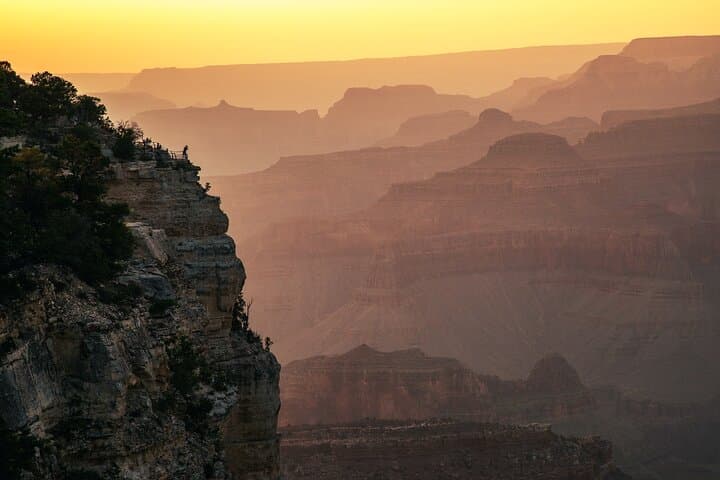
A wind off the rim lifts the dust and the world opens into a canyon that dares you to look deeper. On a private South Rim tour you stand where the plateau ends and the Colorado River, far below, keeps pulling the landscape into its long, slow shape. The rim’s viewpoints deliver immediate, cinematic panoramas; the canyon answers in layers of red, chocolate and pale limestone that tell a story measured in billions of years.
A wind off the rim lifts the dust and the world opens into a canyon that dares you to look deeper. On a private South Rim tour you stand where the plateau ends and the Colorado River, far below, keeps pulling the landscape into its long, slow shape. The rim’s viewpoints deliver immediate, cinematic panoramas; the canyon answers in layers of red, chocolate and pale limestone that tell a story measured in billions of years.
The Grand Canyon’s geology is a classroom in plain sight — Vishnu Schist at the bottom and younger Kaibab limestone at the rim — carved by uplift and the Colorado River. The area holds deep cultural significance to Hopi, Havasupai, Hualapai, Navajo and other tribes; those connections remain part of the place’s meaning and management.
A private vehicle gives families and small groups time to pause at Mather Point, Desert View and quieter stops like Shoshone Point. Expect short, steep walks to overlooks rather than long hikes; elevation on the South Rim sits around 7,000 ft, so pace yourself and hydrate. Bring layers for wind and sun protection, start early to avoid afternoon crowds and thunderstorms in summer, and plan for a long day if traveling from Las Vegas — many transfers run four to five hours one-way.
Practical choices — comfortable shoes, sun protection, and a charged phone with offline maps — make the difference between a rushed visit and a day that lets the canyon reveal a few of its secrets.