THE ADVENTURE COLLECTIVE® · Independent discovery and booking for outdoor travel

Leave Las Vegas before dawn and trade neon for a rim-side horizon: this deluxe coach tour climbs 5,000 feet into ponderosa forests and drops you at Mather Point, Bright Angel and historic El Tovar. It’s a long, well-paced day with lunch, Wi‑Fi and time to photograph the canyon’s vast geology.
Leave Las Vegas before dawn and trade neon for a rim-side horizon: this deluxe coach tour climbs 5,000 feet into ponderosa forests and drops you at Mather Point, Bright Angel and historic El Tovar. It’s a long, well-paced day with lunch, Wi‑Fi and time to photograph the canyon’s vast geology.
The day begins before sunrise on the Las Vegas Strip: a line of travelers, coffee cups in hand, climb aboard a deluxe motor coach while the city’s neon exhales and the desert waits. The ride is its own slow reveal — a steady climb out of the valley, through Mojave scrub and Joshua trees, then over the Mike O’Callaghan–Pat Tillman Memorial Bridge where the Colorado River dares you to look down into its canyon-carved path.
Verified experiences and guided adventures in the surrounding area.
Operated by National Park Express · Grand Canyon Village, Arizona
The day begins before sunrise on the Las Vegas Strip: a line of travelers, coffee cups in hand, climb aboard a deluxe motor coach while the city’s neon exhales and the desert waits. The ride is its own slow reveal — a steady climb out of the valley, through Mojave scrub and Joshua trees, then over the Mike O’Callaghan–Pat Tillman Memorial Bridge where the Colorado River dares you to look down into its canyon-carved path.
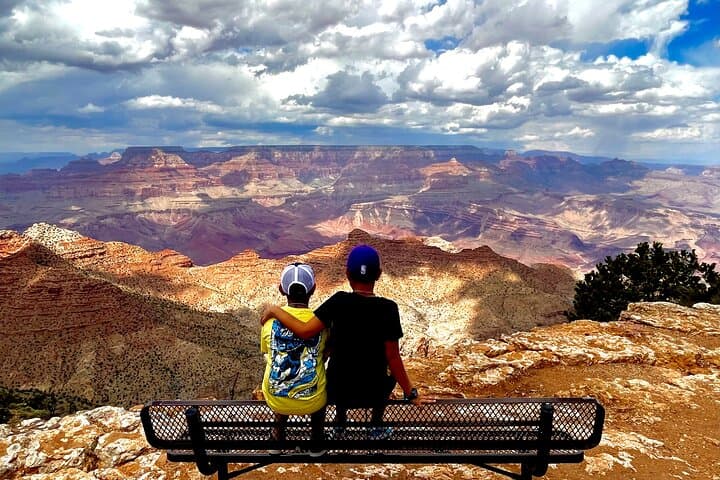
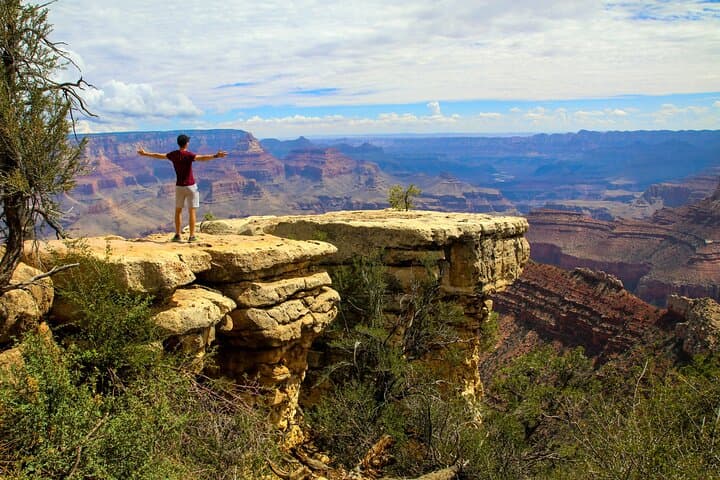
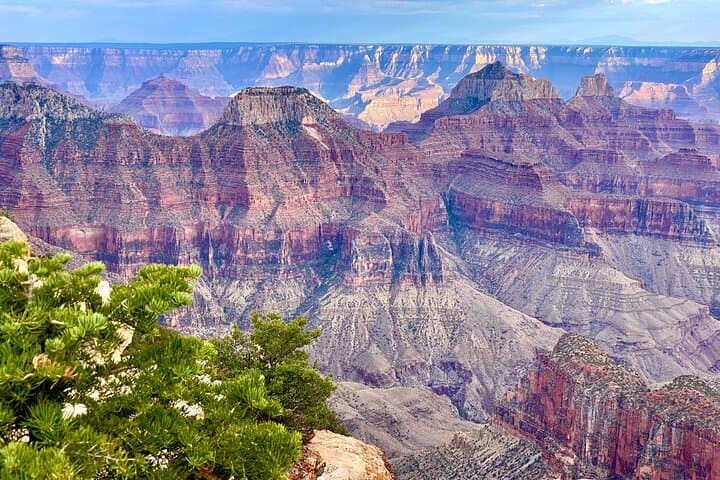
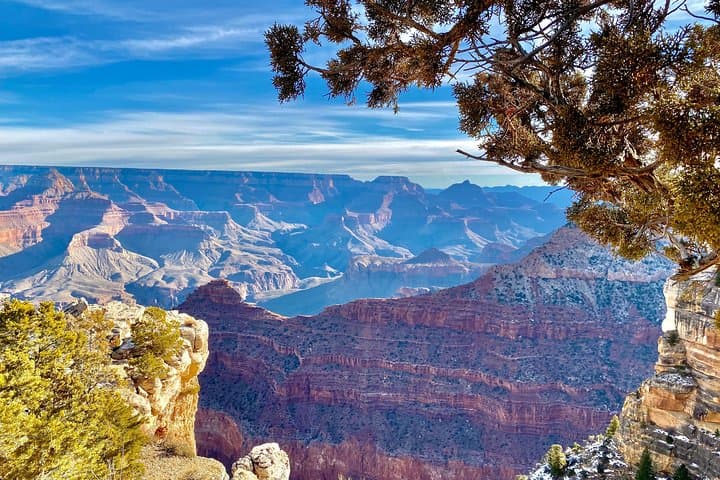
By midmorning the bus climbs roughly 5,000 feet. Pine-scented air replaces desert dust as the landscape flips to ponderosa and pinyon. At Mather Point and along the Bright Angel rim, the canyon opens: vast shelves of exposed rock stacked like pages of Earth’s history. Rock layers — ancient Vishnu schist near the depths, capped by Cretaceous limestone — read like a geological ledger documenting half a billion years of uplift and erosion.
Human stories sit beside those stones. The South Rim’s buildings — El Tovar Hotel, Hopi House and the Kolb Photo Studio — are artifacts of early tourism and the Fred Harvey era, a time when rail lines stitched the Southwest together and architects like Mary Colter shaped how visitors experienced indigenous art and landscape. Indigenous nations, including the Hopi, Navajo and Havasupai, have deep ties to the canyon long predating park designation; their cultural presence is part of the place’s living history.
On this guided day trip, visitors get roughly three hours at the rim to walk paved overlooks, peer down Bright Angel Trail and visit the Visitor Center. Wildlife slips through the trees: elk graze near the lodges and mule deer pause at the patrol of piñon. The tour balances spectacle and simplicity — three grand lookout points, a boxed lunch, and time to frame a photograph you’ll keep.
Practical notes: expect a long day — the full excursion runs about 12–13 hours with roughly five hours each way on the coach. Temperatures can drop quickly at the rim; dress in layers and carry water. Stay a safe distance from cliff edges and follow ranger guidance. The operator provides bottled water, Wi‑Fi onboard, and park admission, and enforces a strict no-alcohol policy during transit.
For photographers, shoot Mather Point at early light or late afternoon for depth and shadow; for quieter moments, walk toward Kolb Studio and the Bright Angel rim trail. If time allows, step into the visitor center’s geology displays to orient yourself to what you’re seeing.
This tour is ideal for travelers looking to maximize one day out of Las Vegas — it delivers the canyon’s scale, some history and geology, and practical comforts so you return to the Strip with a clearer sense of why the Grand Canyon continues to command attention.
easy.
12–13 hours.
Minimal walking required; suitable for most fitness levels though expect long periods of sitting and short rim walks on paved surfaces.
Expect roughly five hours each way by coach; the full tour is about 12–13 hours including time at the rim.
Yes — a boxed lunch and bottled water are included in the tour price.
Children under two may ride on an adult’s lap free of charge; seats are otherwise required for all travelers.
The motor coach is accessible but access to some overlooks may have uneven pavement; contact the operator to confirm specific needs.
The rim sits near 7,000 ft; those with heart or respiratory conditions should consult a doctor. Stay hydrated and move slowly at the rim.
Yes — the tour provides onboard Wi‑Fi for the drive portions, though connection can be intermittent in remote stretches.
The South Rim’s lodges and visitor buildings grew out of early 20th-century railroad tourism and the Fred Harvey hospitality network; Mary Colter’s Hopi House reflects an effort to showcase indigenous craft during that era.
Grand Canyon National Park manages heavy visitation through maintained overlooks and trail restrictions; stick to marked paths and pack out trash to reduce impact.
National Park Express operates guided outdoor trips and adventures with an emphasis on safety, stewardship, and memorable experiences.
The day begins before sunrise on the Las Vegas Strip: a line of travelers, coffee cups in hand, climb aboard a deluxe motor coach while the city’s neon exhales and the desert waits. The ride is its own slow reveal — a steady climb out of the valley, through Mojave scrub and Joshua trees, then over the Mike O’Callaghan–Pat Tillman Memorial Bridge where the Colorado River dares you to look down into its canyon-carved path.
The day begins before sunrise on the Las Vegas Strip: a line of travelers, coffee cups in hand, climb aboard a deluxe motor coach while the city’s neon exhales and the desert waits. The ride is its own slow reveal — a steady climb out of the valley, through Mojave scrub and Joshua trees, then over the Mike O’Callaghan–Pat Tillman Memorial Bridge where the Colorado River dares you to look down into its canyon-carved path.
By midmorning the bus climbs roughly 5,000 feet. Pine-scented air replaces desert dust as the landscape flips to ponderosa and pinyon. At Mather Point and along the Bright Angel rim, the canyon opens: vast shelves of exposed rock stacked like pages of Earth’s history. Rock layers — ancient Vishnu schist near the depths, capped by Cretaceous limestone — read like a geological ledger documenting half a billion years of uplift and erosion.
Human stories sit beside those stones. The South Rim’s buildings — El Tovar Hotel, Hopi House and the Kolb Photo Studio — are artifacts of early tourism and the Fred Harvey era, a time when rail lines stitched the Southwest together and architects like Mary Colter shaped how visitors experienced indigenous art and landscape. Indigenous nations, including the Hopi, Navajo and Havasupai, have deep ties to the canyon long predating park designation; their cultural presence is part of the place’s living history.
On this guided day trip, visitors get roughly three hours at the rim to walk paved overlooks, peer down Bright Angel Trail and visit the Visitor Center. Wildlife slips through the trees: elk graze near the lodges and mule deer pause at the patrol of piñon. The tour balances spectacle and simplicity — three grand lookout points, a boxed lunch, and time to frame a photograph you’ll keep.
Practical notes: expect a long day — the full excursion runs about 12–13 hours with roughly five hours each way on the coach. Temperatures can drop quickly at the rim; dress in layers and carry water. Stay a safe distance from cliff edges and follow ranger guidance. The operator provides bottled water, Wi‑Fi onboard, and park admission, and enforces a strict no-alcohol policy during transit.
For photographers, shoot Mather Point at early light or late afternoon for depth and shadow; for quieter moments, walk toward Kolb Studio and the Bright Angel rim trail. If time allows, step into the visitor center’s geology displays to orient yourself to what you’re seeing.
This tour is ideal for travelers looking to maximize one day out of Las Vegas — it delivers the canyon’s scale, some history and geology, and practical comforts so you return to the Strip with a clearer sense of why the Grand Canyon continues to command attention.