THE ADVENTURE COLLECTIVE® · Independent discovery and booking for outdoor travel

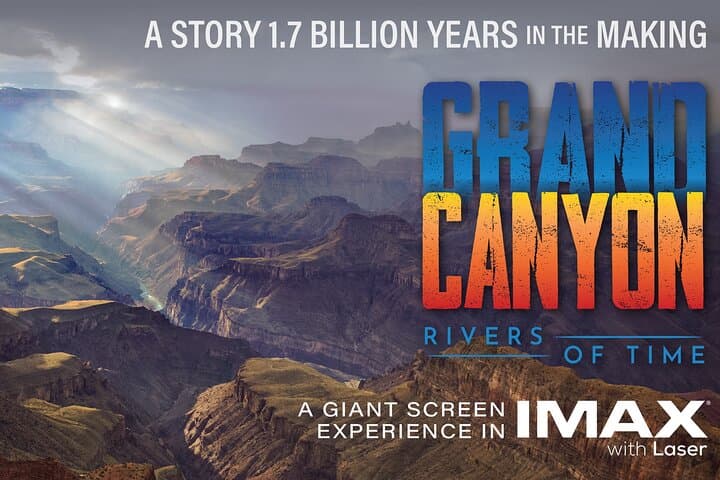
Sit back and let the Grand Canyon tell its deep-time story: Rivers of Time uses IMAX imagery and 12.0 sound to compress 277 miles of geology and human history into a single, powerful viewing. Perfect as a primer before your first rim-side sunset.
Sit back and let the Grand Canyon tell its deep-time story: Rivers of Time uses IMAX imagery and 12.0 sound to compress 277 miles of geology and human history into a single, powerful viewing. Perfect as a primer before your first rim-side sunset.
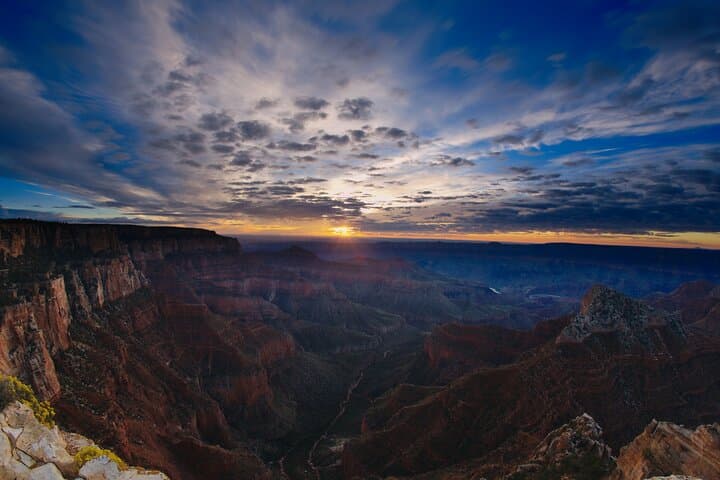
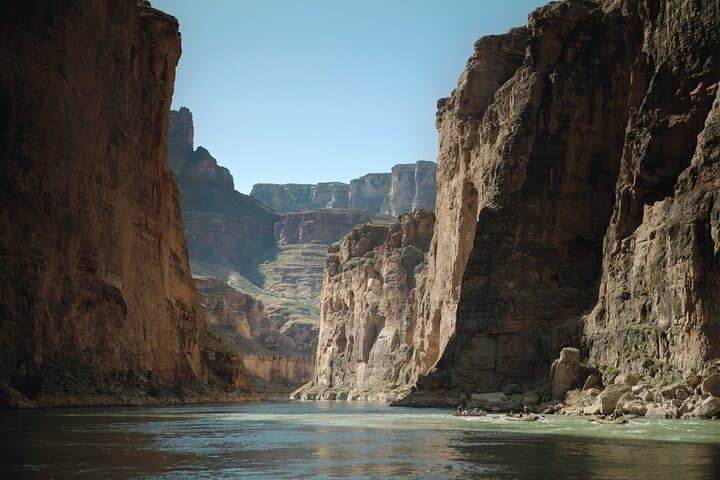
The theater darkens and the Canyon answers — a low, layered sound that feels like wind moving rock. In the IMAX at the National Geographic Visitor Center, the screen swallows the room and the Grand Canyon unspools in giant, razor-sharp frames: braided rivers cutting through stone, spiral vortexes of time-lapse clouds, and close-ups of human hands tracing cliff faces. For about half an hour, viewers ride a geological clock that telescopes 277 miles of canyon into a single cinematic arc.
Verified experiences and guided adventures in the surrounding area.
Operated by IMAX Grand Canyon · Tusayan, Arizona
The theater darkens and the Canyon answers — a low, layered sound that feels like wind moving rock. In the IMAX at the National Geographic Visitor Center, the screen swallows the room and the Grand Canyon unspools in giant, razor-sharp frames: braided rivers cutting through stone, spiral vortexes of time-lapse clouds, and close-ups of human hands tracing cliff faces. For about half an hour, viewers ride a geological clock that telescopes 277 miles of canyon into a single cinematic arc.
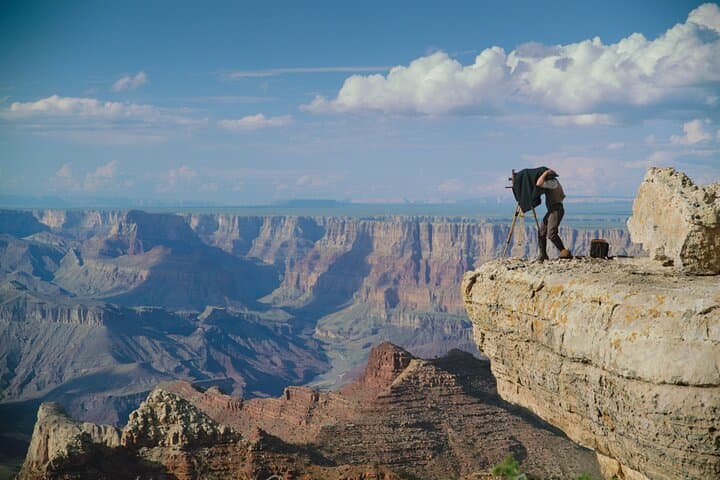
The film stitches together deep time and human time. It begins with the geologic forces that carved the canyon — uplift, erosion, the Colorado River daring the rock to give way — then transitions to the people who have lived with the gorge for millennia: Ancestral Puebloan sites dotting rim and plateau, early explorers mapping edges, and more recent conservation battles that shaped the park visitors experience today. National Geographic’s aerial photography and CGI animation make clear how the canyon’s layers are not just pretty strata but pages in Earth’s archive.
Tusayan itself sits like a last service stop outside the park boundary — a practical, roadside gateway to the South Rim. The Visitor Center and IMAX were designed less as spectacle and more as orientation: a compact primer that helps visitors translate what they’ll soon see in person. Expect the film to sharpen your sense of scale. Small ledges in the theater translate to real cliffs that will demand respect on the rim.
Practically speaking, the IMAX is an easy addition to any Grand Canyon itinerary. Shows run throughout the day and the theater is wheelchair accessible; tickets are mobile-friendly and can be used at any showtime. The room is air-conditioned and acoustically intense — the 12.0 sound design is part of the immersion but can be unexpected if you’re sensitive to loud audio. Bring a light layer for the theater’s chill and keep your ticket stub: it’s good for a small discount at the gift shop.
If you’re timing things, consider a late-afternoon showing before heading into the park for sunset. The movie tightens your reading of the landscape so that when you stand at Mather Point or walk the Rim Trail, the geology and history feel less like trivia and more like a living map. For families, the format is compact and digestible; for repeat Canyon visitors, it offers new perspectives in geology and conservation.
In short: the IMAX is not a substitute for the rim but a primer. It preps your eyes and your curiosity so that the first time you see the actual canyon, it will already be speaking to you.
easy.
45–60 minutes.
No physical exertion required; suitable for all fitness levels
The screening runs approximately 34 minutes, though the full theater visit including seating and exits is closer to 45–60 minutes.
Yes—mobile tickets are accepted; bring your barcode or confirmation to the theater for scanning.
Yes—the National Geographic Visitor Center and IMAX theater are wheelchair accessible and provide seating accommodations.
Yes; the film is family-friendly, but it may be intense for very young children due to loud sound and immersive visuals.
No—photography and recording inside the theater are prohibited to protect the presentation and other guests.
Full refund available if canceled at least 24 hours before the scheduled show; no refund within 24 hours of showtime.
The Visitor Center sits just outside the South Rim entrance to orient visitors; the film traces both geologic time and human presence along the 277-mile canyon.
The park emphasizes staying on marked trails, minimizing waste, and supporting local conservation efforts; saving the ticket stub helps fund visitor services.
IMAX Grand Canyon operates guided outdoor trips and adventures with an emphasis on safety, stewardship, and memorable experiences.
The theater darkens and the Canyon answers — a low, layered sound that feels like wind moving rock. In the IMAX at the National Geographic Visitor Center, the screen swallows the room and the Grand Canyon unspools in giant, razor-sharp frames: braided rivers cutting through stone, spiral vortexes of time-lapse clouds, and close-ups of human hands tracing cliff faces. For about half an hour, viewers ride a geological clock that telescopes 277 miles of canyon into a single cinematic arc.
The theater darkens and the Canyon answers — a low, layered sound that feels like wind moving rock. In the IMAX at the National Geographic Visitor Center, the screen swallows the room and the Grand Canyon unspools in giant, razor-sharp frames: braided rivers cutting through stone, spiral vortexes of time-lapse clouds, and close-ups of human hands tracing cliff faces. For about half an hour, viewers ride a geological clock that telescopes 277 miles of canyon into a single cinematic arc.
The film stitches together deep time and human time. It begins with the geologic forces that carved the canyon — uplift, erosion, the Colorado River daring the rock to give way — then transitions to the people who have lived with the gorge for millennia: Ancestral Puebloan sites dotting rim and plateau, early explorers mapping edges, and more recent conservation battles that shaped the park visitors experience today. National Geographic’s aerial photography and CGI animation make clear how the canyon’s layers are not just pretty strata but pages in Earth’s archive.
Tusayan itself sits like a last service stop outside the park boundary — a practical, roadside gateway to the South Rim. The Visitor Center and IMAX were designed less as spectacle and more as orientation: a compact primer that helps visitors translate what they’ll soon see in person. Expect the film to sharpen your sense of scale. Small ledges in the theater translate to real cliffs that will demand respect on the rim.
Practically speaking, the IMAX is an easy addition to any Grand Canyon itinerary. Shows run throughout the day and the theater is wheelchair accessible; tickets are mobile-friendly and can be used at any showtime. The room is air-conditioned and acoustically intense — the 12.0 sound design is part of the immersion but can be unexpected if you’re sensitive to loud audio. Bring a light layer for the theater’s chill and keep your ticket stub: it’s good for a small discount at the gift shop.
If you’re timing things, consider a late-afternoon showing before heading into the park for sunset. The movie tightens your reading of the landscape so that when you stand at Mather Point or walk the Rim Trail, the geology and history feel less like trivia and more like a living map. For families, the format is compact and digestible; for repeat Canyon visitors, it offers new perspectives in geology and conservation.
In short: the IMAX is not a substitute for the rim but a primer. It preps your eyes and your curiosity so that the first time you see the actual canyon, it will already be speaking to you.