THE ADVENTURE COLLECTIVE® · Independent discovery and booking for outdoor travel

A full-day combination of road, rim walking and a 45-minute ECO-Star helicopter flight delivers some of the Grand Canyon’s most dramatic aerial views. Expect long travel time from Phoenix, short rim hikes at 7,000 ft, and a close look at the Dragon Corridor and Colorado River.
A full-day combination of road, rim walking and a 45-minute ECO-Star helicopter flight delivers some of the Grand Canyon’s most dramatic aerial views. Expect long travel time from Phoenix, short rim hikes at 7,000 ft, and a close look at the Dragon Corridor and Colorado River.
You leave the Phoenix sprawl before dawn, the bus slipping into the slow, wide quiet of the Sonoran Desert where saguaros lift their arms to the morning. As the highway climbs toward Flagstaff the scrub gives way to ponderosa trunks and the air cools; by midmorning you’re standing on the rim at roughly 7,000 feet, with the canyon yawning away below.
Verified experiences and guided adventures in the surrounding area.
Operated by Detours of Arizona · Grand Canyon Village, Arizona
You leave the Phoenix sprawl before dawn, the bus slipping into the slow, wide quiet of the Sonoran Desert where saguaros lift their arms to the morning. As the highway climbs toward Flagstaff the scrub gives way to ponderosa trunks and the air cools; by midmorning you’re standing on the rim at roughly 7,000 feet, with the canyon yawning away below.
The geology here reads like a vertical book: horizontal layers of sandstone, shale and limestone carved over six million years by the Colorado River. Cultural traces run along the rim too — trading hubs, Hopi and Navajo ancestral routes, and nearby Route 66 towns that still wear their neon. The dragon corridor you’ll fly down is the canyon’s widest shoulder, where the river dares the landscape to keep it contained.
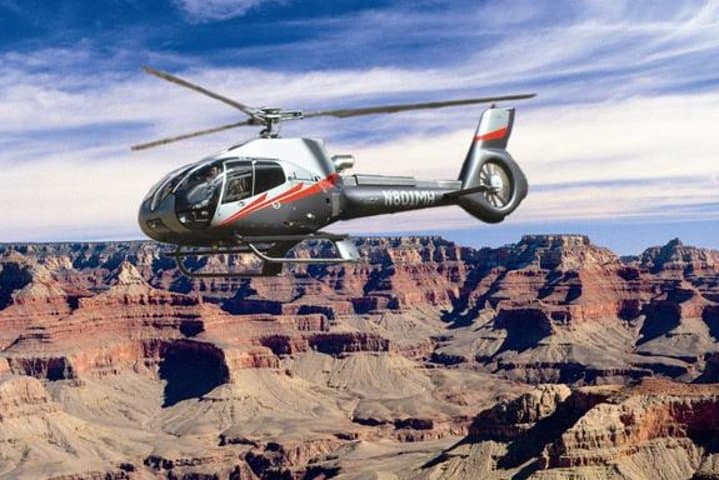
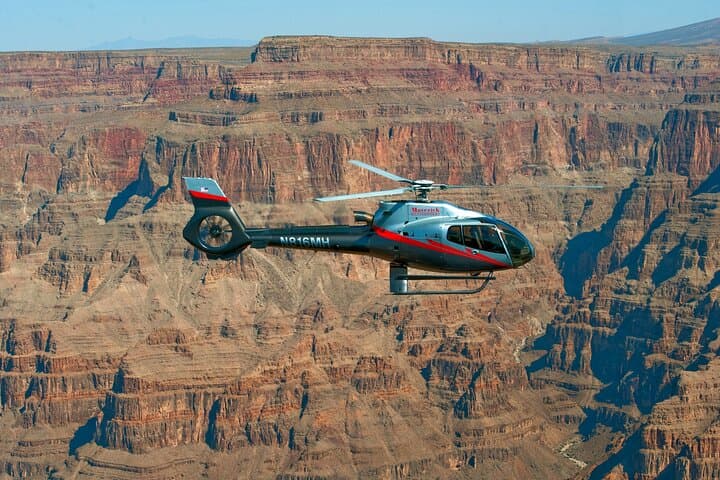
Expect a 45-minute ECO-Star helicopter flight focused on aerial perspectives — sheer walls, braided river turns and spires — followed by 1–1.5 hours walking time on the South Rim. Guides orient you to geological highlights and best photo angles; there’s time to shop for Native art or simply sit with the view.
Practical note: this is a long day (about 12–13 hours), so hydration, layered clothing and sun protection matter. The tour enforces a 300 lb per-person limit and requires advance contact for pickup logistics. There are no public restrooms on the coach; comfort stops are scheduled. Cameras, sunglasses and a lightweight daypack are the simple tools that turn epic vistas into lasting memories.
easy.
12–13 hours.
Suitable for travelers in average fitness; includes short, mostly flat rim walks but involves a long day of coach travel and brief elevation change.
The ECO-Star flight is approximately 45 minutes and follows the eastern stretch of the canyon, flying through the Dragon Corridor and offering bird’s-eye views of the Colorado River and canyon walls.
Pickup is provided from select hotels but is not guaranteed; you must confirm your pickup location with the operator at least one week before your tour and may be asked to meet at a designated point.
There is a 300 lb per-person weight limit; guests over that must purchase a second seat. Minimum age is 3 years and Arizona law requires child seats or boosters for children under 8—bring your own and notify the supplier.
There are no restrooms on the coach; the itinerary includes scheduled comfort stops and there are restroom facilities at the rim visitor areas, but not at the helicopter pad itself.
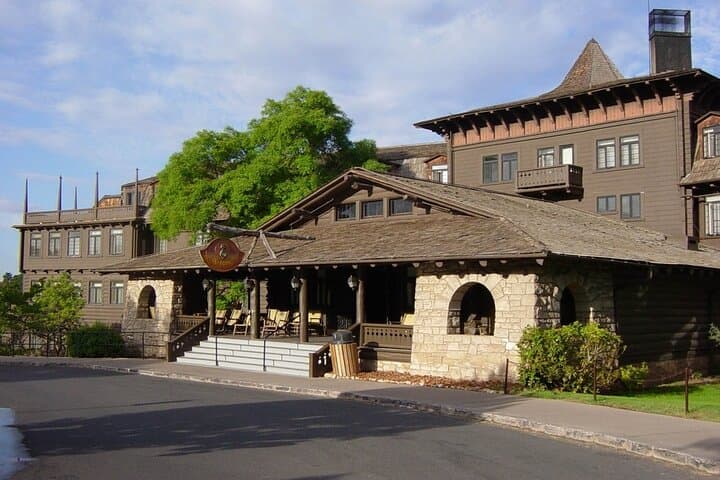
The South Rim has long been a crossroads for Native communities including Hopi and Navajo people and later became a passenger route landmarked by Route 66 and early park tourism.
The Grand Canyon is protected as a National Park; visitors should stay on designated paths, pack out trash, and respect flight corridor rules—operators follow FAA and NPS guidelines to minimize noise and disturbance.
Detours of Arizona operates guided outdoor trips and adventures with an emphasis on safety, stewardship, and memorable experiences.
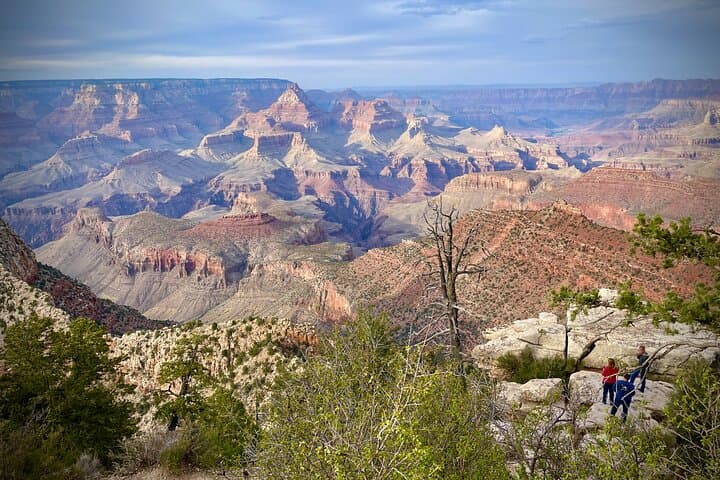
You leave the Phoenix sprawl before dawn, the bus slipping into the slow, wide quiet of the Sonoran Desert where saguaros lift their arms to the morning. As the highway climbs toward Flagstaff the scrub gives way to ponderosa trunks and the air cools; by midmorning you’re standing on the rim at roughly 7,000 feet, with the canyon yawning away below.
You leave the Phoenix sprawl before dawn, the bus slipping into the slow, wide quiet of the Sonoran Desert where saguaros lift their arms to the morning. As the highway climbs toward Flagstaff the scrub gives way to ponderosa trunks and the air cools; by midmorning you’re standing on the rim at roughly 7,000 feet, with the canyon yawning away below.
The geology here reads like a vertical book: horizontal layers of sandstone, shale and limestone carved over six million years by the Colorado River. Cultural traces run along the rim too — trading hubs, Hopi and Navajo ancestral routes, and nearby Route 66 towns that still wear their neon. The dragon corridor you’ll fly down is the canyon’s widest shoulder, where the river dares the landscape to keep it contained.
Expect a 45-minute ECO-Star helicopter flight focused on aerial perspectives — sheer walls, braided river turns and spires — followed by 1–1.5 hours walking time on the South Rim. Guides orient you to geological highlights and best photo angles; there’s time to shop for Native art or simply sit with the view.
Practical note: this is a long day (about 12–13 hours), so hydration, layered clothing and sun protection matter. The tour enforces a 300 lb per-person limit and requires advance contact for pickup logistics. There are no public restrooms on the coach; comfort stops are scheduled. Cameras, sunglasses and a lightweight daypack are the simple tools that turn epic vistas into lasting memories.