THE ADVENTURE COLLECTIVE® · Independent discovery and booking for outdoor travel

Clip in and cross cable bridges over volcanic cliffs on this half‑day via ferrata in Gran Canaria. Expect exposed sections, a final zip line, and sweeping island views on a guided, 3–4 hour route.
Clip in and cross cable bridges over volcanic cliffs on this half‑day via ferrata in Gran Canaria. Expect exposed sections, a final zip line, and sweeping island views on a guided, 3–4 hour route.
You step off the minivan onto sun-warmed volcanic rock and the cliff ahead immediately demands attention: a 70‑metre wall threaded with metal rungs, ladders, and cable bridges that slash a line across the slope. Wind tugs at your jacket as the guide clips you into the steel lifeline; below, terraces and ravines roll toward the sea, a patchwork of ochre and scrub.
Verified experiences and guided adventures in the surrounding area.
Operated by MOJO PICON AVENTURA · Las Palmas de Gran Canaria, Canary Islands
You step off the minivan onto sun-warmed volcanic rock and the cliff ahead immediately demands attention: a 70‑metre wall threaded with metal rungs, ladders, and cable bridges that slash a line across the slope. Wind tugs at your jacket as the guide clips you into the steel lifeline; below, terraces and ravines roll toward the sea, a patchwork of ochre and scrub.
Gran Canaria’s interior is volcanic — steep ridges and hardened lava flows carved by water and wind over millennia. The via ferrata sits on that geology: man‑made aids bolted into natural rock to make vertical terrain accessible. The route combines low‑angle scrambling and exposed sections, with zip lines and a cable bridge adding momentum and theatrical relief. Local guides often weave in island lore — from historic shepherd paths to the mix of Spanish and Canarian culture in nearby mountain villages.
Expect about 3–4 hours for the half‑day program: safety briefing, gear fitting, a 300‑metre horizontal route with 70 metres of vertical gain, and a final zip line descent that finishes with a short walk back to the parking lot. The activity suits people with moderate fitness and no serious vertigo; the line keeps you clipped to steel at all times.
Practical note: go early to avoid midday heat, bring 1–2 liters of water, sturdy shoes, and sunscreen. Photos are usually provided, but leave valuables in the vehicle. The route is designed for beginners wanting real exposure — it’s an introduction to vertical terrain with the adrenaline of crossing cable bridges and flying a final zip line over island cliffs.
moderate.
3–4 hours.
Moderate fitness—comfortable with sustained walking, some scrambling and exposed heights; not for those with severe vertigo.
No technical climbing experience is required; the route is guided and kept clipped to a steel cable, making it suitable for beginners with moderate fitness.
Guiding, helmets, harnesses, anchor lines, photos, a light fruit picnic and snacks, and RC/accident insurance are included per the operator listing.
If you have significant vertigo or panic in exposed situations, this activity is not recommended; the route is continuously clipped and guides are trained, but exposure is real.
Operators will cancel for unsafe conditions (high winds or heavy rain) and typically offer a refund or reschedule — confirm cancellation policy at booking.
Gran Canaria’s mountains formed from volcanic eruptions and erosion; historic shepherd routes shaped many of the trails used today and the island’s cultural mix reflects centuries of maritime trade and settlement.
Stick to bolted routes and marked approaches to limit erosion; operators run small guided groups to reduce impact and protect fragile island vegetation.
MOJO PICON AVENTURA operates guided outdoor trips and adventures with an emphasis on safety, stewardship, and memorable experiences.
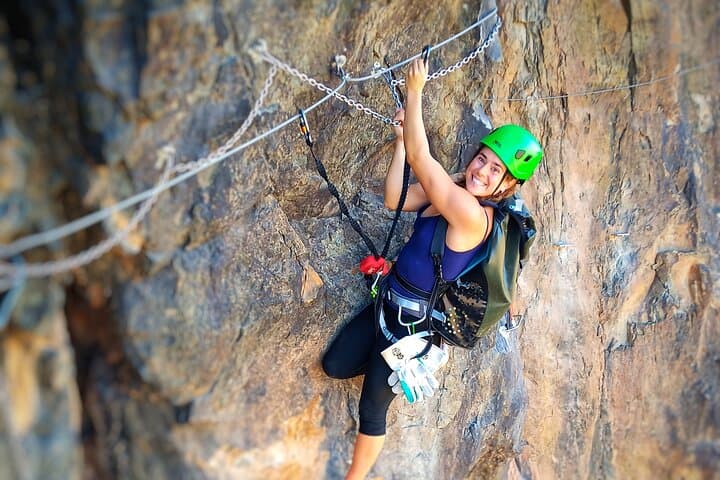
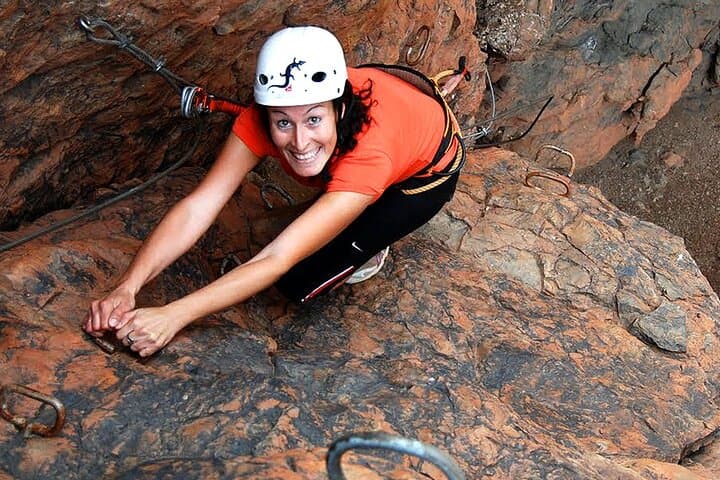
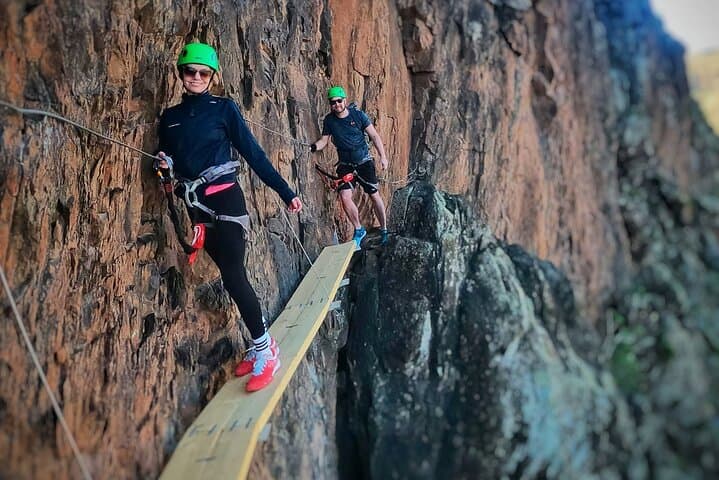
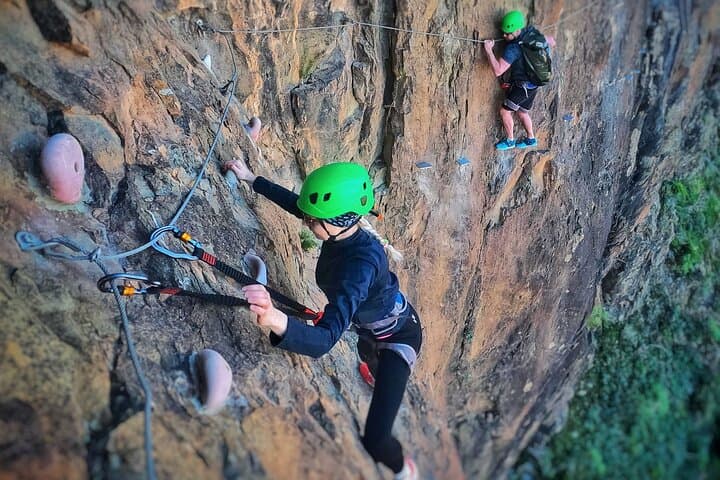
You step off the minivan onto sun-warmed volcanic rock and the cliff ahead immediately demands attention: a 70‑metre wall threaded with metal rungs, ladders, and cable bridges that slash a line across the slope. Wind tugs at your jacket as the guide clips you into the steel lifeline; below, terraces and ravines roll toward the sea, a patchwork of ochre and scrub.
You step off the minivan onto sun-warmed volcanic rock and the cliff ahead immediately demands attention: a 70‑metre wall threaded with metal rungs, ladders, and cable bridges that slash a line across the slope. Wind tugs at your jacket as the guide clips you into the steel lifeline; below, terraces and ravines roll toward the sea, a patchwork of ochre and scrub.
Gran Canaria’s interior is volcanic — steep ridges and hardened lava flows carved by water and wind over millennia. The via ferrata sits on that geology: man‑made aids bolted into natural rock to make vertical terrain accessible. The route combines low‑angle scrambling and exposed sections, with zip lines and a cable bridge adding momentum and theatrical relief. Local guides often weave in island lore — from historic shepherd paths to the mix of Spanish and Canarian culture in nearby mountain villages.
Expect about 3–4 hours for the half‑day program: safety briefing, gear fitting, a 300‑metre horizontal route with 70 metres of vertical gain, and a final zip line descent that finishes with a short walk back to the parking lot. The activity suits people with moderate fitness and no serious vertigo; the line keeps you clipped to steel at all times.
Practical note: go early to avoid midday heat, bring 1–2 liters of water, sturdy shoes, and sunscreen. Photos are usually provided, but leave valuables in the vehicle. The route is designed for beginners wanting real exposure — it’s an introduction to vertical terrain with the adrenaline of crossing cable bridges and flying a final zip line over island cliffs.