THE ADVENTURE COLLECTIVE® · Independent discovery and booking for outdoor travel

Trade the resort bustle for the sharp, granular faces of Gran Canaria. This five-hour private climb on GC-60 pairs local guides with volcanic rock routes suited to varied abilities—expect practical ropework, short rugged approaches, and views that justify the arm pump.
Trade the resort bustle for the sharp, granular faces of Gran Canaria. This five-hour private climb on GC-60 pairs local guides with volcanic rock routes suited to varied abilities—expect practical ropework, short rugged approaches, and views that justify the arm pump.
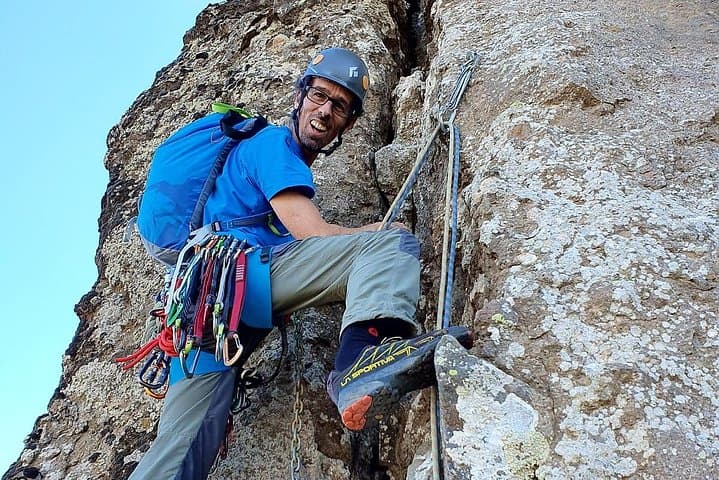
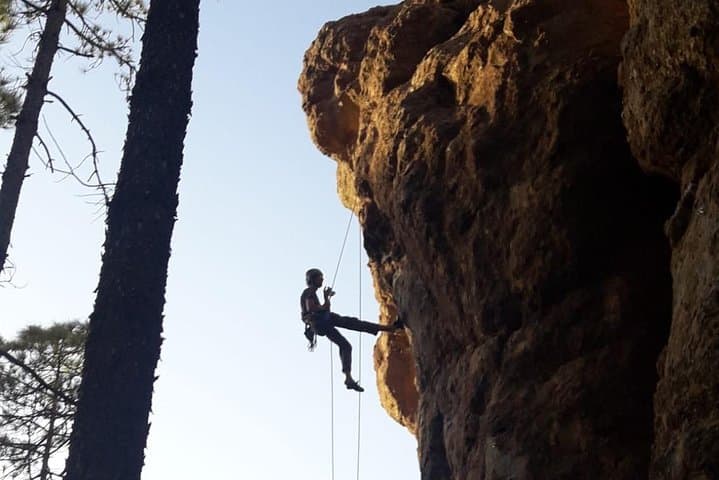
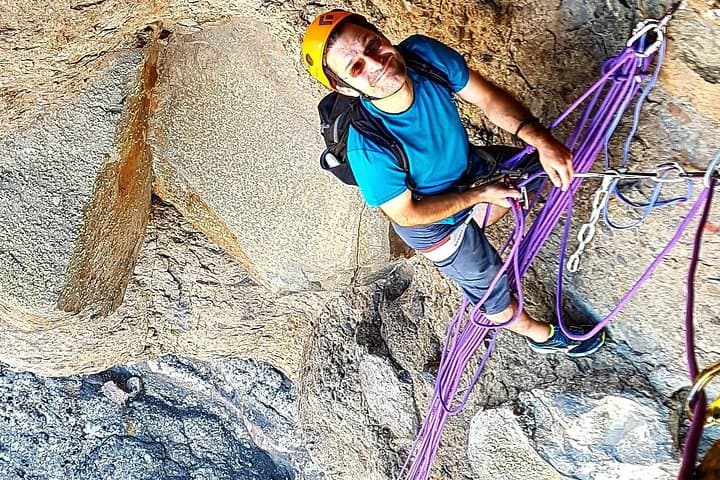
The morning sun lifts off the Atlantic and paints the volcanic faces of Gran Canaria in a hard, honest light. You pull on a harness at a small pullout on GC-60, the breeze already keen enough to ruffle maps, and listen as your local guide briefs the group. The rock here is not polite: it bites with pockets and sharp edges, demands attention and rewards the climber who moves deliberately. Over five hours you’ll move across slabs and short multi-pitch faces, trading the anonymous hum of the highway for the close, granular world of handholds and belays.
Verified experiences and guided adventures in the surrounding area.
Operated by Grand Climb · Maspalomas, Las Palmas
The morning sun lifts off the Atlantic and paints the volcanic faces of Gran Canaria in a hard, honest light. You pull on a harness at a small pullout on GC-60, the breeze already keen enough to ruffle maps, and listen as your local guide briefs the group. The rock here is not polite: it bites with pockets and sharp edges, demands attention and rewards the climber who moves deliberately. Over five hours you’ll move across slabs and short multi-pitch faces, trading the anonymous hum of the highway for the close, granular world of handholds and belays.
Gran Canaria’s climbing communities are young but rooted in older geology. The island is a volcanic plateau carved by erosion and time; what looks like sculpted monoliths are cooled flows and ash beds arranged into steep ridgelines and sea-facing cliffs. Climbers here learned the routes from shepherds and fishermen, adapting thin trad lines and bolted sport climbs where the rock allows. The culture is relaxed—guides prioritize teaching safe movement and ropecraft while pointing out local lore: forgotten mule tracks, a hermit’s cave, or a lone fig tree clinging to a ledge.
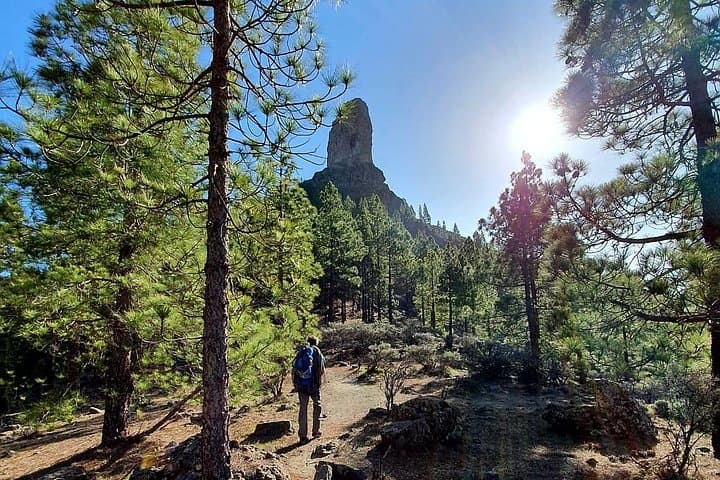
Expect terrain that alternates between coarse volcanic basalt and compacted ashstone. Approaches are usually short but uneven—rocky tracks, cactus patches, and loose scree appear in quick succession. The guide provides ropes, helmets, harnesses, and climbing shoes; your role is to come prepared and curious. Weather on Gran Canaria is obliging most of the year, but wind can be the real negotiator: it will push, cool, and sometimes reroute your plans.
Practical guidance: meet at the GC-60 start point for a 5-hour private session. The experience is accessible to climbers of varied fitness—no advanced skill prerequisites are required—because the guide calibrates routes to ability levels. Still, bring sensible footwear for the approach, sunscreen, and at least 1–2 liters of water. Wear layered clothing; temperature drops on ridgelines and the wind will find any exposed skin.
Safety and booking notes: book at least 72 hours in advance; cancellations are refundable if made 24 hours prior. The outing is not recommended for those with significant back, heart conditions, or pregnancy. Public transport options exist nearby but a car or taxi is the most straightforward way to reach the GC-60 meeting point.
This is an afternoon for learning hard rock technique and reading the mountain’s small signals: a useful stance, a loose block, the way the sea-scented wind changes grip. You’ll leave with new skills, a few chalky fingerprints, and the kind of view that makes time feel both compressed and wide open.
moderate.
5 hours.
Moderate fitness: you should be comfortable hiking short, uneven approaches and standing on your feet for several hours.
No—guides tailor routes to ability levels and teach basic ropework; however, comfort with heights helps.
Ropes, harnesses, helmets and climbing shoes are supplied as part of the activity.
Expect moderate exertion: short rocky approaches, standing, belaying, and climbing moves over a five-hour session.
You meet at the GC-60 start point; there is no pickup service—public transport is nearby but a car or taxi is easiest.
Full refunds are available if you cancel at least 24 hours before the scheduled departure time.
Age and ability requirements vary—booking asks for age bands and special requirements, so confirm with the operator when reserving.
The island’s cliffs are products of volcanic eruptions and long-term erosion; local climbing grew from residents adapting traditional routes to sport and trad lines.
Stick to established approaches and bolted lines to avoid widening trails; pack out waste and follow guide instructions to minimize impact on fragile island vegetation.
Grand Climb operates guided outdoor trips and adventures with an emphasis on safety, stewardship, and memorable experiences.
The morning sun lifts off the Atlantic and paints the volcanic faces of Gran Canaria in a hard, honest light. You pull on a harness at a small pullout on GC-60, the breeze already keen enough to ruffle maps, and listen as your local guide briefs the group. The rock here is not polite: it bites with pockets and sharp edges, demands attention and rewards the climber who moves deliberately. Over five hours you’ll move across slabs and short multi-pitch faces, trading the anonymous hum of the highway for the close, granular world of handholds and belays.
The morning sun lifts off the Atlantic and paints the volcanic faces of Gran Canaria in a hard, honest light. You pull on a harness at a small pullout on GC-60, the breeze already keen enough to ruffle maps, and listen as your local guide briefs the group. The rock here is not polite: it bites with pockets and sharp edges, demands attention and rewards the climber who moves deliberately. Over five hours you’ll move across slabs and short multi-pitch faces, trading the anonymous hum of the highway for the close, granular world of handholds and belays.
Gran Canaria’s climbing communities are young but rooted in older geology. The island is a volcanic plateau carved by erosion and time; what looks like sculpted monoliths are cooled flows and ash beds arranged into steep ridgelines and sea-facing cliffs. Climbers here learned the routes from shepherds and fishermen, adapting thin trad lines and bolted sport climbs where the rock allows. The culture is relaxed—guides prioritize teaching safe movement and ropecraft while pointing out local lore: forgotten mule tracks, a hermit’s cave, or a lone fig tree clinging to a ledge.
Expect terrain that alternates between coarse volcanic basalt and compacted ashstone. Approaches are usually short but uneven—rocky tracks, cactus patches, and loose scree appear in quick succession. The guide provides ropes, helmets, harnesses, and climbing shoes; your role is to come prepared and curious. Weather on Gran Canaria is obliging most of the year, but wind can be the real negotiator: it will push, cool, and sometimes reroute your plans.
Practical guidance: meet at the GC-60 start point for a 5-hour private session. The experience is accessible to climbers of varied fitness—no advanced skill prerequisites are required—because the guide calibrates routes to ability levels. Still, bring sensible footwear for the approach, sunscreen, and at least 1–2 liters of water. Wear layered clothing; temperature drops on ridgelines and the wind will find any exposed skin.
Safety and booking notes: book at least 72 hours in advance; cancellations are refundable if made 24 hours prior. The outing is not recommended for those with significant back, heart conditions, or pregnancy. Public transport options exist nearby but a car or taxi is the most straightforward way to reach the GC-60 meeting point.
This is an afternoon for learning hard rock technique and reading the mountain’s small signals: a useful stance, a loose block, the way the sea-scented wind changes grip. You’ll leave with new skills, a few chalky fingerprints, and the kind of view that makes time feel both compressed and wide open.