THE ADVENTURE COLLECTIVE® · Independent discovery and booking for outdoor travel

A day among red tuff ravines, ancient caves and a small oasis—this small-group hike combines short rocky trails with local Canarian flavors and panoramic southern mountain views. Perfect for hikers who want culture, geology and a cozy alfresco picnic.
A day among red tuff ravines, ancient caves and a small oasis—this small-group hike combines short rocky trails with local Canarian flavors and panoramic southern mountain views. Perfect for hikers who want culture, geology and a cozy alfresco picnic.
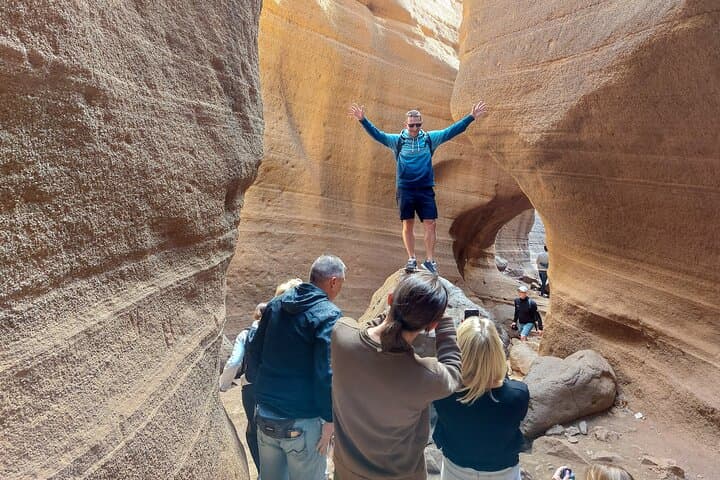
You step out of the van onto warm stone; a red gorge cuts the light into bands and the air smells faintly of dust and rosemary.
Verified experiences and guided adventures in the surrounding area.
Operated by Your Gran Canaria Experience · Fataga, Las Palmas
You step out of the van onto warm stone; a red gorge cuts the light into bands and the air smells faintly of dust and rosemary.
The tuff walls press close in places, daring you to read their layers—ash and welded pumice laid down by ancient eruptions—while a narrow oasis threads palms and irrigated plots where water still commands the landscape.
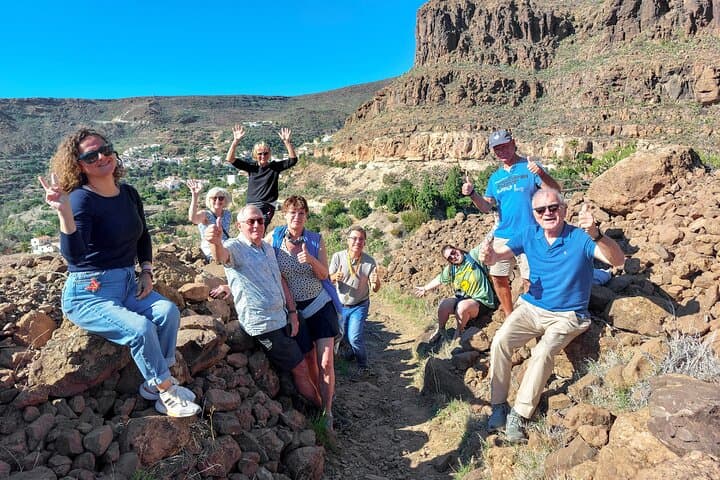
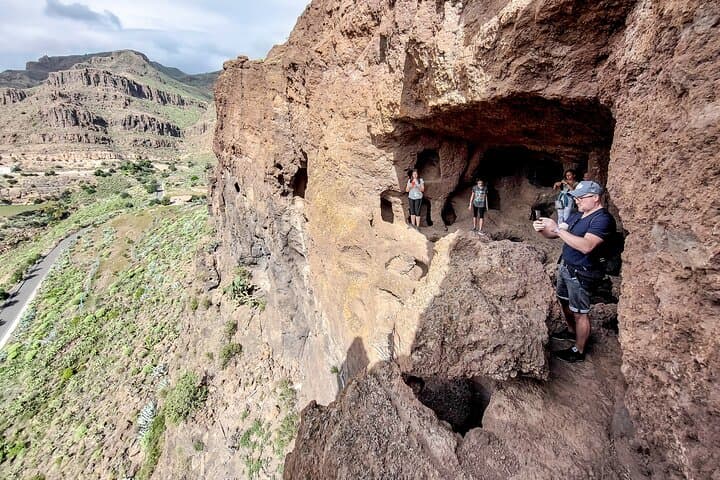
This one-day route ties natural history to human story. Volcanic tuff carved the ravines you walk; the caves were carved into habitations and refuges by Gran Canaria’s aboriginal people centuries before Spanish settlement. Scattered Canarian villages along the way preserve low stone houses, olive terraces and a slow pace that contrasts with the island’s busier coasts.
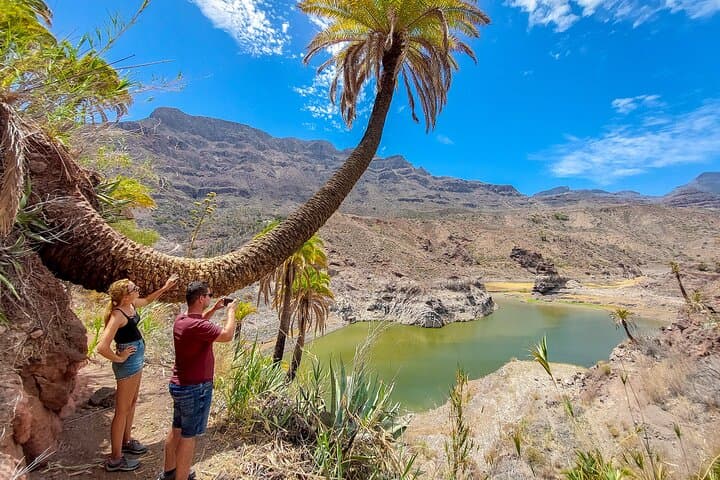
Guides point out agricultural tricks—stone channels, micro-terraces—and serve a homestyle tapas picnic of local cheeses, stewed vegetables, mojo sauces and seasonal fruits. Photography stops include panoramic overlooks of the southern mountains and a small oasis path where irrigation channels and date palms create unexpected green in the scrub.
Practically: expect a 6–7 hour outing with several short hikes on rocky, uneven trails (total walking roughly 4–6 km with up to a few hundred meters of ascent in sections). Moderate fitness is required; trails include loose rock and narrow single-track. Wear sturdy shoes, carry 1–2 liters of water, sun protection and layered clothing for changing wind and shade. The tour is best in morning light for cooler hiking and clearer photos; hotel pickup is usually provided, and small-group pacing means time to ask questions and taste local flavors.
moderate.
6–7 hours.
Suitable for someone with regular walking fitness who can handle uneven terrain and short climbs.
Yes—transport by air-conditioned van with pickup and drop-off from designated hotels is included in the tour.
Hikes are short but on rocky and uneven ground; the tour requires moderate fitness and steady footing rather than technical climbing.
The picnic is Canarian-style with local products; guides can usually accommodate vegetarian needs if requested in advance—note special dietary requests at booking.
This tour is not recommended for pregnant travelers and may not be suitable for very young children due to uneven terrain; check with the operator before booking.
The caves and ravines were used by Gran Canaria’s aboriginal (Guanche) inhabitants; many caves served as dwellings and storage before European arrival.
Water is scarce—stick to trails, avoid disturbing irrigated plots and take all litter out; supporting licensed local guides helps fund conservation and sustainable tourism.
Your Gran Canaria Experience operates guided outdoor trips and adventures with an emphasis on safety, stewardship, and memorable experiences.
You step out of the van onto warm stone; a red gorge cuts the light into bands and the air smells faintly of dust and rosemary.
You step out of the van onto warm stone; a red gorge cuts the light into bands and the air smells faintly of dust and rosemary.
The tuff walls press close in places, daring you to read their layers—ash and welded pumice laid down by ancient eruptions—while a narrow oasis threads palms and irrigated plots where water still commands the landscape.
This one-day route ties natural history to human story. Volcanic tuff carved the ravines you walk; the caves were carved into habitations and refuges by Gran Canaria’s aboriginal people centuries before Spanish settlement. Scattered Canarian villages along the way preserve low stone houses, olive terraces and a slow pace that contrasts with the island’s busier coasts.
Guides point out agricultural tricks—stone channels, micro-terraces—and serve a homestyle tapas picnic of local cheeses, stewed vegetables, mojo sauces and seasonal fruits. Photography stops include panoramic overlooks of the southern mountains and a small oasis path where irrigation channels and date palms create unexpected green in the scrub.
Practically: expect a 6–7 hour outing with several short hikes on rocky, uneven trails (total walking roughly 4–6 km with up to a few hundred meters of ascent in sections). Moderate fitness is required; trails include loose rock and narrow single-track. Wear sturdy shoes, carry 1–2 liters of water, sun protection and layered clothing for changing wind and shade. The tour is best in morning light for cooler hiking and clearer photos; hotel pickup is usually provided, and small-group pacing means time to ask questions and taste local flavors.