THE ADVENTURE COLLECTIVE® · Independent discovery and booking for outdoor travel

Speed along the Karaburun coast to luminous sea caves, quiet pebble coves, and the historic sands of Grama Bay. This full-day speedboat tour pairs snorkeling in glowing blue caverns with time to explore secluded beaches and ancient rock inscriptions.
Speed along the Karaburun coast to luminous sea caves, quiet pebble coves, and the historic sands of Grama Bay. This full-day speedboat tour pairs snorkeling in glowing blue caverns with time to explore secluded beaches and ancient rock inscriptions.
A low sun glances off the Ionian as the speedboat peels away from Vlore, spray catching like glass in the wake. Cliffs rise abruptly on the Karaburun Peninsula, their limestone faces folded and scored by centuries of wind and wave. The boat threads a ragged coastline—caves yawning in shadow, small beaches tucked under rocky ridges—until a narrow mouth opens and a wash of surreal blue light spills from within: the Hidden Blue Cave.
Verified experiences and guided adventures in the surrounding area.
Operated by Go Boat Tours Vlore · Vlorë, Vlorë County
A low sun glances off the Ionian as the speedboat peels away from Vlore, spray catching like glass in the wake. Cliffs rise abruptly on the Karaburun Peninsula, their limestone faces folded and scored by centuries of wind and wave. The boat threads a ragged coastline—caves yawning in shadow, small beaches tucked under rocky ridges—until a narrow mouth opens and a wash of surreal blue light spills from within: the Hidden Blue Cave.
This stretch of coast records both geology and human history. Sea-sculpted karst shelters Haxhi Ali’s pirate hideout and the inscriptions at Grama Bay—ancient sailors’ marks cut into the rock—remind visitors that ships have used these coves for shelter for millennia. Local fishing villages still read tides and wind the way sailors once read stars.
Expect clear water and strong sun; visibility for snorkeling is often excellent, but currents can quicken with afternoon wind. The experience balances exploration and downtime: short swims and cave snorkels interspersed with longer stops at Bristan Bay and Grama Bay, where cliffs and sand invite longer breaks.
Practical notes: wear water shoes for rocky entries, bring reef-safe sunscreen, and carry a light wind layer for the return. If you’re prone to seasickness, take medication beforehand—the open crossing can be choppy. Morning departures minimize wind and give the best light inside the blue cave. Guides typically supply snorkel gear and light snacks; bring any personal masks for the best fit.
This trip suits travelers who want short swims, guided local history, and the kind of coastal geology that alternates between abrupt, watchful cliffs and quiet, sunlit water.
easy.
7–8 hours.
Suitable for average fitness: must be able to step on/off a boat, swim short distances, and handle stairs or rocky beaches.
The tour runs about 7–8 hours, with several short stops and a longer 2‑hour stop at Grama Bay.
Yes—standard snorkeling equipment is provided, but many travelers bring their own mask for comfort.
The tour is classified as easy and suits most ages, but it’s not recommended for infants under 1 or travelers with serious cardiovascular or spinal issues; boat movements and rocky entries can be challenging.
Operators typically cancel in unsafe sea conditions; the tour’s policy allows a full refund if canceled at least 24 hours before departure or if the operator cancels due to weather.
Grama Bay carries ancient sailors’ inscriptions carved into its cliffs; later, Ottoman‑era pirates like Haxhi Ali used these caves as makeshift harbors and hideouts.
The Karaburun coast has fragile marine habitats—avoid anchoring on seagrass, pack out trash, and favor reef‑safe products to minimize impact.
Go Boat Tours Vlore operates guided outdoor trips and adventures with an emphasis on safety, stewardship, and memorable experiences.
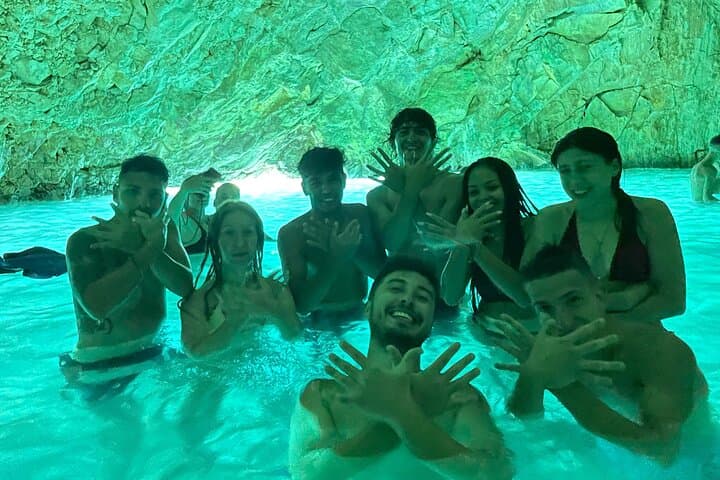
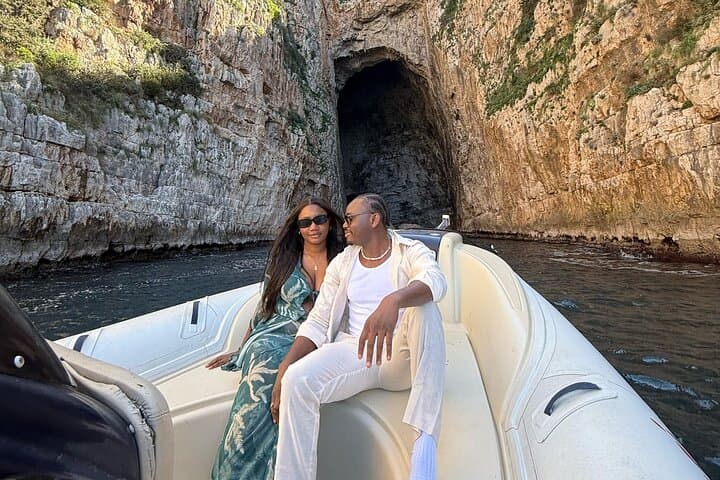
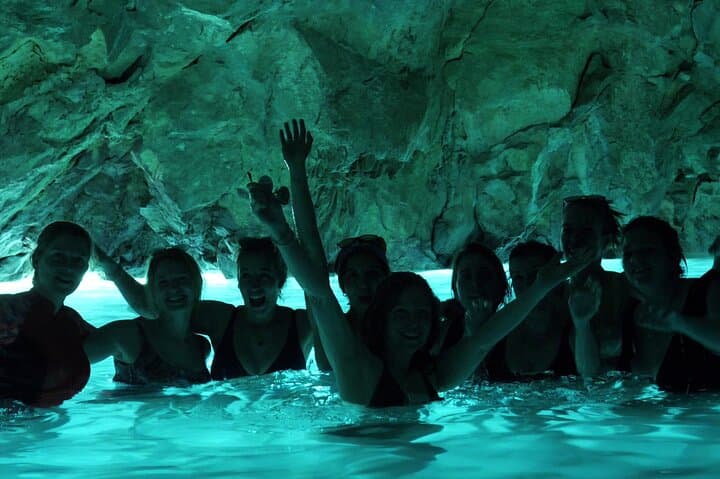
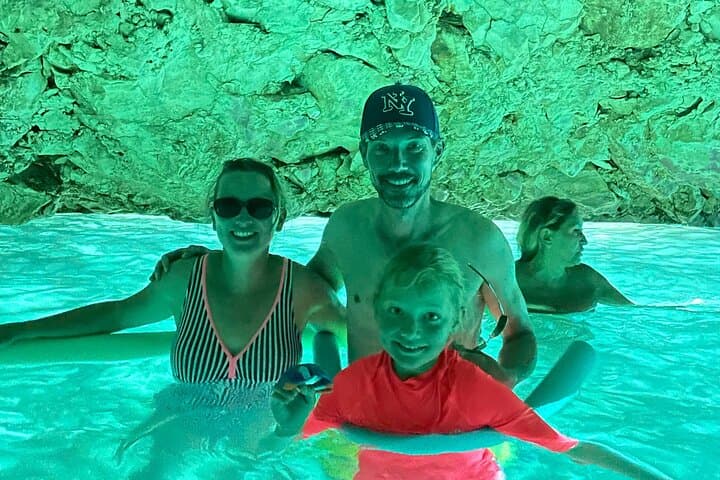
A low sun glances off the Ionian as the speedboat peels away from Vlore, spray catching like glass in the wake. Cliffs rise abruptly on the Karaburun Peninsula, their limestone faces folded and scored by centuries of wind and wave. The boat threads a ragged coastline—caves yawning in shadow, small beaches tucked under rocky ridges—until a narrow mouth opens and a wash of surreal blue light spills from within: the Hidden Blue Cave.
A low sun glances off the Ionian as the speedboat peels away from Vlore, spray catching like glass in the wake. Cliffs rise abruptly on the Karaburun Peninsula, their limestone faces folded and scored by centuries of wind and wave. The boat threads a ragged coastline—caves yawning in shadow, small beaches tucked under rocky ridges—until a narrow mouth opens and a wash of surreal blue light spills from within: the Hidden Blue Cave.
This stretch of coast records both geology and human history. Sea-sculpted karst shelters Haxhi Ali’s pirate hideout and the inscriptions at Grama Bay—ancient sailors’ marks cut into the rock—remind visitors that ships have used these coves for shelter for millennia. Local fishing villages still read tides and wind the way sailors once read stars.
Expect clear water and strong sun; visibility for snorkeling is often excellent, but currents can quicken with afternoon wind. The experience balances exploration and downtime: short swims and cave snorkels interspersed with longer stops at Bristan Bay and Grama Bay, where cliffs and sand invite longer breaks.
Practical notes: wear water shoes for rocky entries, bring reef-safe sunscreen, and carry a light wind layer for the return. If you’re prone to seasickness, take medication beforehand—the open crossing can be choppy. Morning departures minimize wind and give the best light inside the blue cave. Guides typically supply snorkel gear and light snacks; bring any personal masks for the best fit.
This trip suits travelers who want short swims, guided local history, and the kind of coastal geology that alternates between abrupt, watchful cliffs and quiet, sunlit water.