THE ADVENTURE COLLECTIVE® · Independent discovery and booking for outdoor travel

Walk Gozo’s dramatic coast with a local guide: cliff-top panoramas, Punic ruins, and secluded swim spots tailored to weather and fitness. This 4–5 hour tour pairs on-trail storytelling with practical logistics—perfect for first-time visitors who want to see the island’s best edges in a single outing.
Walk Gozo’s dramatic coast with a local guide: cliff-top panoramas, Punic ruins, and secluded swim spots tailored to weather and fitness. This 4–5 hour tour pairs on-trail storytelling with practical logistics—perfect for first-time visitors who want to see the island’s best edges in a single outing.
The morning air on Gozo tastes of salt and limestone. You step off the minivan at a scrub-fringed ridge and the island opens: a sweep of low cliffs falling into the Mediterranean, scattered watchtowers, and a patchwork of terraced fields. Guides check boots, hand out bottles of water, and set a steady pace that lets the coast pull you forward—sometimes along cliff edges with wind pushing you inland, sometimes down a narrow path that ends at a secret pebble bay.
Verified experiences and guided adventures in the surrounding area.
Operated by Gozo Unveiled · Victoria, Gozo
The morning air on Gozo tastes of salt and limestone. You step off the minivan at a scrub-fringed ridge and the island opens: a sweep of low cliffs falling into the Mediterranean, scattered watchtowers, and a patchwork of terraced fields. Guides check boots, hand out bottles of water, and set a steady pace that lets the coast pull you forward—sometimes along cliff edges with wind pushing you inland, sometimes down a narrow path that ends at a secret pebble bay.
Gozo is compact but layered. Its geology is a book of fossilized seabeds and erosion—soft Globigerina limestone forms gentle plateaus and jagged escarpments where waves have undercut the shore. History is visible everywhere: Punic-era shrines like Tal-Wardija hide in scrub, and the raised towers built by the Knights of St. John still watch the approaches from carved stone perches. Villages like Xlendi and Mgarr continue centuries-old rhythms of boat-building and kiosks serving a cooling soda after a hot walk.
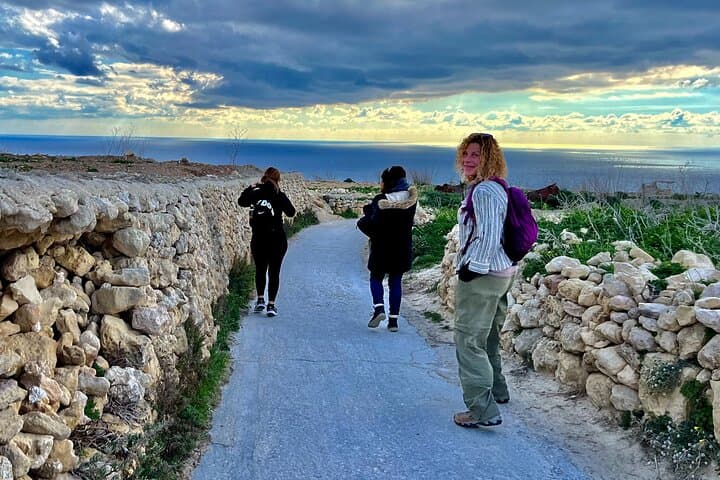
On this guided hike, routes are fluid—chosen by your guide to match weather and fitness—so you may wander cliffside trails above Xlendi Bay one moment and descend through a narrow gorge the next. Guides point out local flora adapted to thin soils and salt spray, and they’ll arrange a swim at a sheltered cove if the sea and the group's mood allow. The walk covers varied terrain: compacted dirt tracks, rocky coastal footpaths, and a few short, steep sections where good footing matters.
Why take this with a guide? Safety on exposed coastal trails, local route knowledge, and the ability to tailor distance and difficulty make a guided outing the best way to see the island in a single morning or afternoon. Expect sections of loose rock and uneven footing—good hiking shoes and a steady step are essential. Bring layers: wind can be sharp on the cliffs even after a hot inland stretch, and sun protection is non-negotiable.
Practical details: the tour meets at Victoria Bus Terminus and runs about 4–5 hours, with a car transfer to the trailhead and back. The group is small—max eight—so there’s room to slow down for photos or to take a dip in a quiet inlet. If winds are strong, guides will reroute to lower, more protected paths. For the clearest experience, plan visits in spring or fall when wildflowers color the headlands and temperatures stay comfortable. Whether you’re chasing panoramic seascapes, ancient ruins, or a quick, saltwater plunge, this hike balances discovery with clear logistics—an efficient, scenic way to read Gozo’s coast on foot.
moderate.
4–5 hours.
Moderate fitness—comfortable walking for multiple hours with some short steep sections; able to manage uneven terrain.
The meeting point is Victoria Bus Terminus (Triq Giorgio Borġ Olivier); the tour returns there after the hike via a car transfer.
A moderate level of fitness is required—expect multiple hours of walking with some uneven and short steep sections; guides can tailor pace and route to the group.
Yes—if weather and sea conditions permit, the guide can arrange a stop at a sheltered bay for a swim; bring swimwear and a towel.
Tours may be rerouted to lower, protected trails or canceled if winds are unsafe; guides prioritize safety and will adapt plans accordingly.
Children with good stamina and older travelers who can handle uneven paths can join, but advise the operator of any limitations when booking.
There may be short stops at local kiosks or village bars during the route; carry snacks and water between stops.
Gozo’s coasts are dotted with watchtowers and fortifications built by the Knights of St. John to guard shipping lanes; older Punic and Roman sites also mark long habitation of these shores.
Coastal trails are vulnerable to erosion and trampling of fragile garigue vegetation—stay on paths, pack out waste, and support local guides who steward these routes.
Gozo Unveiled operates guided outdoor trips and adventures with an emphasis on safety, stewardship, and memorable experiences.
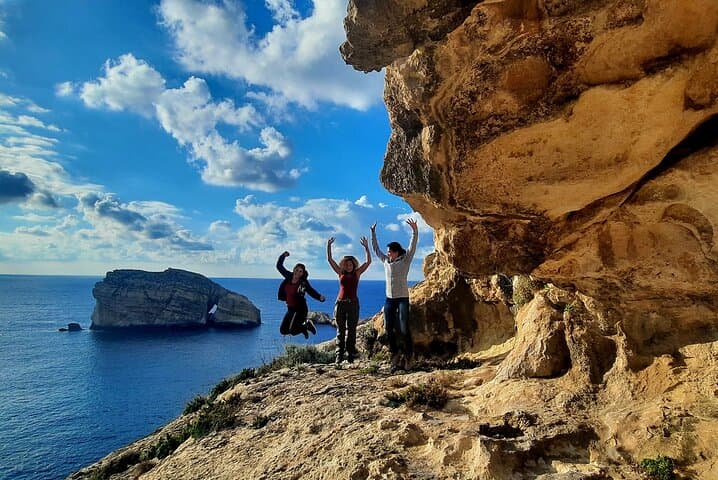

The morning air on Gozo tastes of salt and limestone. You step off the minivan at a scrub-fringed ridge and the island opens: a sweep of low cliffs falling into the Mediterranean, scattered watchtowers, and a patchwork of terraced fields. Guides check boots, hand out bottles of water, and set a steady pace that lets the coast pull you forward—sometimes along cliff edges with wind pushing you inland, sometimes down a narrow path that ends at a secret pebble bay.
The morning air on Gozo tastes of salt and limestone. You step off the minivan at a scrub-fringed ridge and the island opens: a sweep of low cliffs falling into the Mediterranean, scattered watchtowers, and a patchwork of terraced fields. Guides check boots, hand out bottles of water, and set a steady pace that lets the coast pull you forward—sometimes along cliff edges with wind pushing you inland, sometimes down a narrow path that ends at a secret pebble bay.
Gozo is compact but layered. Its geology is a book of fossilized seabeds and erosion—soft Globigerina limestone forms gentle plateaus and jagged escarpments where waves have undercut the shore. History is visible everywhere: Punic-era shrines like Tal-Wardija hide in scrub, and the raised towers built by the Knights of St. John still watch the approaches from carved stone perches. Villages like Xlendi and Mgarr continue centuries-old rhythms of boat-building and kiosks serving a cooling soda after a hot walk.
On this guided hike, routes are fluid—chosen by your guide to match weather and fitness—so you may wander cliffside trails above Xlendi Bay one moment and descend through a narrow gorge the next. Guides point out local flora adapted to thin soils and salt spray, and they’ll arrange a swim at a sheltered cove if the sea and the group's mood allow. The walk covers varied terrain: compacted dirt tracks, rocky coastal footpaths, and a few short, steep sections where good footing matters.
Why take this with a guide? Safety on exposed coastal trails, local route knowledge, and the ability to tailor distance and difficulty make a guided outing the best way to see the island in a single morning or afternoon. Expect sections of loose rock and uneven footing—good hiking shoes and a steady step are essential. Bring layers: wind can be sharp on the cliffs even after a hot inland stretch, and sun protection is non-negotiable.
Practical details: the tour meets at Victoria Bus Terminus and runs about 4–5 hours, with a car transfer to the trailhead and back. The group is small—max eight—so there’s room to slow down for photos or to take a dip in a quiet inlet. If winds are strong, guides will reroute to lower, more protected paths. For the clearest experience, plan visits in spring or fall when wildflowers color the headlands and temperatures stay comfortable. Whether you’re chasing panoramic seascapes, ancient ruins, or a quick, saltwater plunge, this hike balances discovery with clear logistics—an efficient, scenic way to read Gozo’s coast on foot.