THE ADVENTURE COLLECTIVE® · Independent discovery and booking for outdoor travel

Spend a day on the Golden Circle where tectonic rifts, plunging waterfalls, and steaming geysers meet a geothermal greenhouse producing tomatoes year-round. This private 7–8 hour tour pairs geology with local culinary innovation for an accessible, sensory Icelandic introduction.
Spend a day on the Golden Circle where tectonic rifts, plunging waterfalls, and steaming geysers meet a geothermal greenhouse producing tomatoes year-round. This private 7–8 hour tour pairs geology with local culinary innovation for an accessible, sensory Icelandic introduction.
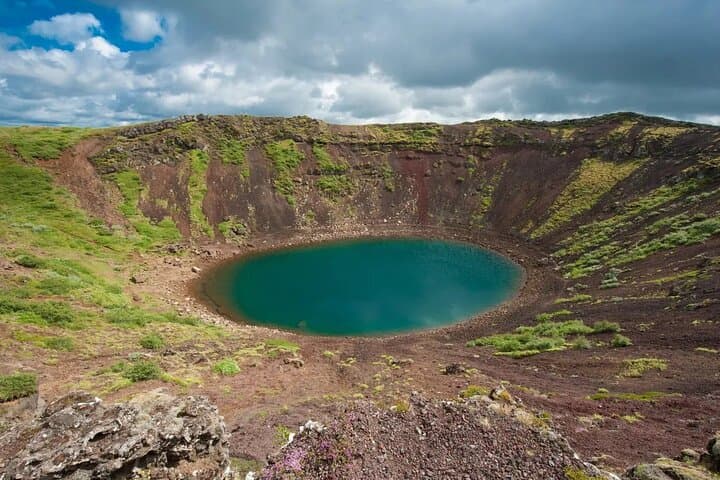
You step out of Reykjavik into an Iceland that moves at paradoxical speeds: steaming and slow, sudden and patient. The road unfurls across low volcanic ridges and wide fields where snow—or summer moss—claims the ground. By mid-morning the bus eases to a stop above a cobalt pool inside Kerið crater; the wind dares you toward the rim and the water below seems to hold its breath.
Verified experiences and guided adventures in the surrounding area.
Operated by Northern Adventurer · Reykjavik, Capital Region
You step out of Reykjavik into an Iceland that moves at paradoxical speeds: steaming and slow, sudden and patient. The road unfurls across low volcanic ridges and wide fields where snow—or summer moss—claims the ground. By mid-morning the bus eases to a stop above a cobalt pool inside Kerið crater; the wind dares you toward the rim and the water below seems to hold its breath.
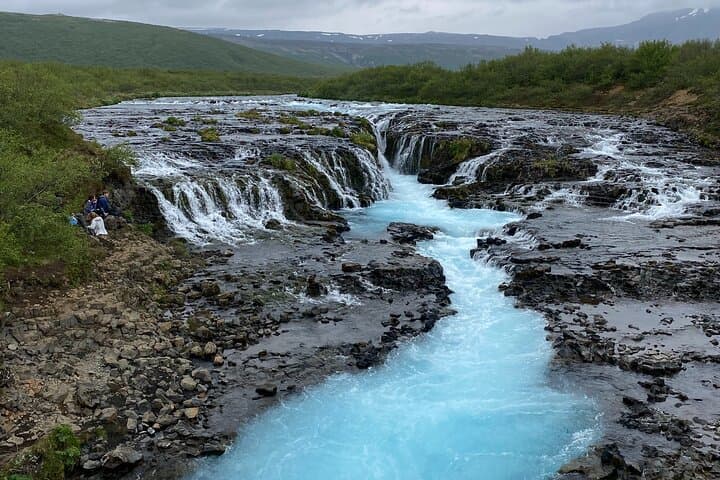
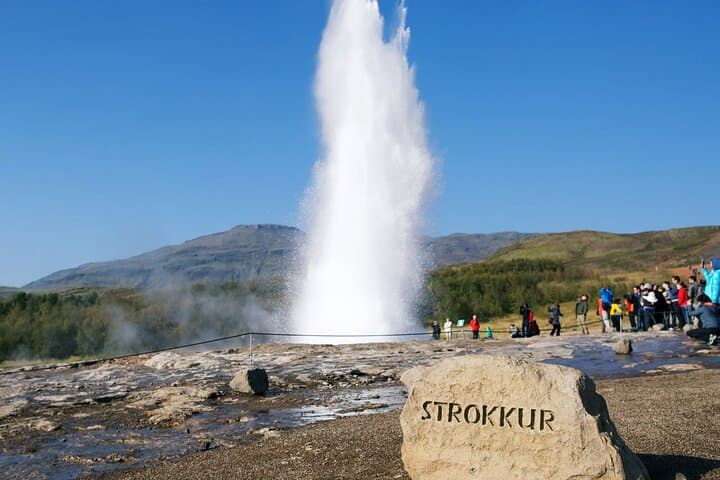
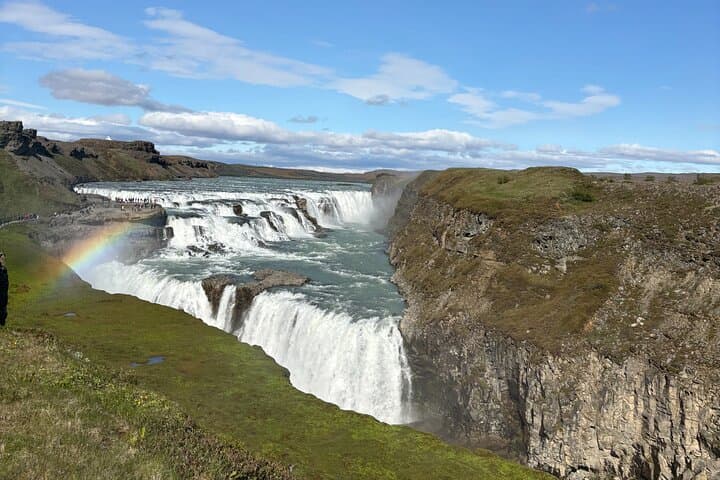
The Golden Circle strings together some of Iceland’s most immediate lessons in geology and human history. Þingvellir’s rift valley is where two tectonic plates pull apart by centimeters each year and where, almost a thousand years ago, Iceland’s Viking settlers founded Alþingi, one of the world’s oldest parliaments. Gullfoss, fed by glacial melt, throws itself into a canyon in two dramatic tiers—the falls can send mist in sheets that make rainbows common on clear days. At Haukadalur, Strokkur punctuates the steam with regular eruptions, a reminder that the earth here is still tuning itself.
Fridheimar greenhouse is the human counterpoint: a warm, humid bubble of cultivated life running off geothermal heat. Here tomatoes grow year-round, and the cafe plates up tart tomato soup and sticky tomato pastries—simple, bright proof of Icelandic ingenuity. On this private, 7–8 hour tour, a local guide threads these stops with stories about sheep farming, geothermal energy, and how a small island retools scarcity into creativity.
Practicalities are straightforward: the loop from Reykjavik covers roughly 220–250 km (about 135–155 miles) and includes short walks—Kerið’s rim walk and Gullfoss viewing paths—so expect light stairs and uneven paths rather than long hikes. Temperatures change quickly: dress in layers, waterproof outerwear is essential, and footwear should handle mud and stone. Photographers chase golden hour at Gullfoss or the quiet, early-morning light across Þingvellir’s rifts; for quieter visits, ask for an early pickup to beat crowds.
Food is a highlight: Fridheimar’s greenhouse tasting is optional and often worth the extra fee; otherwise the itinerary includes bottled water, snacks, and coffee. Accessibility is generally good—boardwalks and observation platforms exist—but some sites use stairs and gravel paths, so let the operator know if mobility is a concern.
Taken together, the sights feel engineered to surprise: a parliament carved between continents, a waterfall that refuses to be still, a geyser that times the horizon. This is a day of contrasts—raw geology and cultivated warmth—that reads like a primer on Iceland’s elemental character while remaining an easy, deeply rewarding introduction for first-time visitors.
easy.
7–8 hours.
Light activity—suitable for anyone comfortable with short walks, stairs, and standing for viewpoints.
Yes—this private tour includes pickup from most Reykjavik hotels; the guide will meet you at the arranged pickup point.
Admission to Kerið crater is included; other optional purchases like Fridheimar tasting are paid on site.
Yes—the operator notes stroller accessibility for short distances, though some viewpoints have stairs; inform at booking for infant seats.
The tour can be cancelled for severe weather; standard cancellation allows a full refund if cancelled at least 24 hours ahead.
Fridheimar accommodates common dietary needs for their dishes, but contact the operator ahead if you have strict allergies.
Walking is brief and focused at each stop—typically 10–30 minute loops or viewing walks rather than long hikes.
Þingvellir hosted Iceland’s Alþingi since 930 AD, where law-speakers met between tectonic fissures that literally separate continents.
Stay on marked paths to protect fragile moss and lichen; Iceland’s tourism pressure makes footpath care and small-group tours important to reduce impact.
Northern Adventurer operates guided outdoor trips and adventures with an emphasis on safety, stewardship, and memorable experiences.
You step out of Reykjavik into an Iceland that moves at paradoxical speeds: steaming and slow, sudden and patient. The road unfurls across low volcanic ridges and wide fields where snow—or summer moss—claims the ground. By mid-morning the bus eases to a stop above a cobalt pool inside Kerið crater; the wind dares you toward the rim and the water below seems to hold its breath.
You step out of Reykjavik into an Iceland that moves at paradoxical speeds: steaming and slow, sudden and patient. The road unfurls across low volcanic ridges and wide fields where snow—or summer moss—claims the ground. By mid-morning the bus eases to a stop above a cobalt pool inside Kerið crater; the wind dares you toward the rim and the water below seems to hold its breath.
The Golden Circle strings together some of Iceland’s most immediate lessons in geology and human history. Þingvellir’s rift valley is where two tectonic plates pull apart by centimeters each year and where, almost a thousand years ago, Iceland’s Viking settlers founded Alþingi, one of the world’s oldest parliaments. Gullfoss, fed by glacial melt, throws itself into a canyon in two dramatic tiers—the falls can send mist in sheets that make rainbows common on clear days. At Haukadalur, Strokkur punctuates the steam with regular eruptions, a reminder that the earth here is still tuning itself.
Fridheimar greenhouse is the human counterpoint: a warm, humid bubble of cultivated life running off geothermal heat. Here tomatoes grow year-round, and the cafe plates up tart tomato soup and sticky tomato pastries—simple, bright proof of Icelandic ingenuity. On this private, 7–8 hour tour, a local guide threads these stops with stories about sheep farming, geothermal energy, and how a small island retools scarcity into creativity.
Practicalities are straightforward: the loop from Reykjavik covers roughly 220–250 km (about 135–155 miles) and includes short walks—Kerið’s rim walk and Gullfoss viewing paths—so expect light stairs and uneven paths rather than long hikes. Temperatures change quickly: dress in layers, waterproof outerwear is essential, and footwear should handle mud and stone. Photographers chase golden hour at Gullfoss or the quiet, early-morning light across Þingvellir’s rifts; for quieter visits, ask for an early pickup to beat crowds.
Food is a highlight: Fridheimar’s greenhouse tasting is optional and often worth the extra fee; otherwise the itinerary includes bottled water, snacks, and coffee. Accessibility is generally good—boardwalks and observation platforms exist—but some sites use stairs and gravel paths, so let the operator know if mobility is a concern.
Taken together, the sights feel engineered to surprise: a parliament carved between continents, a waterfall that refuses to be still, a geyser that times the horizon. This is a day of contrasts—raw geology and cultivated warmth—that reads like a primer on Iceland’s elemental character while remaining an easy, deeply rewarding introduction for first-time visitors.