THE ADVENTURE COLLECTIVE® · Independent discovery and booking for outdoor travel

A 7-day circuit from Kathmandu that climbs to Gosainkunda — a sacred glacial lake at roughly 4,390 m. Expect five days of village-to-village trekking, tea-house stays, and dramatic alpine views with cultural stops along the way.
A 7-day circuit from Kathmandu that climbs to Gosainkunda — a sacred glacial lake at roughly 4,390 m. Expect five days of village-to-village trekking, tea-house stays, and dramatic alpine views with cultural stops along the way.
You step off the jeep at Dhunche and the air feels thinner already—pine and rhododendron push at the trail as you begin the slow climb. Over the next five walking days the valley opens and contracts: terraced fields give way to conifer slopes, then alpine meadows, and finally the startling, glassy blue of Gosainkunda at about 4,390 m. Wind and stone have shaped narrow ridgelines that dare you onward; the lakes sit like a high-altitude gathering place, watched over by Langtang's icy shoulders.
Verified experiences and guided adventures in the surrounding area.
Operated by Flyeast Nepal · Dhunche, Bagmati Province
You step off the jeep at Dhunche and the air feels thinner already—pine and rhododendron push at the trail as you begin the slow climb. Over the next five walking days the valley opens and contracts: terraced fields give way to conifer slopes, then alpine meadows, and finally the startling, glassy blue of Gosainkunda at about 4,390 m. Wind and stone have shaped narrow ridgelines that dare you onward; the lakes sit like a high-altitude gathering place, watched over by Langtang's icy shoulders.
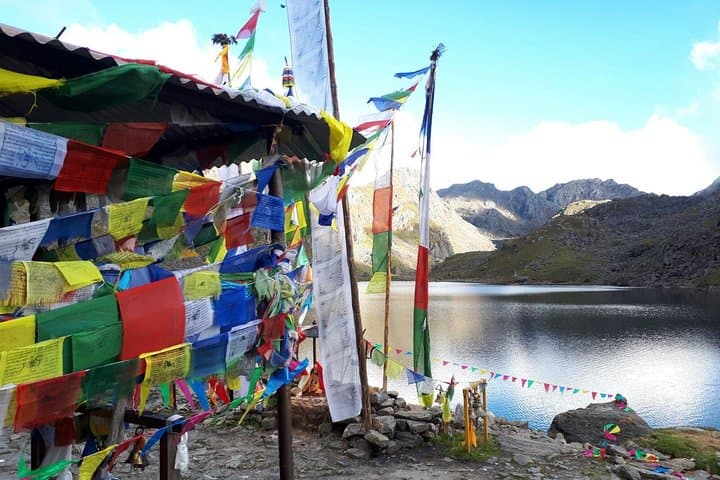
Gosainkunda is both natural and cultural high ground — a glacial basin fed by snowmelt and a pilgrimage site for Hindus and Buddhists who have visited these lakes for centuries. Geology here is direct: glacial scouring, moraines and the sharp uplift of the Mahabharat and Himalayan ranges. Villages along the route are predominantly Tamang and local hill-farming communities; tea houses provide simple beds and local dal-bhat.
Practical guidance: expect 5 days of village-to-village trekking with daily walking windows of roughly 4–7 hours, significant elevation gain (Dhunche ~1,900 m → Chandanbari ~3,330 m → Gosainkunda ~4,390 m), and steep descents thereafter. Trails vary from packed dirt and rocky steps to scree near the lake; basic navigation is straightforward but weather can change quickly.
Bring warm layers, good boots, poles and plan for altitude: ascend slowly, hydrate, and allow for shorter days if you feel off. Spring and autumn offer the clearest views; winter requires snow experience. This trek is rewarding, culturally textured and requires respect—for altitude, weather, and fragile alpine ecology.
moderate.
7 days.
Should be able to walk 4–6 hours per day on uneven terrain and tolerate incremental altitude gain
Yes — local permits are required and are usually arranged by your operator or guide before or at the start in Dhunche.
The lake area sits around 4,390 m (Gosainkunda); plan for gradual ascent and monitor for altitude sickness.
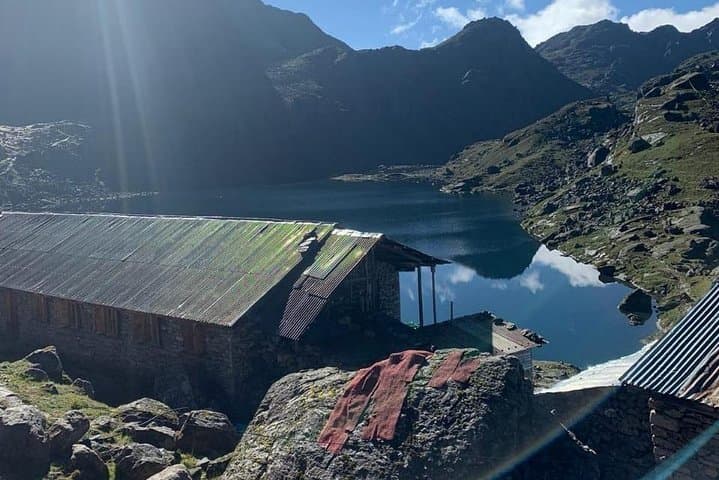
Tea houses and small lodges in villages offer basic rooms and shared facilities; expect simple hot meals and communal spaces.
Spring (mid-March to May) and autumn (September to November) offer the clearest skies and stable weather; winter has deep snow and requires experience.
Gosainkunda is a longstanding pilgrimage site tied to Hindu and Buddhist traditions; local festivals draw pilgrims each year, especially during Janai Purnima.
Alpine vegetation and water sources are fragile—stick to trails, pack out waste, and support local lodges that follow low-impact practices.
Flyeast Nepal operates guided outdoor trips and adventures with an emphasis on safety, stewardship, and memorable experiences.
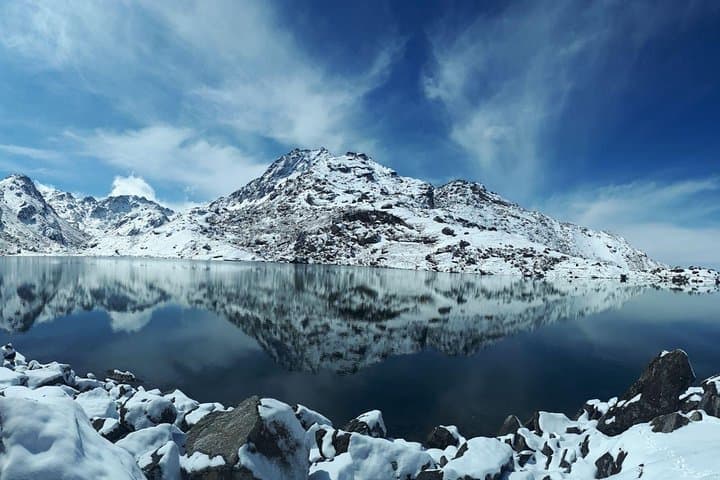
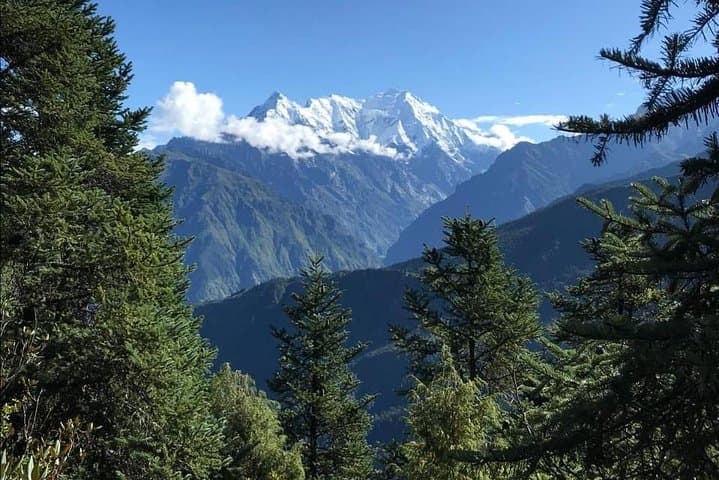
You step off the jeep at Dhunche and the air feels thinner already—pine and rhododendron push at the trail as you begin the slow climb. Over the next five walking days the valley opens and contracts: terraced fields give way to conifer slopes, then alpine meadows, and finally the startling, glassy blue of Gosainkunda at about 4,390 m. Wind and stone have shaped narrow ridgelines that dare you onward; the lakes sit like a high-altitude gathering place, watched over by Langtang's icy shoulders.
You step off the jeep at Dhunche and the air feels thinner already—pine and rhododendron push at the trail as you begin the slow climb. Over the next five walking days the valley opens and contracts: terraced fields give way to conifer slopes, then alpine meadows, and finally the startling, glassy blue of Gosainkunda at about 4,390 m. Wind and stone have shaped narrow ridgelines that dare you onward; the lakes sit like a high-altitude gathering place, watched over by Langtang's icy shoulders.
Gosainkunda is both natural and cultural high ground — a glacial basin fed by snowmelt and a pilgrimage site for Hindus and Buddhists who have visited these lakes for centuries. Geology here is direct: glacial scouring, moraines and the sharp uplift of the Mahabharat and Himalayan ranges. Villages along the route are predominantly Tamang and local hill-farming communities; tea houses provide simple beds and local dal-bhat.
Practical guidance: expect 5 days of village-to-village trekking with daily walking windows of roughly 4–7 hours, significant elevation gain (Dhunche ~1,900 m → Chandanbari ~3,330 m → Gosainkunda ~4,390 m), and steep descents thereafter. Trails vary from packed dirt and rocky steps to scree near the lake; basic navigation is straightforward but weather can change quickly.
Bring warm layers, good boots, poles and plan for altitude: ascend slowly, hydrate, and allow for shorter days if you feel off. Spring and autumn offer the clearest views; winter requires snow experience. This trek is rewarding, culturally textured and requires respect—for altitude, weather, and fragile alpine ecology.