THE ADVENTURE COLLECTIVE® · Independent discovery and booking for outdoor travel

A focused visitor centre in Swatragh that chronicles Dr. Mooney’s famine-era relief work and showcases bog oak sculptures. Plan an hour to move through audiovisual displays, interpretive panels, and local stories that connect village life to Ireland’s Great Hunger.
A focused visitor centre in Swatragh that chronicles Dr. Mooney’s famine-era relief work and showcases bog oak sculptures. Plan an hour to move through audiovisual displays, interpretive panels, and local stories that connect village life to Ireland’s Great Hunger.
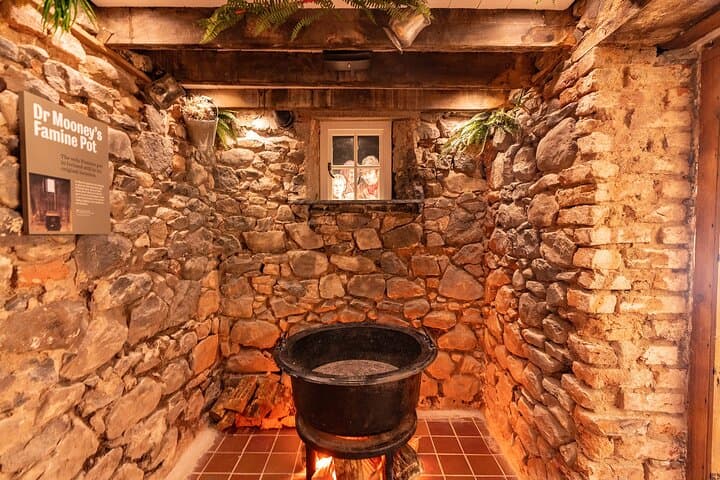
Step inside a compact gallery where soft lighting picks out dark, ancient wood and a single original famine pot sits behind glass. Audio narration threads voices of local families through the room while bog oak sculptures loom like time-worn witnesses; the centre feels less like a museum and more like a conversation with the village itself.
Verified experiences and guided adventures in the surrounding area.
Operated by Gorta Swatraghs Famine Story · Swatragh, County Londonderry
Step inside a compact gallery where soft lighting picks out dark, ancient wood and a single original famine pot sits behind glass. Audio narration threads voices of local families through the room while bog oak sculptures loom like time-worn witnesses; the centre feels less like a museum and more like a conversation with the village itself.
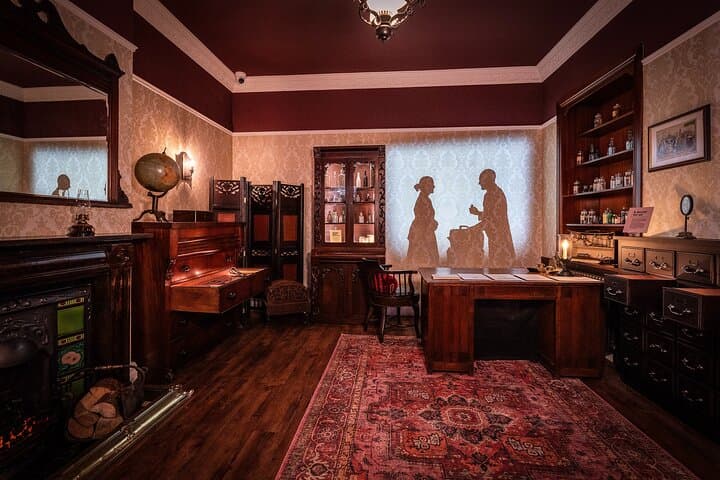
Gorta tells the story of Swatragh in the mid-1800s, concentrating on Dr. Mooney and his wife Sarah who ran a surgery and private soup kitchen during An Gorta Mór. The exhibition grew from a 1992 discovery of a famine pot and a wartime window on the old Friel’s site; historians from Maynooth University collaborated to ground the narrative in records and oral testimony.
Geologically, the star pieces are bog oak—peat-preserved timbers darkened over centuries, carrying the peatlands’ chemical memory. Those peatlands shaped local livelihoods and the physical landscape visitors can still trace in the surrounding fields and drainage patterns.
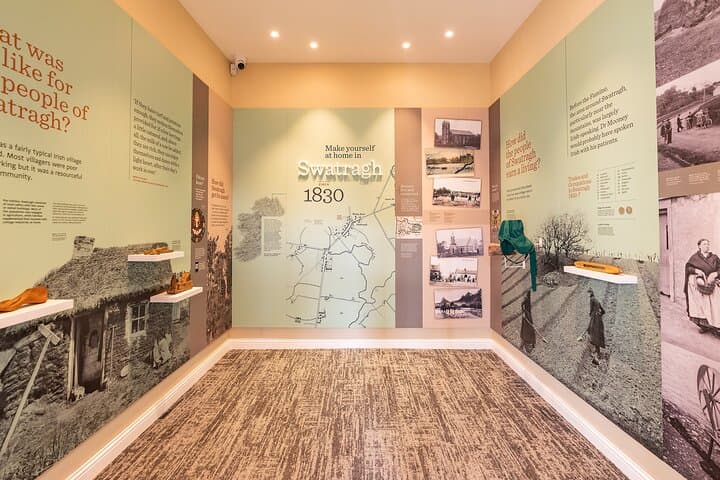
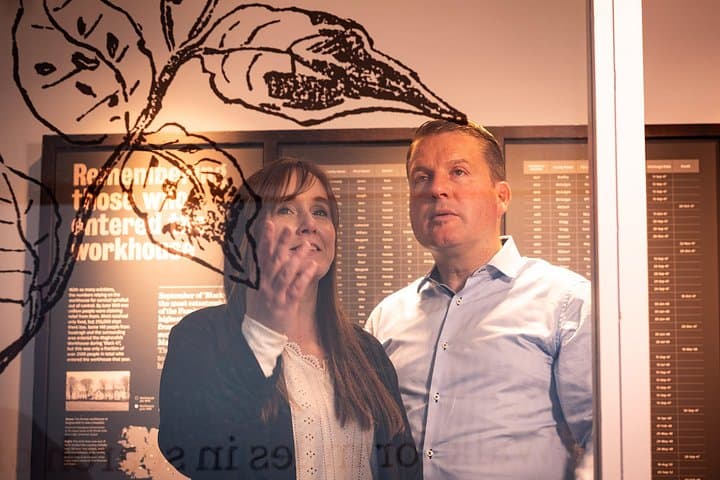
Locally, the centre functions as a focal point for genealogy and quiet reflection; it also highlights Kieran Tuohy’s carved responses to loss and endurance. Panels, touchscreens, and short films make it approachable for families and history buffs alike.
Practical guidance: allow about 60 minutes, arrive during daylight to explore the village after your visit, and bring a light waterproof—the centre is small but nearby paths are exposed to Atlantic weather. Photography is typically allowed of displays; check staff for restricted items. The site is accessible and suitable for all fitness levels, and you’ll leave with a free postcard memento and a clearer sense of Swatragh’s resilient past.
easy.
1 hour.
Suitable for all fitness levels; the centre is primarily an indoor, seated experience
Allocate about 60 minutes to watch the films, read panels, and view the bog oak sculptures—longer if you plan genealogical research.
Yes. The site is suitable for visitors of all fitness levels and allows service animals; staff can assist with accessibility queries.
Entry is available with instant confirmation; bookings can usually be made online but walk-up visits are possible subject to opening hours.
The centre provides local context and contacts; bring family names and dates and staff can advise on archival resources and local historians.
The centre centres on Dr. Mooney’s mid-19th-century surgery and private soup kitchen during the Great Hunger and draws on local testimony and academic research.
Displays highlight peatland heritage and the significance of bog oak; visitors are encouraged to respect local habitats and avoid trampling vulnerable peat edges.
Gorta Swatraghs Famine Story operates guided outdoor trips and adventures with an emphasis on safety, stewardship, and memorable experiences.
Step inside a compact gallery where soft lighting picks out dark, ancient wood and a single original famine pot sits behind glass. Audio narration threads voices of local families through the room while bog oak sculptures loom like time-worn witnesses; the centre feels less like a museum and more like a conversation with the village itself.
Step inside a compact gallery where soft lighting picks out dark, ancient wood and a single original famine pot sits behind glass. Audio narration threads voices of local families through the room while bog oak sculptures loom like time-worn witnesses; the centre feels less like a museum and more like a conversation with the village itself.
Gorta tells the story of Swatragh in the mid-1800s, concentrating on Dr. Mooney and his wife Sarah who ran a surgery and private soup kitchen during An Gorta Mór. The exhibition grew from a 1992 discovery of a famine pot and a wartime window on the old Friel’s site; historians from Maynooth University collaborated to ground the narrative in records and oral testimony.
Geologically, the star pieces are bog oak—peat-preserved timbers darkened over centuries, carrying the peatlands’ chemical memory. Those peatlands shaped local livelihoods and the physical landscape visitors can still trace in the surrounding fields and drainage patterns.
Locally, the centre functions as a focal point for genealogy and quiet reflection; it also highlights Kieran Tuohy’s carved responses to loss and endurance. Panels, touchscreens, and short films make it approachable for families and history buffs alike.
Practical guidance: allow about 60 minutes, arrive during daylight to explore the village after your visit, and bring a light waterproof—the centre is small but nearby paths are exposed to Atlantic weather. Photography is typically allowed of displays; check staff for restricted items. The site is accessible and suitable for all fitness levels, and you’ll leave with a free postcard memento and a clearer sense of Swatragh’s resilient past.