THE ADVENTURE COLLECTIVE® · Independent discovery and booking for outdoor travel

Ride the iconic Gornergrat cog railway to a 3,089 m viewpoint for full-on Matterhorn panoramas, optional Riffelsee reflections, and a private walking tour through historic Zermatt. This six-hour trip combines easy alpine access with high-mountain scenery.
Ride the iconic Gornergrat cog railway to a 3,089 m viewpoint for full-on Matterhorn panoramas, optional Riffelsee reflections, and a private walking tour through historic Zermatt. This six-hour trip combines easy alpine access with high-mountain scenery.
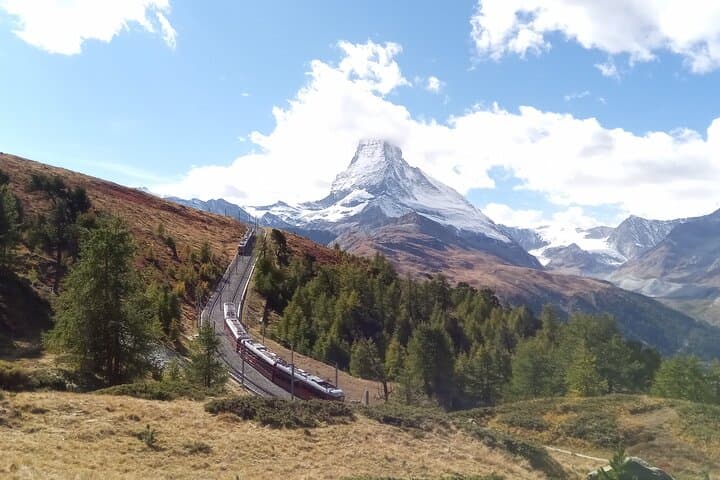
You step out into the crisp alpine air of Zermatt, the slate roofs still holding a thin crust of overnight frost, and watch the cog railway whistle as it begins its slow climb. Trees give way to rock and glacier; the Matterhorn waits above the skyline, a patient peak that seems to change expression with each turn of the train.
Verified experiences and guided adventures in the surrounding area.
Operated by MyMountains · Zermatt, Valais
You step out into the crisp alpine air of Zermatt, the slate roofs still holding a thin crust of overnight frost, and watch the cog railway whistle as it begins its slow climb. Trees give way to rock and glacier; the Matterhorn waits above the skyline, a patient peak that seems to change expression with each turn of the train.
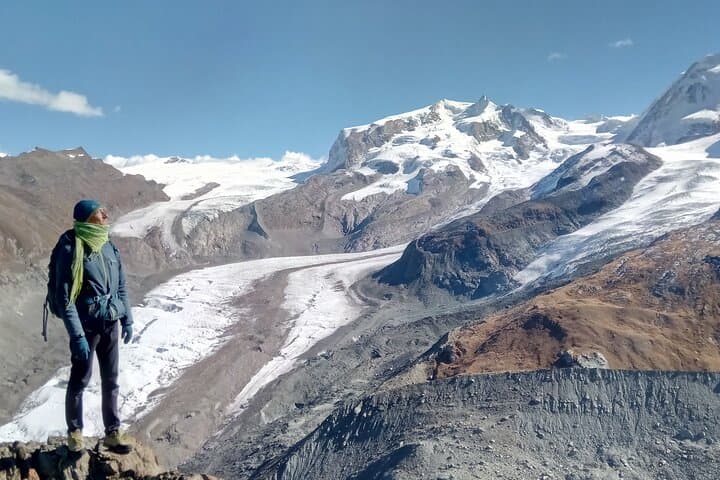
Zermatt has been a mountaineering hub since the first ascent of the Matterhorn in 1865, and the Gornergrat railway—opened in 1898—was built to bring visitors to a reliable high viewpoint. Geologically the scene is raw: ancient crystalline rock faces, ribbon glaciers like the Gorner Glacier, and moraine-strewn valleys carved over millennia. Culturally, the village blends Swiss alpine tradition with an international climbing legacy—museums, old guide houses and the modern Monte Rosa Hut illustrate that arc.
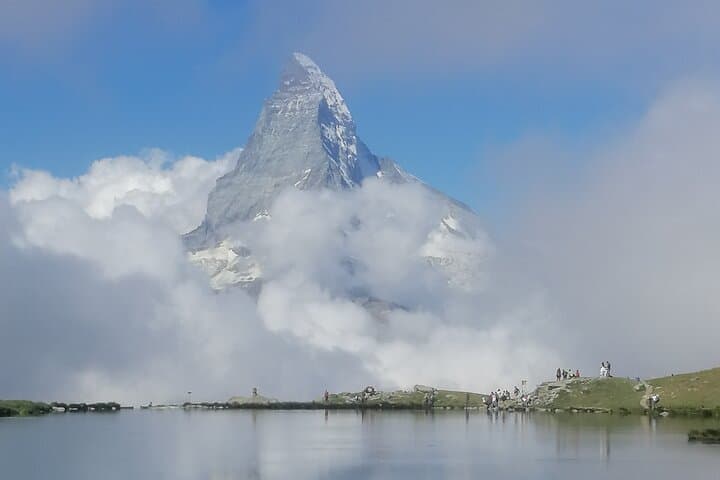
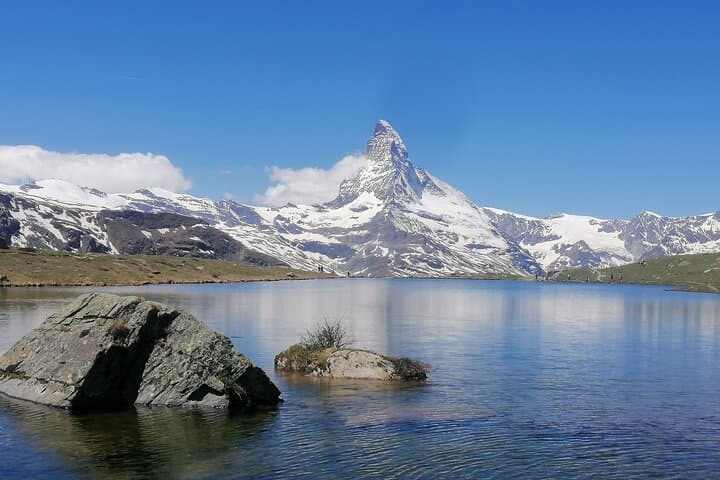
On this private six-hour tour you’ll ride the 9.3 km cog railway from Zermatt (~1,604 m) to Gornergrat (~3,089 m) in roughly 35 minutes, giving you sustained alpine panoramas. If you opt to hike, a short descent to Riffelsee offers one of the clearest reflections of the Matterhorn; expect an approximate 300–350 m drop and rough alpine trails underfoot.
Practical guidance: dress in layers for rapid temperature swings, bring waterproof wind layers, and allow time for altitude adjustment; cameras will be busy but pack spare batteries (cold drains them fast). The tour is a compact way to experience high-alpine views, local history and glacier geography without technical climbing—ideal for travelers who want big scenery with manageable effort.
easy.
6 hours.
Suitable for travelers in general good health; walking on uneven alpine paths recommended but not strenuous.
Pickup is offered at hotels or Zermatt railway station; the tour finishes with drop-off at the same points.
Yes—this is a non-technical tour with short walks; guests should be able to walk on uneven ground and manage altitude changes.
Yes—there is a marked trail descending roughly 300–350 m; it’s rocky and can be slippery when wet, so wear proper shoes.
The operator cancels in unsafe weather; trains may still run but visibility can be limited—check refund policies and rebooking options.
Zermatt became a center for alpinism after the 1865 Matterhorn ascent; the Gornergrat Railway brought tourists and scientific interest from 1898 onward.
Zermatt is car-free to limit emissions and protect fragile alpine environments; stick to trails and carry out waste to reduce impact.
MyMountains operates guided outdoor trips and adventures with an emphasis on safety, stewardship, and memorable experiences.
You step out into the crisp alpine air of Zermatt, the slate roofs still holding a thin crust of overnight frost, and watch the cog railway whistle as it begins its slow climb. Trees give way to rock and glacier; the Matterhorn waits above the skyline, a patient peak that seems to change expression with each turn of the train.
You step out into the crisp alpine air of Zermatt, the slate roofs still holding a thin crust of overnight frost, and watch the cog railway whistle as it begins its slow climb. Trees give way to rock and glacier; the Matterhorn waits above the skyline, a patient peak that seems to change expression with each turn of the train.
Zermatt has been a mountaineering hub since the first ascent of the Matterhorn in 1865, and the Gornergrat railway—opened in 1898—was built to bring visitors to a reliable high viewpoint. Geologically the scene is raw: ancient crystalline rock faces, ribbon glaciers like the Gorner Glacier, and moraine-strewn valleys carved over millennia. Culturally, the village blends Swiss alpine tradition with an international climbing legacy—museums, old guide houses and the modern Monte Rosa Hut illustrate that arc.
On this private six-hour tour you’ll ride the 9.3 km cog railway from Zermatt (~1,604 m) to Gornergrat (~3,089 m) in roughly 35 minutes, giving you sustained alpine panoramas. If you opt to hike, a short descent to Riffelsee offers one of the clearest reflections of the Matterhorn; expect an approximate 300–350 m drop and rough alpine trails underfoot.
Practical guidance: dress in layers for rapid temperature swings, bring waterproof wind layers, and allow time for altitude adjustment; cameras will be busy but pack spare batteries (cold drains them fast). The tour is a compact way to experience high-alpine views, local history and glacier geography without technical climbing—ideal for travelers who want big scenery with manageable effort.