THE ADVENTURE COLLECTIVE® · Independent discovery and booking for outdoor travel

Ride the Gornergrat cogwheel to 3,089 m, then follow signposted trails on a guided day hike with sustained Matterhorn views and alpine lakes. This private English-guided tour blends geology, local history, and accessible high-mountain walking.
Ride the Gornergrat cogwheel to 3,089 m, then follow signposted trails on a guided day hike with sustained Matterhorn views and alpine lakes. This private English-guided tour blends geology, local history, and accessible high-mountain walking.
The cogwheel train exhales steam and the valley shrinks beneath you as you climb toward Gornergrat. At 3,089 meters the air is thin, the light sharp, and the Matterhorn looms like a pared-down outline against a sky that seems closer here. Your guide pauses to point out moraine bands and a mirror-still alpine lake that reflects the peak in near-perfect symmetry.
Verified experiences and guided adventures in the surrounding area.
Operated by ECHO Rails & Trails · Zermatt, Valais (Wallis)
The cogwheel train exhales steam and the valley shrinks beneath you as you climb toward Gornergrat. At 3,089 meters the air is thin, the light sharp, and the Matterhorn looms like a pared-down outline against a sky that seems closer here. Your guide pauses to point out moraine bands and a mirror-still alpine lake that reflects the peak in near-perfect symmetry.
This route follows signposted trails through an alpine nature reserve that has shaped local life for centuries. Zermatt’s history as a mountaineering hub grew in the 19th century with climbers and cogwheel engineers shaping the built landscape; the Gornergrat railway—one of Europe’s highest open-air railways—opened access to panoramas once only seen by climbers.
Geologically the terrain is glacial: crested ridges, rounded moraines, and rock faces carved by ice. Culturally, you’ll hear stories of the Valais (Wallis) farming communities and the Walser migrations that influenced local dialect and architecture.
Practically, expect a full-day rhythm: a train ride up, 1–2 hours of guided hiking on easy-to-moderate trails, and time on the 360° platform to scan more than 29 peaks above 4,000 meters. Trails are well-marked but uneven; sturdy-soled shoes and layered clothing are essential. The tour is private and led in English, operates in most weather (dress for sun and wind), and isn’t recommended for people with serious heart or spinal conditions. Hydrate early, move at a steady pace to manage altitude, and plan to return to Zermatt by late afternoon with clear views and a deeper sense of alpine geology and local history.
moderate.
6–8 hours.
Suitable for people with moderate fitness who can handle uphill walking and short periods at higher altitude.
The guided hike along signposted trails typically lasts 1–2 hours, embedded within a 6–8 hour full-day itinerary including trains and viewpoint stops.
Yes—transport up to Gornergrat on the cogwheel railway and all itinerary transport are included with the tour.
Children are welcome but must be accompanied by an adult and should be accustomed to walking distances and higher-elevation conditions.
The Gornergrat station has basic facilities and a mountain restaurant; bring snacks and water for the hike portion as options can be limited on trails.
Zermatt evolved from a farming and Walser settlement into a global mountaineering center in the 19th century; the Gornergrat railway, built in the late 1800s, opened panoramic access to tourists.
Trails run through a protected alpine nature reserve—stay on marked paths, pack out waste, and minimize noise to protect fragile vegetation and nesting wildlife.
ECHO Rails & Trails operates guided outdoor trips and adventures with an emphasis on safety, stewardship, and memorable experiences.
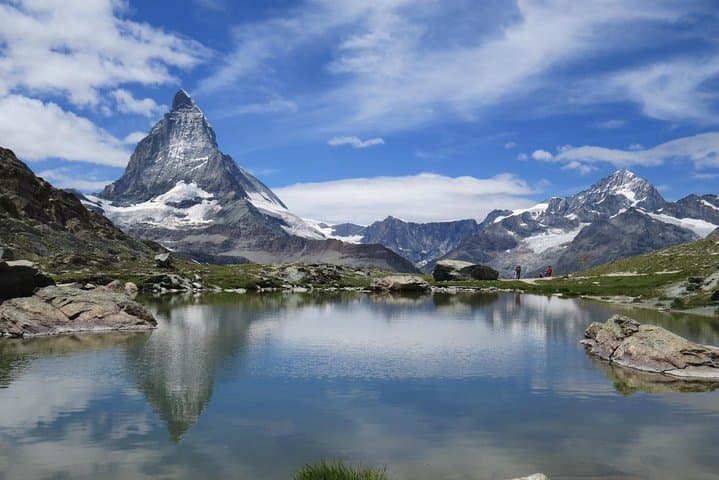
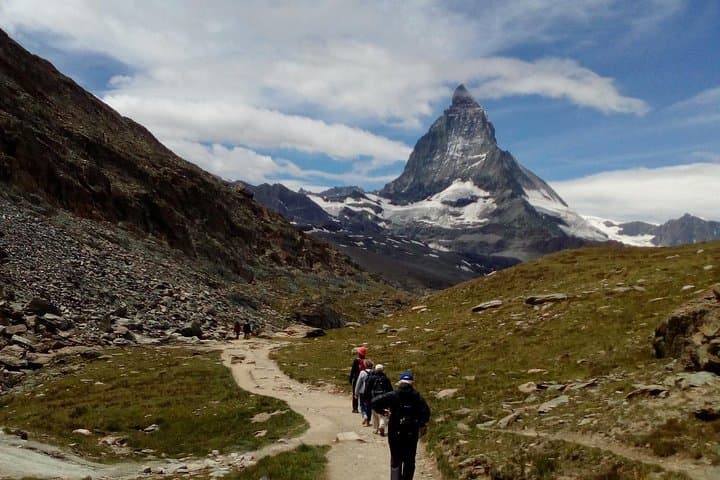
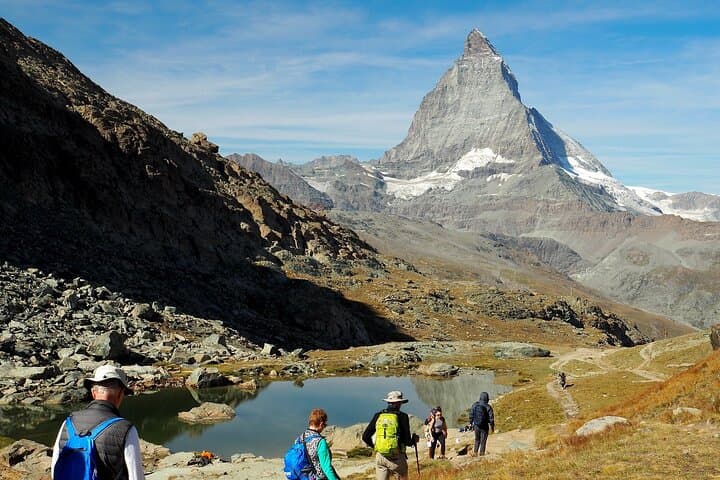
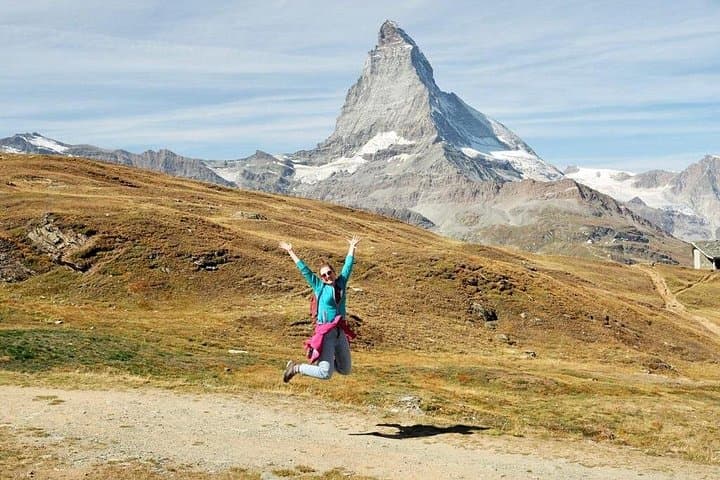
The cogwheel train exhales steam and the valley shrinks beneath you as you climb toward Gornergrat. At 3,089 meters the air is thin, the light sharp, and the Matterhorn looms like a pared-down outline against a sky that seems closer here. Your guide pauses to point out moraine bands and a mirror-still alpine lake that reflects the peak in near-perfect symmetry.
The cogwheel train exhales steam and the valley shrinks beneath you as you climb toward Gornergrat. At 3,089 meters the air is thin, the light sharp, and the Matterhorn looms like a pared-down outline against a sky that seems closer here. Your guide pauses to point out moraine bands and a mirror-still alpine lake that reflects the peak in near-perfect symmetry.
This route follows signposted trails through an alpine nature reserve that has shaped local life for centuries. Zermatt’s history as a mountaineering hub grew in the 19th century with climbers and cogwheel engineers shaping the built landscape; the Gornergrat railway—one of Europe’s highest open-air railways—opened access to panoramas once only seen by climbers.
Geologically the terrain is glacial: crested ridges, rounded moraines, and rock faces carved by ice. Culturally, you’ll hear stories of the Valais (Wallis) farming communities and the Walser migrations that influenced local dialect and architecture.
Practically, expect a full-day rhythm: a train ride up, 1–2 hours of guided hiking on easy-to-moderate trails, and time on the 360° platform to scan more than 29 peaks above 4,000 meters. Trails are well-marked but uneven; sturdy-soled shoes and layered clothing are essential. The tour is private and led in English, operates in most weather (dress for sun and wind), and isn’t recommended for people with serious heart or spinal conditions. Hydrate early, move at a steady pace to manage altitude, and plan to return to Zermatt by late afternoon with clear views and a deeper sense of alpine geology and local history.