THE ADVENTURE COLLECTIVE® · Independent discovery and booking for outdoor travel

Spend a private day exploring Gori’s fortress and the rock-hewn city of Uplistsikhe. This combined cultural and light-hiking tour delivers sweeping valley views, ancient cave structures, and Soviet-era history with private transport and hotel pickup.
Spend a private day exploring Gori’s fortress and the rock-hewn city of Uplistsikhe. This combined cultural and light-hiking tour delivers sweeping valley views, ancient cave structures, and Soviet-era history with private transport and hotel pickup.
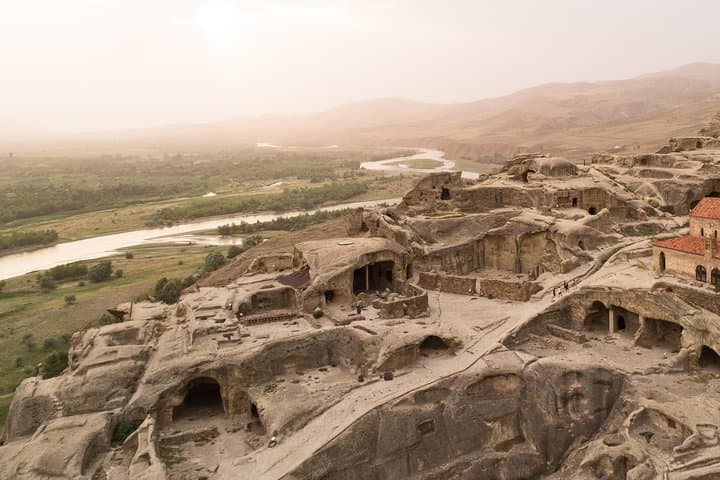
A dawn drive from Tbilisi drops you into the low, sunbaked valley where the Mtkvari River pushes east and the cliffs begin to show the pale scars of human hands. You step out at Gori’s compact fortress first — a rampart of stone above town — and feel the slow, steady pull of history toward the carved city perched on the opposite bank.
Verified experiences and guided adventures in the surrounding area.
Operated by Hey Geo · Gori, Shida Kartli
A dawn drive from Tbilisi drops you into the low, sunbaked valley where the Mtkvari River pushes east and the cliffs begin to show the pale scars of human hands. You step out at Gori’s compact fortress first — a rampart of stone above town — and feel the slow, steady pull of history toward the carved city perched on the opposite bank.
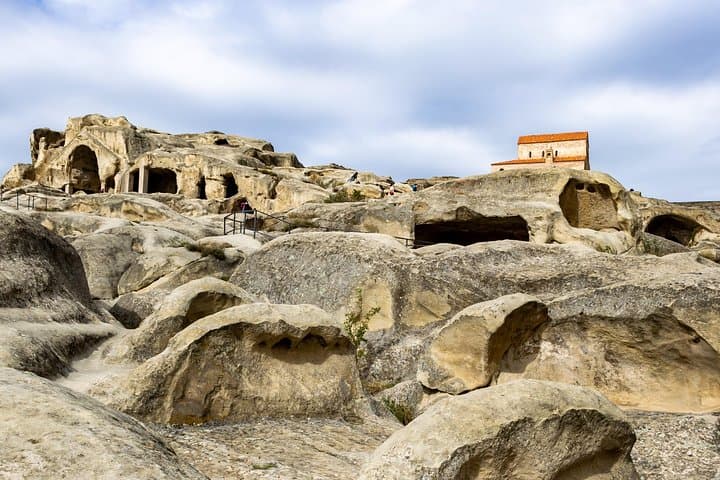
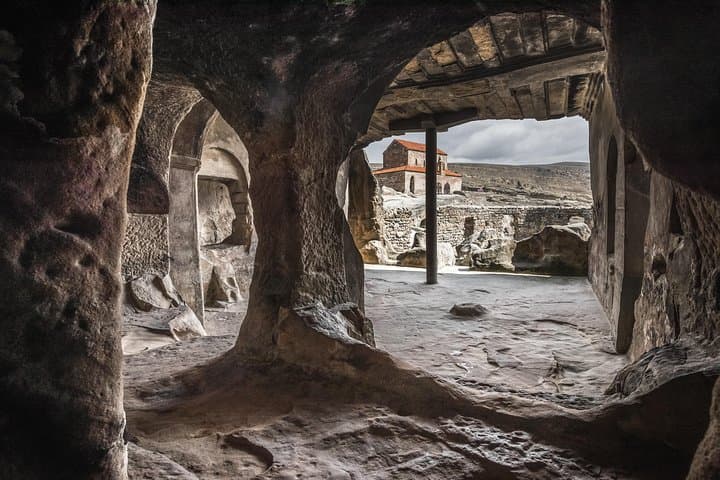
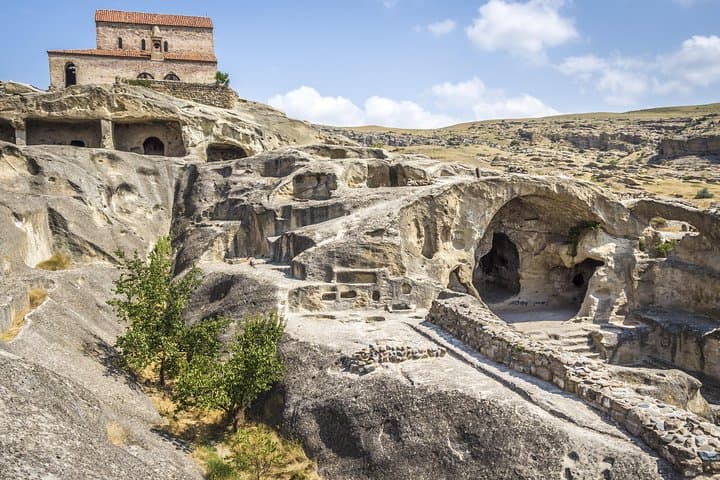
Uplistsikhe is an open-air maze cut into volcanic rock and soft tuff; corridors thread through chambers that once held temples, bakeries and wine cellars. Archaeologists link the site to pre-Christian ritual life in Kartli, when sun cults and caravan trade shaped its layout. Nearby Gori tells a different chapter: fortified medieval walls, a Soviet-era house-turned-museum that reflects 20th-century geopolitics, and a town that bears the marks of modern conflict.
Geology is obvious underfoot — eroded rock faces, stairways hewn from beige strata and cliff-side terraces that frame sweeping valley views. Culture arrives in pottery fragments, Orthodox churches, and the quiet pride of villagers who still farm the terraces below.
Practical notes: the private tour runs about 6–7 hours with hotel pickup, bottled water provided, and requires walking over uneven, often steep rock surfaces. Wear sturdy shoes, sun protection and plan for steps with no railings. Early starts avoid heat and enhance light for photography; check entrance fees for the fortress and Uplistsikhe as they may be extra. The trip balances easy logistics with rugged footing — part cultural day trip, part short, exposed hike.
moderate.
6–7 hours.
Suitable for travelers with average fitness; involves walking on uneven ground and climbing stone steps.
Not always—check the tour inclusions; the Stalin Museum and Uplistsikhe admissions are commonly excluded and payable on site.
Most private tours include hotel pickup and drop-off in Tbilisi; confirm your pickup point when booking.
Children can join but many paths have steep steps and uneven rock; strollers are not practical within Uplistsikhe.
Private format often allows flexibility—ask about extra stops or pacing when you book to match mobility or interests.
Gori has been inhabited since the Bronze Age and served as a strategic stronghold in medieval Kartli; Uplistsikhe was a key pre-Christian political and trade center that declined after Mongol destruction in 1240.
Erosion and visitor impact are ongoing concerns at Uplistsikhe; stick to marked paths and avoid touching fragile carvings to help preserve the site.
Hey Geo operates guided outdoor trips and adventures with an emphasis on safety, stewardship, and memorable experiences.
A dawn drive from Tbilisi drops you into the low, sunbaked valley where the Mtkvari River pushes east and the cliffs begin to show the pale scars of human hands. You step out at Gori’s compact fortress first — a rampart of stone above town — and feel the slow, steady pull of history toward the carved city perched on the opposite bank.
A dawn drive from Tbilisi drops you into the low, sunbaked valley where the Mtkvari River pushes east and the cliffs begin to show the pale scars of human hands. You step out at Gori’s compact fortress first — a rampart of stone above town — and feel the slow, steady pull of history toward the carved city perched on the opposite bank.
Uplistsikhe is an open-air maze cut into volcanic rock and soft tuff; corridors thread through chambers that once held temples, bakeries and wine cellars. Archaeologists link the site to pre-Christian ritual life in Kartli, when sun cults and caravan trade shaped its layout. Nearby Gori tells a different chapter: fortified medieval walls, a Soviet-era house-turned-museum that reflects 20th-century geopolitics, and a town that bears the marks of modern conflict.
Geology is obvious underfoot — eroded rock faces, stairways hewn from beige strata and cliff-side terraces that frame sweeping valley views. Culture arrives in pottery fragments, Orthodox churches, and the quiet pride of villagers who still farm the terraces below.
Practical notes: the private tour runs about 6–7 hours with hotel pickup, bottled water provided, and requires walking over uneven, often steep rock surfaces. Wear sturdy shoes, sun protection and plan for steps with no railings. Early starts avoid heat and enhance light for photography; check entrance fees for the fortress and Uplistsikhe as they may be extra. The trip balances easy logistics with rugged footing — part cultural day trip, part short, exposed hike.