THE ADVENTURE COLLECTIVE® · Independent discovery and booking for outdoor travel

Skip the ticket line and step directly into Cappadocia’s monastic heart. This practical guide covers what to expect inside Göreme Open Air Museum—its rock churches, fresco rules, and timing tips for a focused visit.
Skip the ticket line and step directly into Cappadocia’s monastic heart. This practical guide covers what to expect inside Göreme Open Air Museum—its rock churches, fresco rules, and timing tips for a focused visit.
Morning light slants across a field of sculpted stone as you approach the Göreme Open Air Museum: a cluster of carved chapels, refectory rooms and monk cells carved directly into volcanic tuff. The approach is simple—a short walk from town—yet the gates open onto centuries of lived faith and art.
Verified experiences and guided adventures in the surrounding area.
Operated by Travelgroup · Goreme, Nevşehir
Morning light slants across a field of sculpted stone as you approach the Göreme Open Air Museum: a cluster of carved chapels, refectory rooms and monk cells carved directly into volcanic tuff. The approach is simple—a short walk from town—yet the gates open onto centuries of lived faith and art.
The site grew from early Christian monastic communities between the 4th and 13th centuries. Cappadocia’s soft volcanic rock, eroded by wind and water, made it possible to carve entire monastic complexes into fairy‑chimney slopes; frescoes inside the Dark Church and Tokalı Church preserve pigments and iconography influenced by the Cappadocian Fathers, who helped shape Eastern Christian theology here.
Culturally, the museum reads as both classroom and chapel: austere living quarters alongside intricate biblical scenes that once instructed largely illiterate congregations. Geologically, you’re walking on ignimbrite and ash deposits—rock that made both shelter and canvases.
Practical guidance: presentation of a mobile ticket lets you skip the purchase queue, but security checks are mandatory and can create lines in high season. Allow 90–120 minutes to see the main churches at a measured pace; bring sun protection for the open courtyard and step carefully on uneven carved stone and low doorways. Photography is generally allowed but some interiors restrict flash to protect pigments—observe posted signs. Visit early in the day for cooler temperatures and softer light on the frescoes, and treat the site with restraint: no touching frescoes, stay on marked paths, and pack out waste. The Göreme Open Air Museum rewards quiet attention: move slowly and the painted faces within the rock will begin to feel like the region’s long conversation with light and stone.
easy.
1.5–2 hours.
Suitable for most fitness levels; requires short walks and some stooping through low doorways
The supplier emails your entry ticket up to 24 hours before your reservation—check inbox and spam; mobile or paper is accepted.
Plan 90–120 minutes to see the main churches (Dark Church, Tokalı, St. Basil) at a steady pace.
No—security checks are mandatory at the entrance; the ticket only skips the purchase queue, not security.
Photography is generally allowed but flash may be restricted in certain interiors to protect frescoes; obey posted signage.
Monastic communities carved cells and chapels into Cappadocia’s tuff from the 4th century onward; Göreme later became a key center for monastic education and Christian art.
Fresco preservation is ongoing—visitor limits, no‑flash rules, and roped paths minimize wear; avoid touching painted surfaces and stay on marked routes.
Travelgroup operates guided outdoor trips and adventures with an emphasis on safety, stewardship, and memorable experiences.
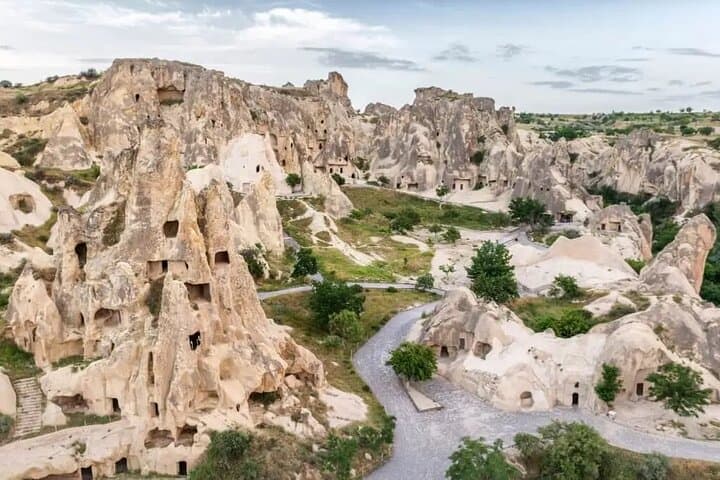
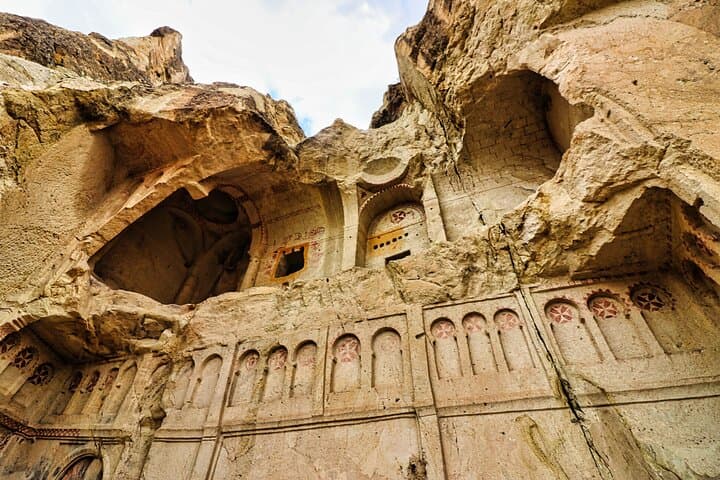
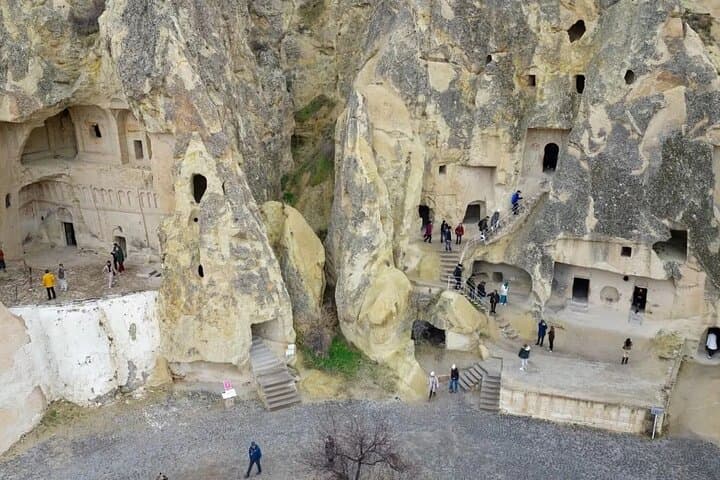
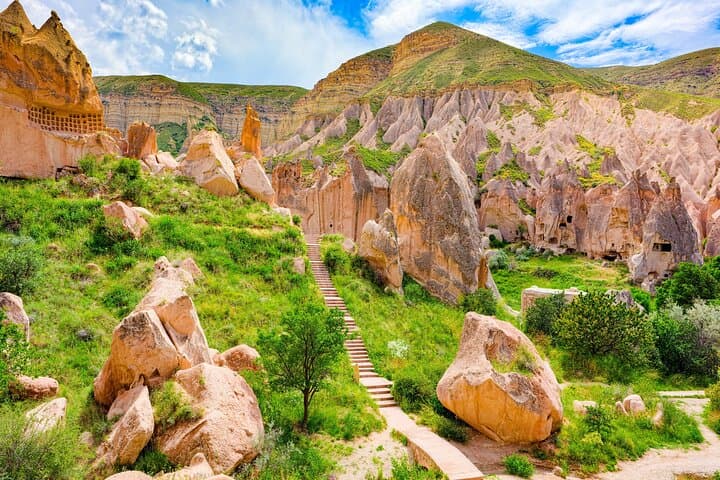
Morning light slants across a field of sculpted stone as you approach the Göreme Open Air Museum: a cluster of carved chapels, refectory rooms and monk cells carved directly into volcanic tuff. The approach is simple—a short walk from town—yet the gates open onto centuries of lived faith and art.
Morning light slants across a field of sculpted stone as you approach the Göreme Open Air Museum: a cluster of carved chapels, refectory rooms and monk cells carved directly into volcanic tuff. The approach is simple—a short walk from town—yet the gates open onto centuries of lived faith and art.
The site grew from early Christian monastic communities between the 4th and 13th centuries. Cappadocia’s soft volcanic rock, eroded by wind and water, made it possible to carve entire monastic complexes into fairy‑chimney slopes; frescoes inside the Dark Church and Tokalı Church preserve pigments and iconography influenced by the Cappadocian Fathers, who helped shape Eastern Christian theology here.
Culturally, the museum reads as both classroom and chapel: austere living quarters alongside intricate biblical scenes that once instructed largely illiterate congregations. Geologically, you’re walking on ignimbrite and ash deposits—rock that made both shelter and canvases.
Practical guidance: presentation of a mobile ticket lets you skip the purchase queue, but security checks are mandatory and can create lines in high season. Allow 90–120 minutes to see the main churches at a measured pace; bring sun protection for the open courtyard and step carefully on uneven carved stone and low doorways. Photography is generally allowed but some interiors restrict flash to protect pigments—observe posted signs. Visit early in the day for cooler temperatures and softer light on the frescoes, and treat the site with restraint: no touching frescoes, stay on marked paths, and pack out waste. The Göreme Open Air Museum rewards quiet attention: move slowly and the painted faces within the rock will begin to feel like the region’s long conversation with light and stone.